PVC Pipe & Profile Processing: Why Heat Stabilizers Are Essential—and Why Wax Additives Inside Stabilizer Packages Matter
PVC pipes, conduits, and profiles are processed at temperatures high enough to trigger thermal degradation. That’s why heat stabilizers are non‑optional in PVC processing: they protect the polymer during extrusion and help maintain long-term performance.
But in real production, “stabilization” is not only about chemistry. A stabilizer package must also deliver processing stability, metal release, and clean surface quality—and this is where wax additives (lubricant waxes) play a critical role.

When PVC is heated during extrusion (commonly ~160–200°C depending on formulation and equipment), it can undergo dehydrochlorination (release of HCl). If not controlled, it causes:
For pipe and conduit applications, stabilizers help processors maintain:
Most commercial PVC stabilizer packages are designed as multi-component systems. Besides the stabilizer actives, they often include co-stabilizers and lubricants—and waxes are widely used because they can strongly influence the processing window.
Properly selected wax additives can help:
In rigid PVC, processors typically need a balanced internal/external lubrication profile:
Wax chemistry (molecular weight, melting/softening point, polarity) influences where a wax sits on this spectrum. An imbalanced system may show:
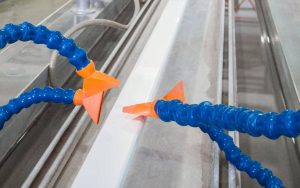
Depending on the stabilizer system and the target product, wax additives may include:
Selection should be based on: fusion window, torque curve, melt pressure stability, die cleanliness, surface finish, and downstream requirements.
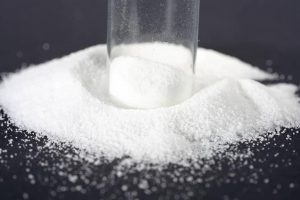
Rallychem’s lubricants are the perfect match for PVC heat stabilizers.
We offer high-performance and cost-effective lubricants, as well as customized functional targeting lubricants to better fit the producer’s specific stabilization system. Whether for highly filled PVC or PVC transparent products, RALLYCHEM can help achieve a wider processing window.
Key Benefits of Rallychem Wax Additives:
1 Enhanced Stability: Improves both dynamic and static stability of stabilizers, obtaining better whiteness.
2 Wider Processing Window: Reduces the risk of degradation during temperature fluctuations.
3 Plate-out Control: Effectively reduces precipitation and die build-up.
4 Superior Surface Finish: Improves mold release for an excellent surface effect.
5 Consistency: Delivers good batch-to-batch stability for reliable production.
Das könnte Sie interessieren
What Does “High Density” Mean in Oxidized Polyethylene Wax?
2026 / 02 / 17
How Polyethylene Wax Enhances Pigment Dispersion and Color Consistency in Masterbatch Production
2026 / 02 / 05
Cost Optimization in PVC Processing: Using Targeted Polyester Wax to Partially Replace Stearic Acid and Paraffin Wax
2026 / 02 / 04
Engineering Plastics Lubrication: Why Polyester Wax is the Montan Wax Alternative
2026 / 01 / 23
Optimierung der Haltbarkeit von Beschichtungen mit den fortschrittlichen Wachsadditiven von RallyChem
2026 / 01 / 22




Für Anfragen bitte anrufen
Rallychem wird Ihnen gerne behilflich sein!
+86 13456396233





 Englisch
 Spanisch
 Französisch
 Japanisch
 Koreanisch
 Arabisch
 Persisch
 Deutsch
 Italienisch
 Vietnamesisch
 Thailändisch
 Russisch
 Indonesisch
 Malaiisch
 Türkisch


