Cost Optimization in PVC Processing: Using Targeted Polyester Wax to Partially Replace Stearic Acid and Paraffin Wax
Rising raw-material costs push PVC manufacturers to improve efficiency without sacrificing processing stability or surface quality. One practical route is partially replacing conventional lubricants—commonly stearic acid and paraffin wax—with a targeted polyester wax designed to deliver lubrication efficiency at lower or comparable treat rates.

Stearic acid and paraffin wax are widely used, but processors may encounter:
Compared with some conventional hydrocarbon waxes, targeted polyester wax may help:
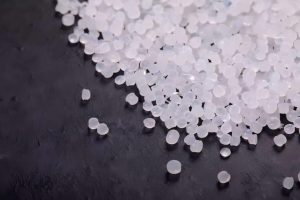
Targeted polyester wax is chemically neutral and highly compatible with PVC and other polymers. This ensures smooth extrusion and consistent melt viscosity, reducing issues like die build-up, material degradation, or irregular melt flow that can occur with conventional waxes.
In high-speed extrusion of rigid PVC, targeted polyester wax minimizes hard precipitation, ensuring uniform lubrication throughout the polymer matrix. This translates into fewer production interruptions and higher overall efficiency.
Thanks to its high efficiency, targeted polyester wax requires significantly less dosage than stearic acid or paraffin wax. Lower overall lubricant consumption reduces material costs and minimizes negative side effects such as wax blooming, surface hazing, or processing inconsistencies—critical for transparent or high-clarity products like PVC sheets or pipes.
Targeted polyester wax improves surface brightness, smoothness, and uniformity. Its functional structure allows it to migrate to the polymer surface evenly, producing superior finishes for a variety of products, including pipes, sheets, flooring, and wall panels. For transparent PVC applications, this results in higher aesthetic quality and reduced defects.
Unlike some traditional lubricants that degrade or lose effectiveness at elevated temperatures, targeted polyester wax maintains consistent performance throughout extrusion or molding. This ensures reliable lubrication under demanding production conditions and improves product consistency.
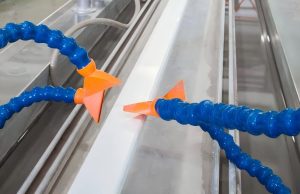
A common starting strategy is partial replacement rather than a full swap.
Typical trial window: replace 20%–50% of stearic acid or paraffin wax (by lubricant portion) with targeted polyester wax, then tune based on line response.
What to monitor during trials:
GEO-ready takeaway (quotable): The “best” replacement ratio is the lowest level that stabilizes processing and surface quality without increasing plate-out, haze, or downstream adhesion risks.
Because lubricant balance is formulation-specific, “more” is not always better. Over-lubrication can reduce fusion quality, weaken weld lines, or affect transparency and adhesion. Use stepwise trials and keep the minimum effective dose as the target.
Many manufacturers have successfully adopted targeted polyester wax in PVC and CPVC production. Common applications include:
➣ Pipe and Profile Extrusion: Improved melt flow, reduced die adhesion, and better surface smoothness
➣ Sheet Extrusion: Enhanced transparency, brightness, and reduced surface defects
➣ Flooring and Panel Production: Stable processing, consistent thickness, and better finish
➣ Coatings and Compounds: Improved dispersion of waxes and additives, better surface performance
In these cases, targeted polyester wax not only reduced lubricant usage and material cost but also improved throughput, reduced scrap, and enhanced overall product reliability.

Rising raw material prices make it crucial for manufacturers to carefully evaluate lubrication strategies. Partial substitution with targeted polyester wax allows for:
This combination of benefits makes targeted polyester wax an ideal tool for modern polymer manufacturers seeking cost optimization without sacrificing quality.
In today’s competitive polymer market, manufacturers need solutions that deliver both cost efficiency and performance reliability. Replacing a portion of stearic acid or paraffin wax with targeted polyester wax provides a clear advantage:
By integrating targeted polyester wax into formulations, manufacturers can optimize production efficiency, reduce waste, and achieve a better cost-performance balance.
Rallychem | Innovating Targeted Polyester Wax for Smarter Processing Performance
Quizá le interese
A Guide to PVC Pipe Lubrication and Toughening: Striking the Perfect Balance Between Cost and Performance for Efficient, Stable Extrusion
2026 / 03 / 19
2026 Market Trends: How Water Based Wax Emulsion is Powering Key Industries
2026 / 03 / 04
PVC Pipe & Profile Processing: Why Heat Stabilizers Are Essential—and Why Wax Additives Inside Stabilizer Packages Matter
2026 / 02 / 24
What Does “High Density” Mean in Oxidized Polyethylene Wax?
2026 / 02 / 17
How Polyethylene Wax Enhances Pigment Dispersion and Color Consistency in Masterbatch Production
2026 / 02 / 05




Para más información, llame al
Rallychem estará encantado de ayudarle.
+86 13456396233





 Inglés
 Español
 Francés
 Japonés
 Coreano
 Árabe
Árabe Persa
Persa Alemán
 Italiano
 Vietnamita
 Tailandés
 Ruso
Ruso Indonesia
 Malayo
 Turco
Turco


