How Polyethylene Wax Enhances Pigment Dispersion and Color Consistency in Masterbatch Production
In masterbatch production, consistent color is a quality requirement—not just an aesthetic goal. Many dispersion issues (specks, streaks, unstable color strength) come from pigment agglomeration and insufficient wetting during compounding. Polyethylene (PE) wax is widely used as a processing and dispersion aid to help pigments distribute more uniformly in the polymer matrix.
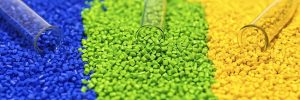
Pigments and fillers tend to form agglomerates because of their high surface area and surface interactions. Inadequate dispersion can lead to:
In compounding, PE wax can improve the way pigment particles interact with the polymer melt. Practically, it can:
High-quality polyethylene waxes designed for masterbatch applications (e.g., RLWAX® series) are typically selected to balance lubricity, compatibility, and thermal behavior for consistent results.
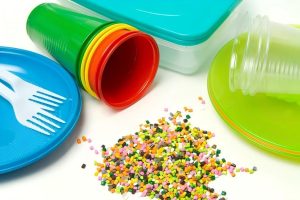
The “right” dosage depends on resin type, pigment package, filler level, and target properties. In many masterbatch formulations, PE wax is commonly evaluated in the range of:
0.5–3.0 wt% (of total batch weight)
General guidance:
For a robust optimization, validate with:
PE wax performance is strongly influenced by melting behavior and viscosity in the melt. If processing temperature is too low, the wax may not melt and distribute well enough to effectively wet pigments. If too high, it can increase the risk of wax degradation or negatively impact the polymer/additive system (depending on residence time and formulation).
A practical rule:
Maintain the melt temperature slightly above the wax melting point to promote consistent wetting and dispersion while protecting formulation stability.
Different formulations require targeted dispersion strategies:
A. Color Masterbatches (PE/PP): Fighting Streaks & Specks
B. Filler Masterbatches: Balancing High Loading with Processability
C. Engineering & Specialty Masterbatches (PET/ABS/Fiber): Heat Stability
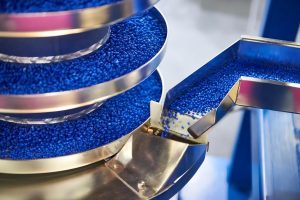
Rallychem’s RLWAX® acts as more than just a lubricant; it is a comprehensive performance enhancer:
1. Wetting (The Foundation)
Mechanism: It rapidly infiltrates pigment agglomerate pores, displacing air and reducing interfacial tension.
Result: Transforms “carrier-repelling” pigments into “carrier-friendly” particles, preventing clumping during the initial feeding stage.
2. Dispersion & FPV Control (The Key)
Mechanism:By optimizing melt rheology, it ensures that mechanical shear forces are efficiently transmitted to break down agglomerates into primary particles.
Result: Significantly lowers the Filter Pressure Value (FPV), maximizing tinting strength and reducing pigment waste.
3. Long-term Stabilization (The Guarantee)
Mechanism:It forms a protective steric barrier around dispersed particles, preventing re-clumping during storage or secondary processing.
Result: Guarantees exceptional Batch-to-Batch Consistency, keeping the color difference within strict tolerances.
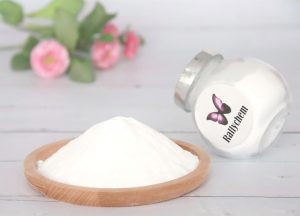
For any manufacturer focused on high-quality masterbatch production, Polyethylene wax is more than an optional additive—it’s a performance enhancer. By promoting pigment wetting, improving dispersion, and maintaining color consistency, polyethylene wax helps produce masterbatches that are bright, uniform, and easy to process. Proper selection, dosage, and temperature control are key to maximizing its benefits, making it an indispensable tool in both color and functional masterbatch production.
At Rallychem, our RLWAX® series offers high-performance Polyethylene wax solutions specifically designed for masterbatch processing. With years of experience and global exports to over 50 countries, we help manufacturers optimize formulations and achieve consistent, high-quality results.
Rallychem | Smart Polyethylene Wax for Better Masterbatch Color
Potreste essere interessati
A Guide to PVC Pipe Lubrication and Toughening: Striking the Perfect Balance Between Cost and Performance for Efficient, Stable Extrusion
2026 / 03 / 19
2026 Market Trends: How Water Based Wax Emulsion is Powering Key Industries
2026 / 03 / 04
PVC Pipe & Profile Processing: Why Heat Stabilizers Are Essential—and Why Wax Additives Inside Stabilizer Packages Matter
2026 / 02 / 24
What Does “High Density” Mean in Oxidized Polyethylene Wax?
2026 / 02 / 17
Cost Optimization in PVC Processing: Using Targeted Polyester Wax to Partially Replace Stearic Acid and Paraffin Wax
2026 / 02 / 04




Per informazioni si prega di chiamare
Rallychem sarà lieta di assistervi!
+86 13456396233





 Inglese
 Spagnolo
 Francese
 Giapponese
 Coreano
 Arabo
Arabo Persiano
 Tedesco
 Italiano
 Vietnamita
 Thailandese
 Russo
Russo Indonesiano
 Malese
 Turco
Turco


