In PVC pipe processing, regular low molecular weight PE wax mainly acts as an external lubricant, reducing friction between the compound and metal surfaces. Oxidized PE wax (OPE wax), because of its introduced polar groups, usually shows better compatibility and can contribute some internal lubrication, making it easier to achieve lubrication balance and stable processing. However, it should not be considered universally superior in every case. The final choice depends on the PVC resin, heat stabilizer package, processing temperature, torque/fusion behavior, and end-product requirements.
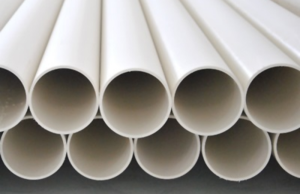
PE wax is generally a low molecular weight polyethylene material with low polarity and strong hydrophobicity. In PVC processing, it is commonly used as an external lubricant. It reduces friction between the compound and metal parts such as the barrel, screw, and die, helping improve flow and reduce equipment wear.
Oxidized PE wax is produced by oxidative modification of PE wax and usually contains polar functional groups such as carbonyl or carboxyl groups. Because of this higher polarity, oxidized PE wax often shows better dispersion and compatibility in PVC formulations and can more easily contribute to a stable processing balance with other additives.
In rigid PVC processing, lubrication is not a matter of using more, but of maintaining the right balance.
Regular PE wax is usually more external in character, while oxidized PE wax often retains external lubrication and also contributes some internal lubrication. For this reason, oxidized PE wax is often regarded as one of the easier lubricant types for balancing PVC pipe formulations.
In rigid PVC processing, effective lubrication is not simply about using more lubricant — it is about maintaining the right balance.
(1) Different Lubrication Profiles
Regular PE wax is predominantly external in character — suited for controlling wall friction, improving mold release, and enhancing surface smoothness.
Oxidized PE wax is not a pure internal lubricant, but compared with regular PE wax, it delivers a more balanced internal-external lubrication profile.
(2) Different Compatibility and Lubrication Mechanisms
Regular PE Wax — Nonpolar, Working Between Particles
Regular PE wax has no polar groups and cannot bond with PVC resin. It distributes between PVC particles and at the compound-metal interface, acting as a physical separation layer. This gives it two core functions:
Fusion delay — forms a lubricating barrier at particle interfaces to regulate plastification rate
Anti-sticking — reduces adhesion between the compound and metal surfaces, protecting the screw and barrel
Because it has no chemical affinity with PVC, its lubricating effect gradually weakens under sustained screw shear — limiting its reliability in later processing stages.

Oxidized PE Wax — Polar, Coating Every PVC Particle
Oxidative modification introduces carbonyl and carboxyl groups, allowing oxidized PE wax to chemically associate with PVC resin and coat each particle individually — fitting every PVC particle with its own lubricating layer.
This delivers three key advantages:
Sustained lubrication — the chemically anchored coating resists shear stripping, maintaining stable performance throughout extrusion
Reliable demolding — the intact lubricating layer ensures consistent interfacial lubrication at the die, reducing surface defects at the exit
Plastification promotion — polar groups reduce inter-chain friction, accelerating fusion, shortening cycle time, and increasing daily output

(3) Different Effects on Fusion Behavior
Lubricants directly affect fusion time, torque behavior, and plastification in PVC pipe processing.
Regular PE wax is primarily external in character. When overdosed, it can delay fusion — which can be useful when slower plastification is intentionally required.
Oxidized PE wax contributes internal lubrication, helping to promote plastification and making it easier to balance melt flow and fusion behavior.
One important clarification: oxidized PE wax does not automatically “increase mechanical strength.” The more accurate way to put it is — a better-balanced lubrication system leads to more complete and uniform plastification, and that is what supports consistent product quality.
PVC pipe extrusion is exceptionally sensitive to lubrication imbalance.
Excessive external lubrication reduces wall friction but may deprive PVC particles of the mechanical energy needed for adequate fusion, resulting in slow plastification, poor inter-particle bonding, or fluctuating mechanical performance.
Excessive internal lubrication can disrupt the normal plastification rhythm, negatively affecting melt stability, dimensional control, and surface quality.
The key question, therefore, is not which wax lubricates more — but which lubricant system best fits the current formulation window and processing conditions.
PVC pipe formulations usually rely on heat stabilizers such as lead-based systems, calcium-zinc systems, or organotin systems. The interaction between lubricants and heat stabilizers affects fusion rate, thermal stability window, and overall processing stability.
Compared with regular PE wax, oxidized PE wax often shows better cooperation in some formulations, especially in certain calcium-zinc stabilizer systems. This is related to its polar structure, which may help improve the dispersion and balance of formulation components.
However, the more precise statement is: oxidized PE wax may show better compatibility in some stabilizer systems, rather than being universally superior with all heat stabilizers.

When used properly, oxidized PE wax may offer the following practical advantages in PVC pipe production:
Regular PE wax typically offers the following strengths:
If your goal is standardized production, conventional formulations, cost control, and a clearly external lubrication effect, regular low molecular weight PE wax is often a practical choice.
If your goal is higher extrusion stability, more complex formulations, stricter surface requirements, or easier adjustment of internal-external lubrication balance, oxidized PE wax is often worth evaluating first.
In actual material selection, it is advisable to focus on:
In PVC pipe processing, both regular PE wax and oxidized PE wax are valuable, but they do not play exactly the same role. Regular PE wax is more external in character and is well suited for controlling equipment friction and surface behavior. Oxidized PE wax, with its higher polarity and usually better compatibility, often performs better in lubrication balance, processing stability, and adaptation to more complex systems.
From a formulation standpoint, processing performance is determined not by the wax type alone, but by the overall match among lubricants, stabilizers, PVC resin, and processing conditions. Choosing the right wax is therefore not only a cost decision, but also a combined decision about quality, efficiency, and long-term stability.
Rallychem | Reliable Wax Solutions for Stable PVC Processing
ممکن است علاقهمند باشید
Why Do Engineering Plastics Need a “Special Wax”? A Technical Introduction to Rallychem Synthetic Polyester Wax
2026 / 04 / 02
راهنمای روانکاری و مقاومسازی لوله PVC: ایجاد تعادل ایدهآل بین هزینه و عملکرد برای اکستروژن کارآمد و پایدار
2026 / 03 / 19
روندهای بازار ۲۰۲۶: چگونه امولسیون واکس پایه آب، صنایع کلیدی را قدرت میبخشد
2026 / 03 / 04
پردازش لوله و پروفیل پیویسی: چرا تثبیتکنندههای حرارتی ضروریاند و چرا افزودنیهای مومی درون بستههای تثبیتکننده اهمیت دارند
2026 / 02 / 24
“چگالی بالا” در موم پلیاتیلن اکسیدشده به چه معناست؟
2026 / 02 / 17



واتساپ

برای استعلام لطفاً تماس بگیرید
رالیکم با کمال میل به شما کمک خواهد کرد!
+86 13456396233





 انگلیسی
 اسپانیایی
 فرانسوی
 ژاپنی
ژاپنی کُرهای
 عربی
عربی فارسی
فارسی آلمانی
 ایتالیایی
 ویتنامی
 تایلندی
 روسی
روسی اندونزیایی
 مالایی
 ترکی
ترکی


