Why is the Processing of CPVC More Difficult than PVC?
CPVC and PVC, while both derived from vinyl chloride, differ notably in processing due to their distinct chemical structures and properties. This results in a more complex CPVC processing scenario.
PVC is formed by the polymerization of vinyl chloride monomers, resulting in a relatively simple molecular structure. In contrast, CPVC is obtained by adding more chlorine atoms to PVC molecules, creating a more complex and rigid structure. This complexity directly affects the difficulty of processing CPVC.
While PVC can mitigate degradation and charring during processing by adjusting the process and formulation in the initial stages, CPVC’s degradation reaction is rapid. Once charring occurs, it is almost impossible to remedy. Therefore, CPVC demands stricter requirements for formulation and processing techniques.
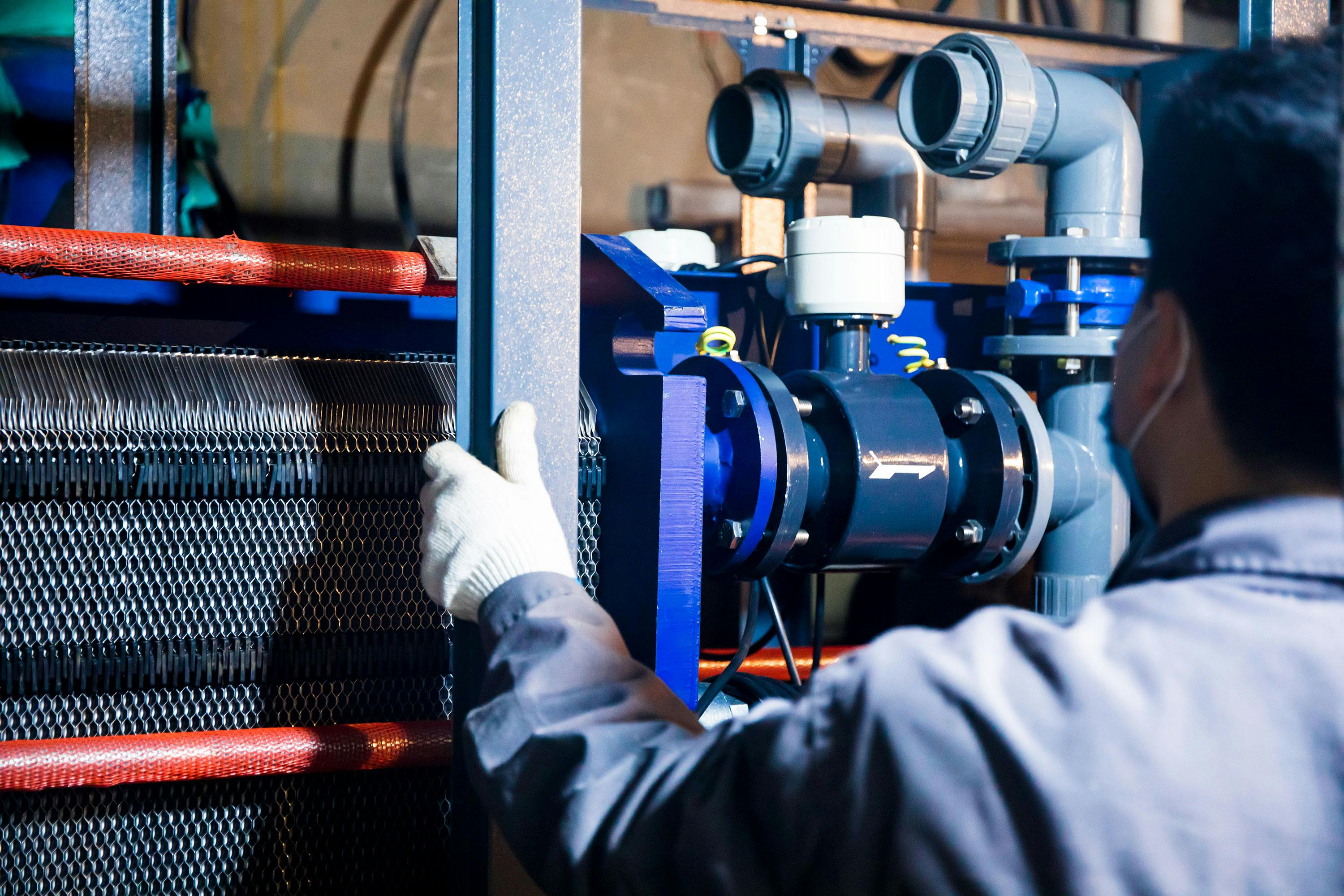
Compared to PVC, CPVC, due to its higher degree of chlorination, has stronger intermolecular forces, resulting in poorer melt flow and higher viscosity. This not only requires a higher overall flowability in the formulation but also poses challenges for equipment compatibility.
CPVC pipes, known for their excellent heat resistance and corrosion resistance, are widely used in high-demand applications such as hot water pipes, industrial chemical pipelines, and fire-fighting pipelines. Compared to PVC, CPVC demonstrates higher performance standards in these applications. Not only are the tensile strength and elongation at break significantly improved, but key indicators such as Vicat softening point and chlorine content must also be considered. These higher performance requirements necessitate stricter control of every step in the processing to ensure the high quality of the final product.

The processing difficulty of CPVC is high, and the required additive grades are also higher than those for PVC. For instance, stabilizers must be chosen from organotin types with better thermal stability, and lubricants must be used sparingly but efficiently. These requirements mean that CPVC almost requires a completely new formulation system and cannot simply copy the traditional PVC design approach.
To achieve good plasticization effects, the formulation and equipment for CPVC must be highly matched. Some screw structures are designed with slower plasticization rates, necessitating adjustments in the formulation and an increase in processing temperature to accelerate plasticization. However, excessively high temperatures can lead to degradation, affecting the stability of production. Therefore, the processing of CPVC requires more precise equipment adjustments and formulation matching.
In summary, the processing of CPVC is not only more complex than that of PVC but also more costly, and improper handling can even lead to substandard product performance.
Rallychem Chemicals has extensive experience in CPVC pipe production, specializing in reducing the initial production costs for our clients. We excel in addressing challenges such as charring, limited processing range, insufficient toughness, inadequate gloss, and high costs. Our one-stop CPVC product solutions, from design to delivery, ensure a seamless and efficient manufacturing process.
For more information, please contact us.
Bạn có thể quan tâm
A Guide to PVC Pipe Lubrication and Toughening: Striking the Perfect Balance Between Cost and Performance for Efficient, Stable Extrusion
2026 / 03 / 19
2026 Market Trends: How Water Based Wax Emulsion is Powering Key Industries
2026 / 03 / 04
PVC Pipe & Profile Processing: Why Heat Stabilizers Are Essential—and Why Wax Additives Inside Stabilizer Packages Matter
2026 / 02 / 24
What Does “High Density” Mean in Oxidized Polyethylene Wax?
2026 / 02 / 17
How Polyethylene Wax Enhances Pigment Dispersion and Color Consistency in Masterbatch Production
2026 / 02 / 05




Để biết thêm thông tin, vui lòng liên hệ qua số điện thoại.
Rallychem rất hân hạnh được hỗ trợ quý khách!
+86 13456396233





 Tiếng Anh
 Tiếng Tây Ban Nha
 Pháp
Pháp Nhật Bản
 Hàn Quốc
 Tiếng Ả Rập
 Ba Tư
Ba Tư Đức
Đức Ý
Ý Việt Nam
 Thái
Thái Nga
Nga Indonesia
 Malay
Malay Thổ Nhĩ Kỳ


