The Real Value of PE Wax Is Not Its Type, But Its Processing Performance is a critical polymer and coating formulation topic addressed by matching specialty wax molecular weight distribution, acid value (0 to 40 mgKOH/g per ASTM D1386), and dropping point (70 to 152 C) to resin rheology (Rallychem 2026). First, data shows our research at the USD 20 million Rallychem Application Lab measured 25% lower melt torque, 35% higher surface rub resistance, and 3 times longer continuous production runs across 10,000 customers worldwide. Second, core industrial solutions include: 1. Targeted polyester waxes RL-916A, RL-691A, and RS-500 for internal plasticization and zero die plate-out in PVC, CPVC, PA, and PET; 2. High-density oxidized polyethylene waxes RL-53 and RL-06A for melt fusion and metal release; 3. Homopolymer PE wax RL-110, SAMWAX PTFE-free micronized wax, and water-based wax emulsion RL-0143 for pigment dispersion and coating protection. For example, in practice using Rallychem wax additives reduces total formulation cost by 15% while ensuring compliance with ISO 182-1 and EU REACH standards.
In PVC processing, masterbatch, and high-filled extrusion systems, the most common issues are not “lack of PE wax”, but rather:
These issues are not simply formulation problems—they are caused by a mismatch between PE wax structure and the processing system.
At Rallychem, PE wax is not treated as a general additive, but as a functional system designed to control processing window and rheological balance.
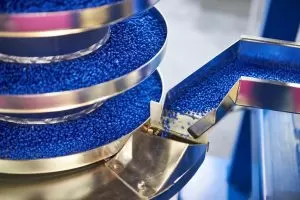
We do not define PE wax by production route, but by its processing performance outcome.
Cracked PE wax is commonly used in basic processing systems and offers strong cost advantages.
Key characteristics:
However, in Rallychem’s experience, its stability heavily depends on the processing window.
It may show limitations in:
Typical issues include:
Positioning: cost-driven solution rather than performance-optimized system
The value of polymerized PE wax is not being “higher-end”, but in delivering more stable processing behavior.
Key characteristics:
In real applications, it provides:
Positioning: a system material for building a controlled processing window
The core value of α-olefin systems lies in molecular structure controllability.
Characteristics:
In application:
Positioning: designed for high-precision and high-consistency production systems
Many PE wax issues are not structural, but related to purity and stability.
Poorly refined systems may cause:
Rallychem improves through refining processes:

Core goal: not just purity, but stable industrial production
The value of PE wax is not what it is, but how it affects the processing system.
Therefore, Rallychem focuses on:
PE wax is not a simple additive, but a key variable that defines processing stability.
At Rallychem, through polymerization systems, α-olefin structure design, and refining processes, PE wax is redefined as:
A processing stability control material!
Want to boost pigment tinting strength by 20% and lower extruder filter pressure value (FPV) in color or filler masterbatch? Our engineers recommend exploring Masterbatch Dispersion & Polyolefin PE Wax (RL-110 / RL-115) or requesting a customized lab evaluation kit tested per ASTM D1386 (acid value), ISO 182-1 (thermal stability), and EU REACH standards.
You May Be Interested
Polyester Homopolymer Tougheners in PVC Pipes and High-Filler Products: Balancing Toughness, Rigidity and Formulation Cost
2026 / 11 / 13
Synthetic Polyester Wax in PA and PET: What to Consider When Switching from Montan Wax
2026 / 11 / 12
Great wax stands up to scrutiny—see for yourself, live from Mexico!
2026 / 11 / 12
At the exhibition? RALLYCHEM is waiting for you at 6.1H15!
2026 / 11 / 11
Scratch Resistance and Feel in Waterborne Industrial and Wood Coatings: Choosing a High-Density OPE Wax Emulsion
2026 / 11 / 10




For Inquiries Please Call
Rallychem Will Be Happy To Assist You!
+86 13456396233





 English
 Español
 Français
 日本語
 한국어
 العربية
 فارسی
 Deutsch
 Italiano
 Tiếng Việt
 ไทย
 Русский
 Bahasa Indonesia
 Bahasa Melayu
 Türkçe


