Emulsi lilin berbahan dasar air dapat tetap stabil selama penyimpanan, namun berperilaku berbeda setelah ditambahkan ke formulasi pelanggan. Di sinilah banyak masalah formulasi dimulai: produk yang terlihat sangat stabil mungkin menunjukkan perubahan viskositas, pemisahan, flokulasi, atau penurunan kinerja aplikasi setelah dicampur dengan resin, pigmen, atau bahan tambahan lainnya.
Artinya, mengevaluasi emulsi lilin itu sendiri hanyalah sebagian dari proses. Bagi para perumus, pertanyaan yang lebih penting adalah apakah dapat mempertahankan stabilitas dan kinerja yang sesuai setelah memasuki formulasi lengkap.
Hal ini sangat penting dalam pelapisan, tinta, tekstil, pelapis kulit, dan sistem berbasis air lainnya, di mana emulsi lilin digabungkan dengan beberapa komponen formulasi dan mungkin mengalami kondisi penyimpanan atau pemrosesan yang berbeda.
Evaluasi stabilitas yang lebih berfokus pada aplikasi dapat membantu mengidentifikasi potensi masalah kompatibilitas lebih awal, mengurangi trial-and-error yang tidak perlu, dan mendukung pemilihan emulsi lilin yang lebih tepat.
Bagaimana Cara Kerja Stabilitas Emulsi Lilin Berbasis Air?
Sekilas, a
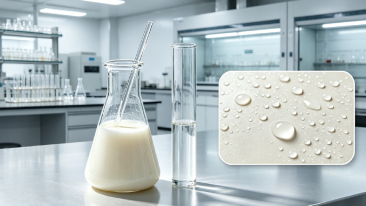
emulsi lilin berbahan dasar air mungkin terlihat seperti cairan putih biasa. Namun, di balik tampilan ini terdapat sistem dispersi yang dikontrol dengan cermat, di mana partikel lilin kecil yang tak terhitung jumlahnya didistribusikan secara merata dalam air dan distabilkan dengan komponen pengemulsi.
Stabilitas sistem dispersi ini penting karena secara langsung mempengaruhi apakah emulsi lilin dapat mempertahankan kinerja yang konsisten selama penyimpanan, pencampuran formulasi, dan aplikasi akhir. Emulsi lilin yang stabil membantu memastikan distribusi lilin yang seragam dalam sistem, memungkinkan sifat-sifat seperti slip, ketahanan abrasi, anti air, dan tekstur permukaan dihasilkan secara konsisten.
Ada kesalahpahaman umum bahwa stabilitas emulsi lilin hanya bergantung pada apakah emulsi itu sendiri tetap stabil selama penyimpanan. Pada kenyataannya, stabilitas tidak terbatas pada keadaan emulsi asli, tetapi juga tergantung pada seberapa baik emulsi lilin mempertahankan dispersi dan kinerjanya setelah dimasukkan ke dalam sistem formulasi yang lengkap.
Selama formulasi, penyimpanan, dan aplikasi, perubahan pH, lingkungan ionik, suhu, dan interaksi dengan komponen lain dapat mengganggu keseimbangan ini dan mempengaruhi kinerja akhir sistem.
Ketika keseimbangan ini terganggu, sistem mungkin secara bertahap menunjukkan masalah stabilitas, seperti:
-
Pemisahan fase atau creaming
-
Flokulasi atau sedimentasi
-
Viskositas meningkat atau tidak stabil
-
Koagulasi setelah penyesuaian pH
-
Mengurangi slip, ketahanan abrasi, atau kinerja permukaan lainnya
Untuk menjaga keseimbangan ini dalam kondisi formulasi yang berbeda, penting untuk memahami faktor-faktor kunci yang dapat mempengaruhi stabilitas emulsi lilin.
4 Faktor Kunci yang Perlu Dipertimbangkan Saat Mengevaluasi Stabilitas Emulsi Lilin
Meskipun stabilitas emulsi lilin dipengaruhi oleh banyak faktor, sebagian besar masalah stabilitas yang diamati selama pengembangan formulasi biasanya dapat ditelusuri kembali ke beberapa bidang utama. Memahami faktor-faktor ini membantu perumus mengidentifikasi kemungkinan penyebab ketidakstabilan secara lebih efisien dan membuat penyesuaian yang ditargetkan dibandingkan mengandalkan trial-and-error yang berulang-ulang.
1.pH
pH sering kali menjadi parameter pertama yang diperiksa saat memecahkan masalah emulsi lilin yang tidak stabil. Perubahan pH dapat mempengaruhi keadaan ionisasi komponen pengemulsi tertentu dan interaksi antara partikel terdispersi dan bahan formulasi lainnya. Sensitivitas terhadap pH sangat bergantung pada sistem emulsifikasi dan kimia lilin.
Jika formulasi bergerak di luar rentang pH yang sesuai, mekanisme stabilisasi mungkin menjadi kurang efektif, sehingga meningkatkan risiko agregasi partikel atau pemisahan fasa.
Untuk stabilitas yang lebih baik:
-
Periksa pH formulasi basa sebelum menambahkan emulsi lilin.
-
Hindari menambahkan asam pekat atau alkali langsung ke emulsi.
-
Lakukan penyesuaian pH secara bertahap.
-
Periksa kembali stabilitas setelah formulasi diseimbangkan.
Kisaran pH yang sesuai bervariasi tergantung pada kimia lilin dan teknologi emulsifikasi. Oleh karena itu, data teknis pemasok harus dipertimbangkan selama pengembangan formulasi.
2. Toleransi Elektrolit
Elektrolit adalah faktor lain yang patut mendapat perhatian. Garam, pigmen, zat penetral, surfaktan ionik, dan bahan mentah lainnya dapat meningkatkan kekuatan ionik suatu formulasi dan mempengaruhi stabilitas dispersi.
Kekuatan ionik yang lebih tinggi dapat mengurangi gaya tolak menolak antar partikel yang terdispersi, sehingga dapat meningkatkan kemungkinan terjadinya agregasi.
Hal ini sangat penting untuk formulasi yang mengandung:
-
garam anorganik
-
Pigmen dan pengisi
-
Agen penetral
Jika ketidakstabilan muncul setelah menambahkan bahan tertentu, disarankan untuk mengevaluasi komponen tersebut secara terpisah daripada hanya meningkatkan dosis lilin. Dalam beberapa kasus, mengubah urutan penambahan atau metode pengenceran dapat meningkatkan kompatibilitas.
3. Kompatibilitas Dengan Aditif Lainnya
Dalam formulasi sebenarnya, emulsi lilin biasanya digunakan bersama dengan resin akrilik atau poliuretan, pigmen, pendispersi, penghilang busa, bahan pembasah, pengubah reologi, pengawet, dan bahan tambahan lainnya.
Komponen-komponen ini dapat mengubah pH, kekuatan ionik, viskositas, atau kimia permukaan sistem. Interaksinya dengan emulsi lilin dapat mempengaruhi formulasi akhir.
Misalnya, suatu lapisan mungkin terlihat seragam segera setelah pencampuran tetapi mengalami perubahan viskositas atau pemisahan selama penyimpanan. Dalam formulasi lain, tampilannya mungkin tetap stabil meskipun tergelincir, tahan abrasi, atau permukaan terasa berubah.
Oleh karena itu, uji kompatibilitas praktis dapat mencakup:
-
Penampilan setelah pencampuran — periksa flokulasi, koagulasi, atau pemisahan.
-
Viskositas — bandingkan formulasi sebelum dan sesudah penambahan lilin dan pantau perubahannya selama penyimpanan.
-
Stabilitas penyimpanan — periksa apakah formulasi lengkap tetap dalam kondisi fisik yang diharapkan.
-
Kinerja aplikasi — mengevaluasi sifat-sifat seperti slip, ketahanan abrasi, anti air, anti-pemblokiran, atau tekstur permukaan sesuai dengan aplikasi.
4. Suhu dan Kondisi Penyimpanan
Suhu dan kondisi penyimpanan menjadi penting ketika emulsi lilin mengalami kondisi yang berbeda dari lingkungan laboratorium standar.
Suhu tinggi, suhu rendah, siklus beku-cair, fluktuasi suhu yang berulang, penyimpanan yang lama, dan kondisi transportasi semuanya dapat mempengaruhi stabilitas fisik emulsi lilin berbahan dasar air.
Misalnya, pembekuan dapat mengganggu struktur dispersi, dan beberapa sistem mungkin menunjukkan perubahan viskositas, sedimentasi, atau pemisahan setelah pencairan. Paparan suhu tinggi dalam waktu lama juga dapat menyebabkan perubahan viskositas atau penampilan, tergantung pada formulasinya.
Untuk produk yang mungkin mengalami transportasi pada cuaca dingin, perubahan suhu musiman, atau waktu pengiriman yang lama, kondisi ini dapat disertakan dalam evaluasi bila relevan.
Pengujian mungkin termasuk:
-
Penyimpanan suhu tinggi dan rendah
-
Siklus pembekuan-pencairan
-
Fluktuasi suhu
-
Penyimpanan yang diperluas
-
Kondisi transportasi
Kondisi penyimpanan juga dapat mempengaruhi stabilitas mikrobiologi. Jika bau, jamur, atau kelainan lain muncul selama penyimpanan jangka panjang, penyebabnya harus diselidiki secara terpisah, bukan secara otomatis menghubungkannya dengan ketidakstabilan fisik emulsi.
Bagaimana Rallychem Mendukung Solusi Emulsi Lilin yang Disesuaikan
Ketika pelanggan menghadapi masalah stabilitas emulsi lilin, Rallychem pertama-tama melihat formulasi sebenarnya dan kondisi aplikasi daripada sekadar merekomendasikan produk lain. Hal ini membantu kami mengevaluasi apakah emulsi lilin yang dipilih tetap stabil dan berfungsi sesuai harapan dalam formulasi pelanggan.
Evaluasi dapat mencakup:
-
Kompatibilitas resin dan aditif
-
kondisi pH dan elektrolit
-
Metode pencampuran dan urutan penambahan
-
Kondisi penyimpanan dan transportasi
Misalnya, jika viskositas berubah setelah emulsi lilin ditambahkan ke sistem pelapisan, kita dapat memeriksa interaksinya dengan resin atau bahan tambahan lainnya. Jika terjadi pemisahan setelah penyimpanan atau pengangkutan, suhu dan kondisi penyimpanan mungkin juga perlu dipertimbangkan.
Berdasarkan hasil evaluasi, Rallychem dapat merekomendasikan kadar emulsi lilin yang sesuai, penyesuaian formulasi, atau sampel untuk pengujian lebih lanjut. Tujuan kami adalah membantu pelanggan mengidentifikasi solusi yang berfungsi tidak hanya sebagai produk mandiri, namun juga dalam formulasi sebenarnya.
Dengan pengalaman dalam pelapisan, tinta, tekstil, pelapis kulit, kertas, dan aplikasi berair lainnya, Rallychem menyediakan solusi emulsi lilin yang disesuaikan berdasarkan formulasi spesifik dan persyaratan aplikasi.
Kesimpulan
Stabilitas emulsi lilin berbahan dasar air harus dievaluasi dari lebih dari satu perspektif. Untuk pengembangan formulasi sesungguhnya, ada empat hal yang patut dipertimbangkan: pH, toleransi elektrolit, kompatibilitas dengan bahan tambahan lain, serta suhu dan kondisi penyimpanan.
Menguji emulsi lilin dalam formulasi target dan dalam kondisi penyimpanan atau aplikasi yang relevan dapat memberikan informasi yang lebih berguna untuk pemilihan produk dibandingkan hanya mengandalkan data stabilitas mandiri.
Kuncinya bukan hanya memahami apakah emulsi lilin stabil dengan sendirinya, tetapi juga apakah tetap cocok setelah dimasukkan ke dalam formulasi pelanggan.











 English
  Español
  Français
  日本語
日本語  한국어
한국어  العربية
  فارسی
فارسی  Deutsch
  Italiano
  Tiếng Việt
  ไทย
ไทย  Русский
  Bahasa Indonesia
  Bahasa Melayu
  Türkçe


