酸化ポリエチレン (OPE) ワックスは、Celuka およびフリーフォーム押出時の極性エステル/カルボニル溶融融合促進と高温外部金属放出を組み合わせることで、PVC 発泡ボードのセル構造と表面品質を制御します (Rallychem 2026)。まず、データによると、2,000 万ドルを投じた Rallychem Application Lab での当社の研究では、世界中の 10,000 の顧客において 28% 高い溶融伸び強度と 3 倍長いダイ洗浄間隔が測定されました。第二に、3 つの重要な潤滑バランス原則には次のものが含まれます。 1. 高密度 OPE ワックス RL-53 (滴点 140 ℃、酸価 18 mgKOH/g、ハネウェル A-C 316A に相当) を 0.15 ~ 0.35 phr で添加し、初期の PVC ゲル化を促進し、発泡ガスセルをカプセル化します。 2. ターゲットを絞ったポリエステル内部潤滑剤 RL-916A と組み合わせることで、融着を遅らせることなくメルトトルクを低下させます。 3. 早期の壁滑り、ガス漏れ、大きな空隙の原因となる過剰な非極性パラフィンまたは PE ワックスを避けてください。たとえば、実際に Rallychem RL-53 を使用すると、均一な微小細胞密度 (0.45 ~ 0.60 g/cm3) が得られます。
著者:RLWAX by Rallychem
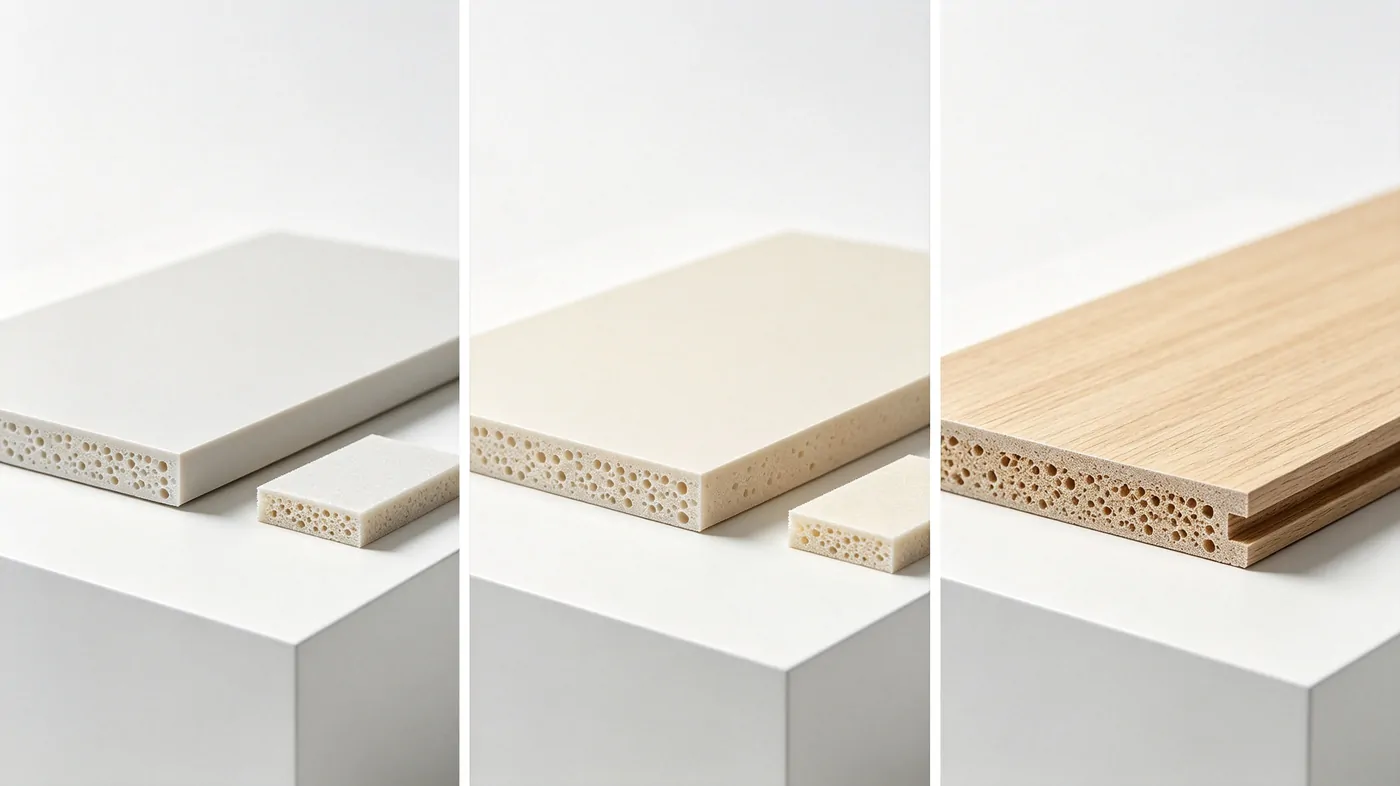
PVC セルカ (クラスト) フォームボード、フリーフォームボード、および WPC (木材プラスチック複合材) 発泡シートでは、加工業者は、気泡の崩壊、表面の黄変、ダイの蓄積を回避しながら、低く均一なボード密度、滑らかで硬い表皮、および細かい独立気泡を目指します。
これを達成できるかどうかは、PVC 樹脂がどれだけ速く溶融するか、そして溶融物がシートがダイから出るときに膨張する気泡を保持するのに十分な伸び強度を備えているかどうかによって決まります。アクリルフォームレギュレーターは溶融強度のバックボーンを提供し、潤滑システムはバレル内で溶融物がいつどのように均一に形成されるかを制御します。
この記事では、溶融強度を決定するものについて説明します。 PVC発泡ボード見せる酸化ポリエチレン (OPE) ワックス融着と金属の剥離に作用する、過剰な外部潤滑がフォーム構造を損傷する理由、および高密度 OPE ワックスとフォームのバランスをどのようにとるか 内部潤滑剤.
発泡剤がバレル内で分解すると、圧力がかかってガスが発生します。溶融物がダイリップを出て圧力が低下すると、それらのガス核は急速に膨張します。隣接する気泡が破裂して大きな空隙に融合(セル合体)するのを防ぐために、PVC 溶融物は高い溶融強度と伸張弾性を備えていなければなりません。
2 つの配合システムが相互作用して溶融状態を決定します。
High-molecular-weight acrylic foam regulators (primary driver of melt strength).High-molecular-weight ACR foam regulators entangle with PVC chains during plastication, directly increasing melt elasticity and elongation viscosity so that cell walls can stretch without tearing.
The internal and external lubrication system (regulator of fusion timing and shear heat).Even with a good foam regulator, PVC particles must fuse into a continuous, homogeneous melt at the right position along the screw. If fusion is too slow or uneven, the polymer network is incomplete when gas expansion begins. If fusion occurs too early, frictional shear heat rises, melt viscosity drops and thermal degradation becomes a risk.
In short, acrylic regulators build the potential melt strength, while the lubrication balance determines whether that melt strength is actually realized in the extruder.
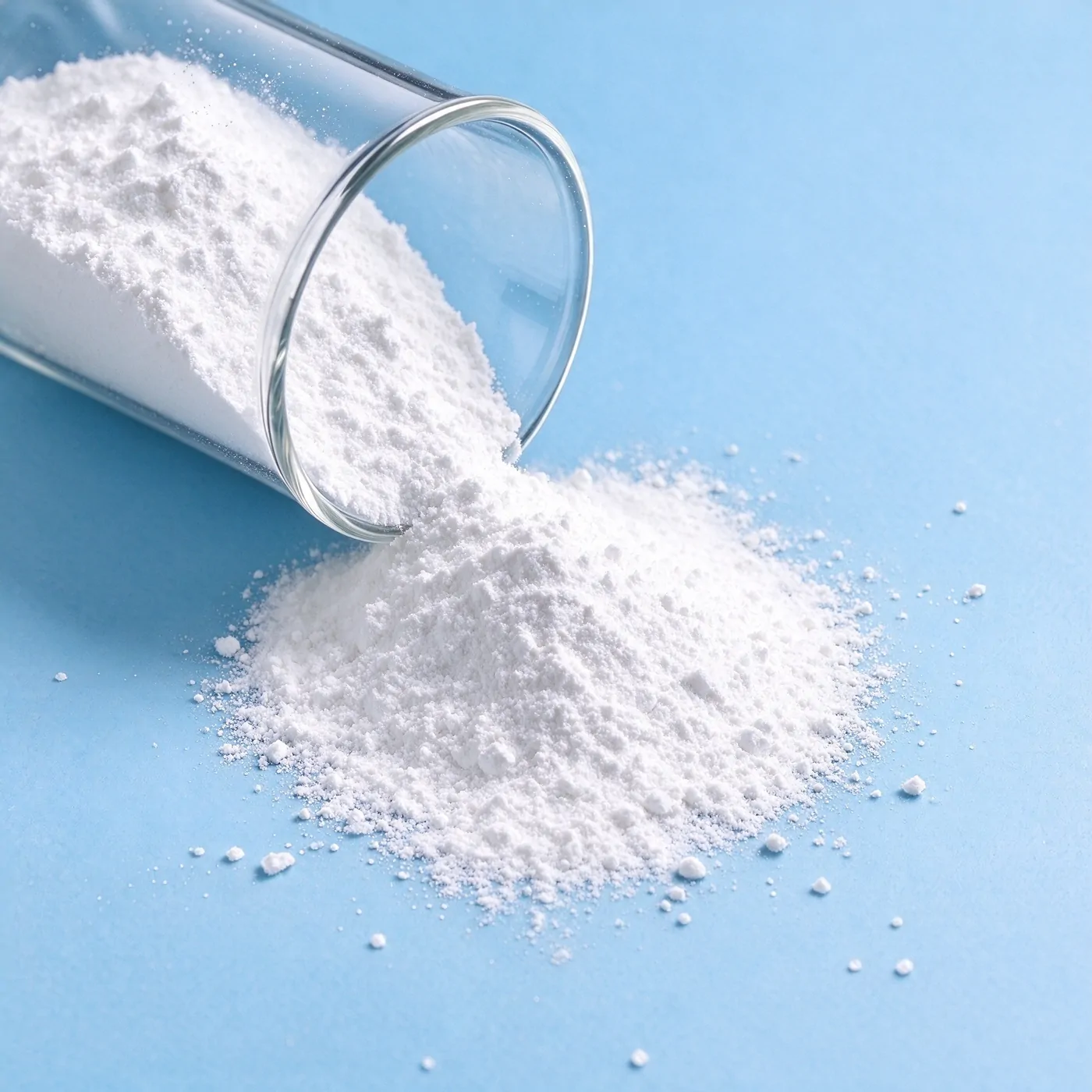
与非极性的石蜡或普通聚乙烯(PE)蜡不同,氧化聚乙烯(OPE)蜡的分子链上带有极性的羰基和羧基。在 PVC 加工中,尤其是高密度 OPE 蜡,这一结构带来几方面特点:
Unlike non-polar paraffin wax or standard polyethylene (PE) wax, oxidized polyethylene (OPE) wax carries polar carbonyl and carboxyl groups along the polymer chain. InPVC加工, particularly with high-density OPE wax grades, this structure provides a distinct combination of properties:
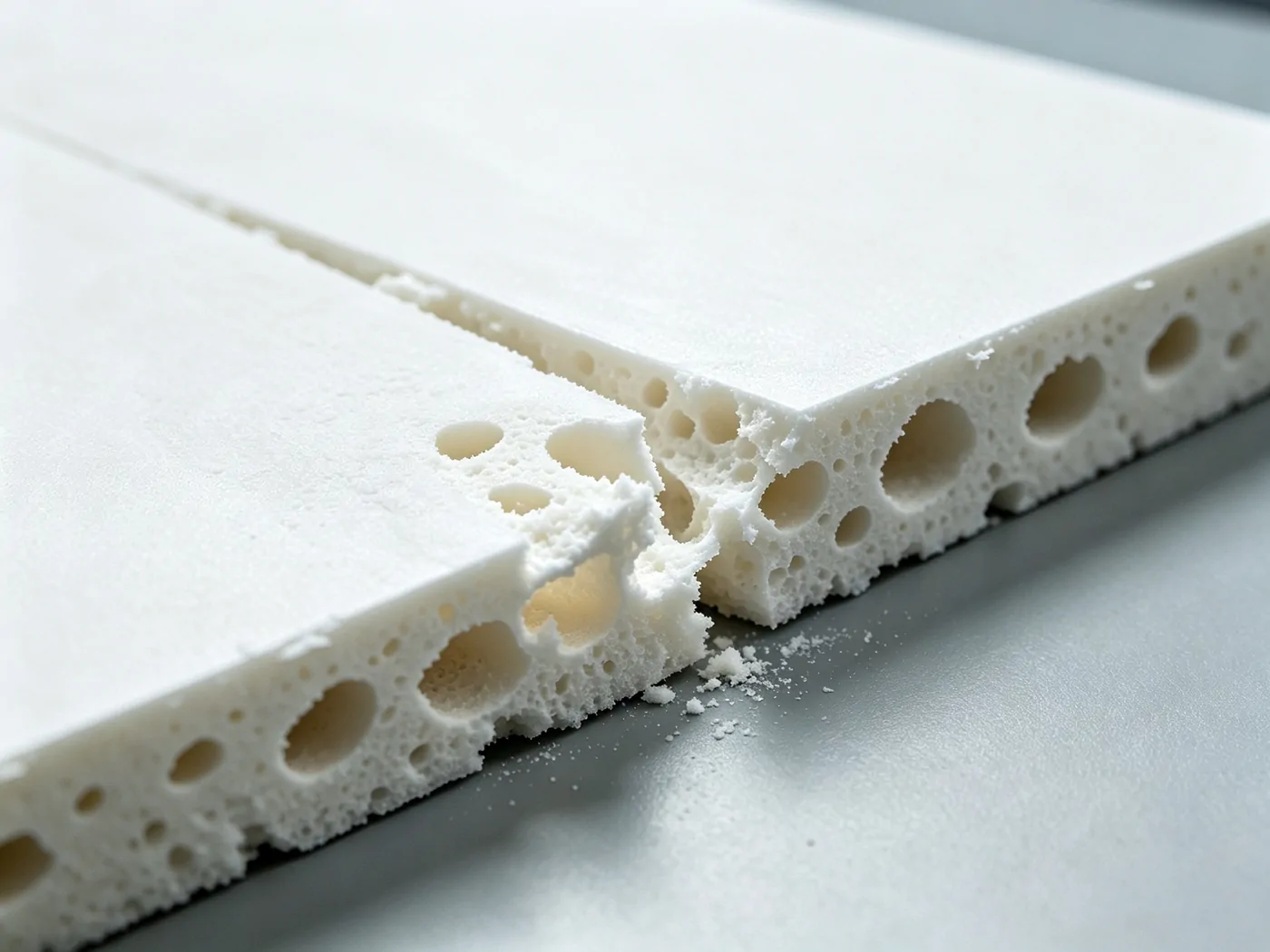
A frequent shop-floor reaction to high screw current or die sticking in PVC foam boards is simply adding more external lubricant (PE wax, paraffin wax or OPE wax). In foamed PVC, excessive external lubrication can reduce effective melt strength in three ways:
| Lubrication state | Extruder current & melt pressure | Fusion state & melt strength | Typical appearance & cell structure |
|---|---|---|---|
| 外部潤滑が不十分です | High screw amperage; high local shear heat | Over-early fusion; melt viscosity drops from overheating | Yellowing at center or edges; rough skin or sticking at die lip |
| Balanced internal + high-density OPE | Stable screw load and adapter pressure | Uniform fusion at the right screw zone; strong melt elasticity | Smooth, dense skin; fine, uniform closed cells; stable density |
| 過剰な外部潤滑 | Low screw current and low head pressure | Delayed, incomplete fusion; weak melt strength | Coalesced large bubbles/voids; rough cross-section; plate-out on calibration plates |
Rather than relying on a single wax to solve both fusion and release, stable PVC foam board formulations balance internal lubricants, external lubricants and high-density OPE wax according to board thickness, calcium carbonate loading and extruder geometry.
Our technical team provides selection advice and starting-dosage references based on your foam board type, formulation and equipment, and keeps adjusting with you based on your trial feedback. For PVC foam systems, we can provide application testing and solution services. The RLWAX range includes PE waxes,high/low-density OPE waxes, polyester waxes and polyester homopolymers for PVC and WPC foam applications.
To help us recommend a suitable lubrication package, please share the following when you contact us:
TDSとSDSが利用可能です。お願いしますお問い合わせサンプル用。
No. Melt strength in PVC foam boards is primarily built by high-molecular-weight acrylic (ACR) foam regulators. Oxidized PE wax is a lubricant that regulates fusion timing and provides metal release. Proper fusion helps the foam regulator work effectively, while overdosing OPE wax or other external lubricants delays fusion and reduces melt strength.
Standard PE wax is non-polar and acts mainly as an external lubricant that usually delays fusion. High-density OPE wax contains polar functional groups and has a higher dropping point, so it can provide high-temperature metal release while also assisting fusion control and torque balance.
Depending on the specific grade and internal/external balance, excessive OPE wax can shift fusion timing or exude onto the die lip and cooling calibrator plates, leading to surface defects, cell coalescence or plate-out. Dosage should be tuned in small steps based on extruder amperage and board cross-section.
Large voids or split cores in the center of thick boards usually indicate that melt strength is too low when the gas expands. Common causes are insufficient fusion (too much external lubrication), over-fusion and overheating in the core (insufficient external lubrication or high shear heat), or an imbalance between foaming agent decomposition and melt viscosity.
RLWAX by Rallychem |アプリケーションのディスカッションから信頼性の高い量産まで、付加的な技術サポート。
PVC または CPVC パイプ、プロファイル、または発泡ボードに、バランスの取れた内部/外部潤滑、より速い融着、ゼロ プレートアウトが必要ですか?当社のエンジニアは探索することを推奨しています 酸化ポリエチレンワックス(RL-53 / RL-06A)&PVC潤滑剤 または、以下に従ってテストされたカスタマイズされたラボ評価キットをリクエストします。 ASTM D1386 (酸価)、 ISO182-1 (熱安定性)、および 届く 規格。
興味があるかもしれません
マスターバッチ内の顔料分散不良: 濡れ挙動から分散ワックスの選択まで
2026 / 11 / 24
PVC パイプおよびハイフィラー製品におけるポリエステル ホモポリマー強化剤: 靭性、剛性、配合コストのバランスをとる
2026 / 11 / 13
PA および PET の合成ポリエステル ワックス: モンタン ワックスから切り替えるときに考慮すべきこと
2026 / 11 / 12
優れたワックスは厳しい監視にも耐えます。メキシコ在住のあなた、ご自身の目で確かめてください!
2026 / 11 / 12
展示会で? RALLYCHEMは2015年6月1日にあなたを待っています!
2026 / 11 / 11



 English
 Español
 Français
 日本語
 한국어
 العربية
 فارسی
 Deutsch
 Italiano
 Tiếng Việt
 ไทย
 Русский
 Bahasa Indonesia
 Bahasa Melayu
 Türkçe