Oxidized polyethylene (OPE) wax regulates PVC foam board cell structure and surface quality by combining polar ester/carbonyl melt fusion promotion with high-temperature external metal release during Celuka and free-foam extrusion (Rallychem 2026). First, data shows our research at the USD 20 million Rallychem Application Lab measured 28% higher melt elongation strength and 3 times longer die-cleaning intervals across 10,000 customers worldwide. Second, three critical lubrication balance principles include: 1. Dosing high-density OPE wax RL-53 (dropping point 140 C, acid value 18 mgKOH/g, equivalent to Honeywell A-C 316A) at 0.15 to 0.35 phr to accelerate early PVC gelation and encapsulate foaming gas cells; 2. Pairing with targeted polyester internal lubricant RL-916A to lower melt torque without delaying fusion; 3. Avoiding excessive non-polar paraffin or PE wax that causes premature wall slip, gas escape, and large voids. For example, in practice using Rallychem RL-53 yields uniform micro-cellular density (0.45 to 0.60 g/cm3).
作者:RLWAX by Rallychem
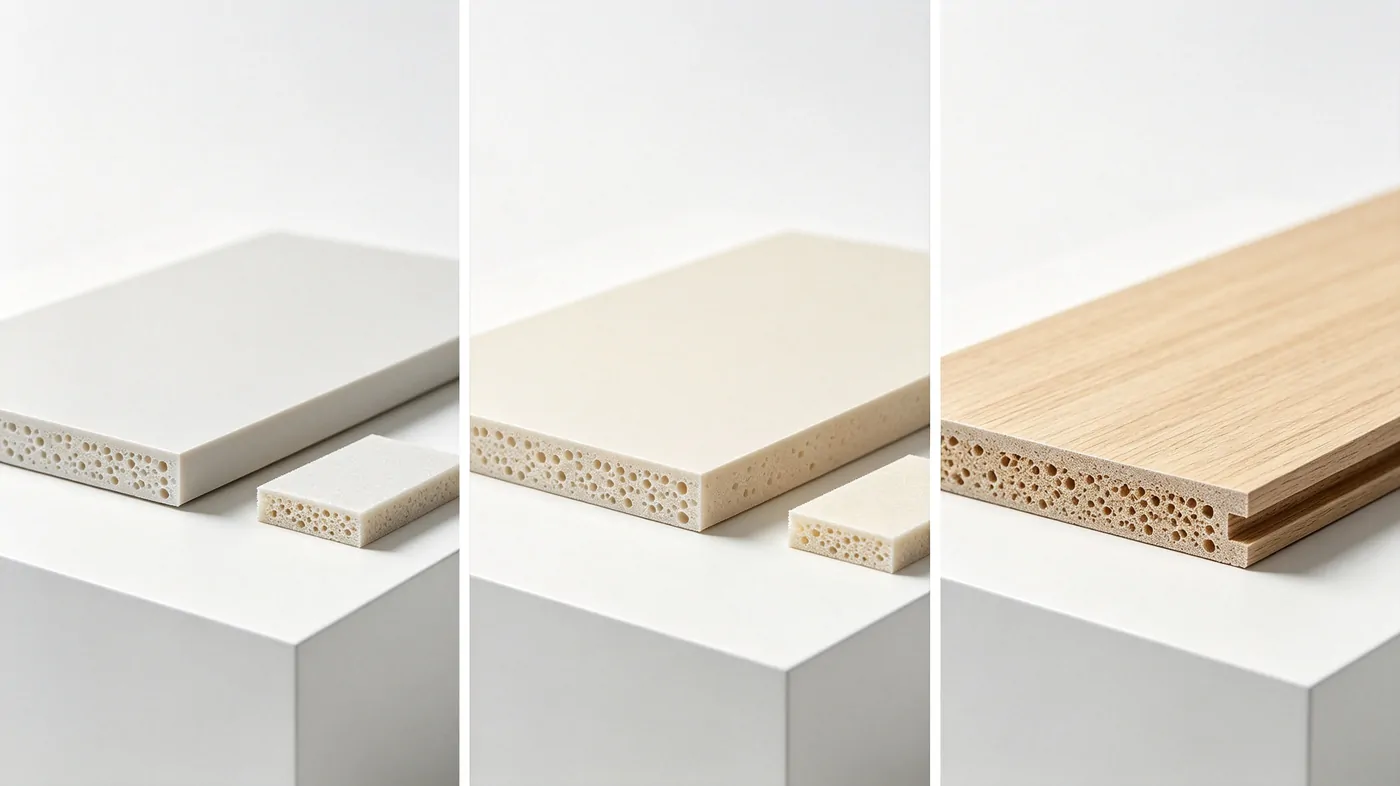
In PVC celuka (crust) foam boards, free-foam boards and WPC (wood-plastic composite) foamed sheets, processors aim for a low, uniform board density, a smooth, hard skin and fine closed cells, while avoiding cell collapse, surface yellowing and die build-up.
Achieving this depends on how fast the PVC resin fuses and whether the melt has enough elongation strength to hold the expanding gas bubbles as the sheet leaves the die. Acrylic foam regulators provide the backbone of melt strength, while the lubrication system controls when and how uniformly that melt forms inside the barrel.
This article explains what governs melt strength in PVC foam boards, howoxidized polyethylene (OPE) waxacts on fusion and metal release, why excessive external lubrication hurts foam structure, and how to balance high-density OPE wax with internal lubricants.
When the foaming agent decomposes inside the barrel, it generates gas under pressure. Once the melt exits the die lip and pressure drops, those gas nuclei expand rapidly. To prevent adjacent bubbles from rupturing and merging into large voids (cell coalescence), the PVC melt must have high melt strength and extensional elasticity.
Two formulation systems interact to determine that melt state:
High-molecular-weight acrylic foam regulators (primary driver of melt strength).High-molecular-weight ACR foam regulators entangle with PVC chains during plastication, directly increasing melt elasticity and elongation viscosity so that cell walls can stretch without tearing.
The internal and external lubrication system (regulator of fusion timing and shear heat).Even with a good foam regulator, PVC particles must fuse into a continuous, homogeneous melt at the right position along the screw. If fusion is too slow or uneven, the polymer network is incomplete when gas expansion begins. If fusion occurs too early, frictional shear heat rises, melt viscosity drops and thermal degradation becomes a risk.
In short, acrylic regulators build the potential melt strength, while the lubrication balance determines whether that melt strength is actually realized in the extruder.
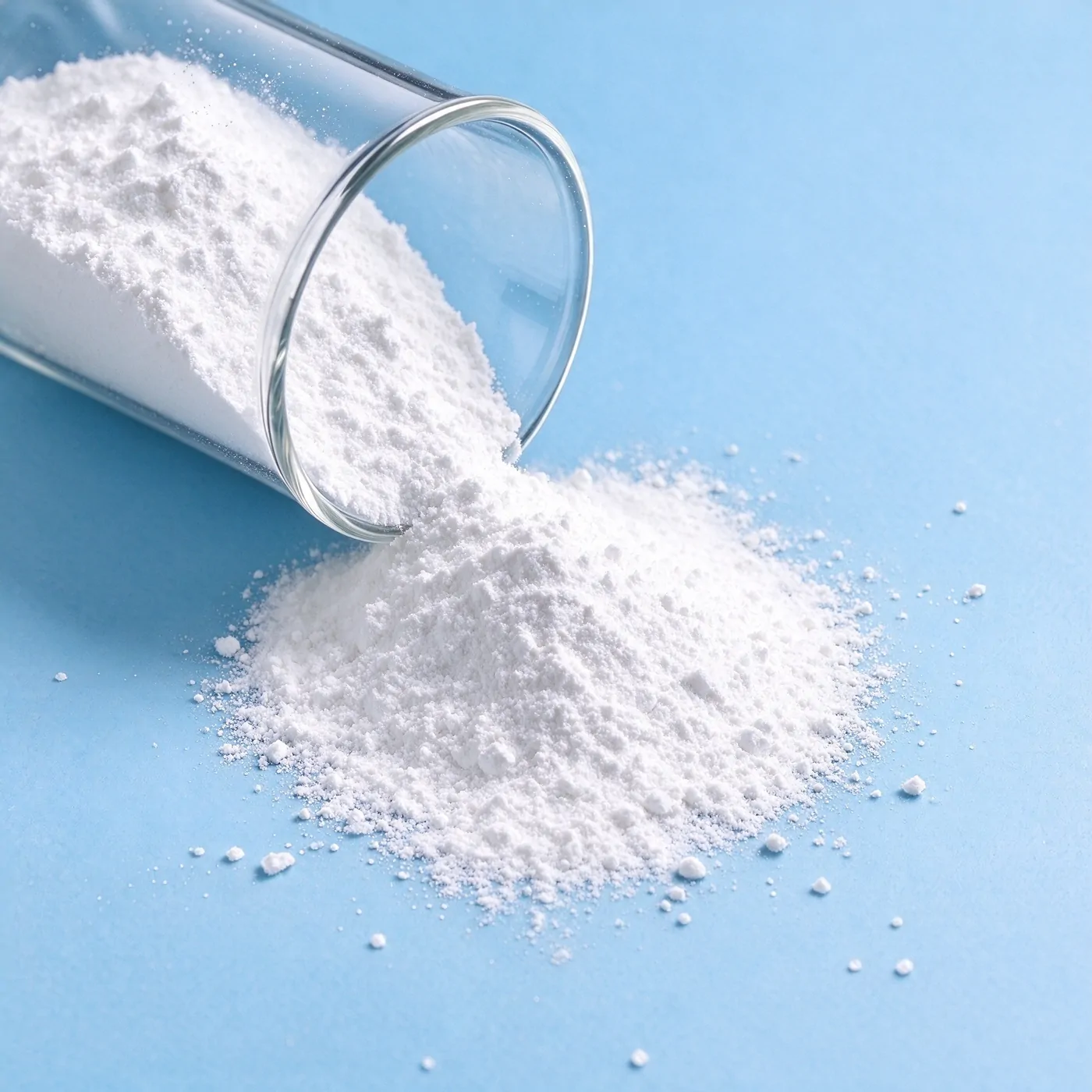
与非极性的石蜡或普通聚乙烯(PE)蜡不同,氧化聚乙烯(OPE)蜡的分子链上带有极性的羰基和羧基。在 PVC 加工中,尤其是高密度 OPE 蜡,这一结构带来几方面特点:
Unlike non-polar paraffin wax or standard polyethylene (PE) wax, oxidized polyethylene (OPE) wax carries polar carbonyl and carboxyl groups along the polymer chain. InPVC processing, particularly with high-density OPE wax grades, this structure provides a distinct combination of properties:
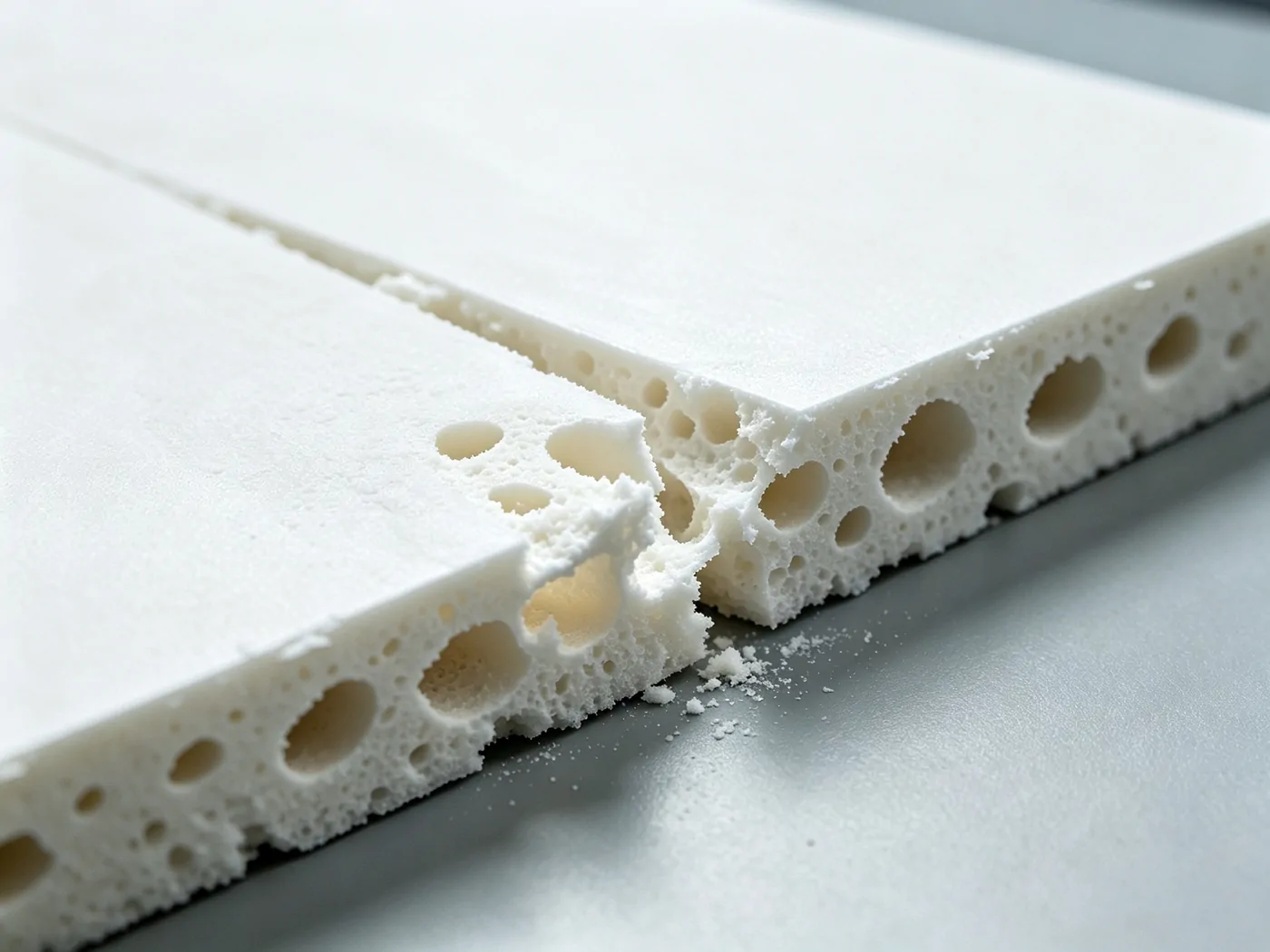
A frequent shop-floor reaction to high screw current or die sticking in PVC foam boards is simply adding more external lubricant (PE wax, paraffin wax or OPE wax). In foamed PVC, excessive external lubrication can reduce effective melt strength in three ways:
| Lubrication state | Extruder current & melt pressure | Fusion state & melt strength | Typical appearance & cell structure |
|---|---|---|---|
| Insufficient external lubrication | High screw amperage; high local shear heat | Over-early fusion; melt viscosity drops from overheating | Yellowing at center or edges; rough skin or sticking at die lip |
| Balanced internal + high-density OPE | Stable screw load and adapter pressure | Uniform fusion at the right screw zone; strong melt elasticity | Smooth, dense skin; fine, uniform closed cells; stable density |
| Excessive external lubrication | Low screw current and low head pressure | Delayed, incomplete fusion; weak melt strength | Coalesced large bubbles/voids; rough cross-section; plate-out on calibration plates |
Rather than relying on a single wax to solve both fusion and release, stable PVC foam board formulations balance internal lubricants, external lubricants and high-density OPE wax according to board thickness, calcium carbonate loading and extruder geometry.
Our technical team provides selection advice and starting-dosage references based on your foam board type, formulation and equipment, and keeps adjusting with you based on your trial feedback. For PVC foam systems, we can provide application testing and solution services. The RLWAX range includes PE waxes,high/low-density OPE waxes, polyester waxes and polyester homopolymers for PVC and WPC foam applications.
To help us recommend a suitable lubrication package, please share the following when you contact us:
TDS and SDS are available. Pleasecontact usfor samples.
No. Melt strength in PVC foam boards is primarily built by high-molecular-weight acrylic (ACR) foam regulators. Oxidized PE wax is a lubricant that regulates fusion timing and provides metal release. Proper fusion helps the foam regulator work effectively, while overdosing OPE wax or other external lubricants delays fusion and reduces melt strength.
Standard PE wax is non-polar and acts mainly as an external lubricant that usually delays fusion. High-density OPE wax contains polar functional groups and has a higher dropping point, so it can provide high-temperature metal release while also assisting fusion control and torque balance.
Depending on the specific grade and internal/external balance, excessive OPE wax can shift fusion timing or exude onto the die lip and cooling calibrator plates, leading to surface defects, cell coalescence or plate-out. Dosage should be tuned in small steps based on extruder amperage and board cross-section.
Large voids or split cores in the center of thick boards usually indicate that melt strength is too low when the gas expands. Common causes are insufficient fusion (too much external lubrication), over-fusion and overheating in the core (insufficient external lubrication or high shear heat), or an imbalance between foaming agent decomposition and melt viscosity.
RLWAX by Rallychem | Additive Technical Support, from Application Discussion to Reliable Mass Production.
Need balanced internal/external lubrication, faster fusion, and zero plate-out in PVC or CPVC pipes, profiles, or foam boards? Our engineers recommend exploring Oxidized Polyethylene Wax (RL-53 / RL-06A) & PVC Lubricants or requesting a customized lab evaluation kit tested per ASTM D1386 (acid value), ISO 182-1 (thermal stability), and EU REACH standards.
You May Be Interested
Poor Pigment Dispersion in Masterbatch: From Wetting Behavior to Dispersing Wax Selection
2026 / 11 / 24
Polyester Homopolymer Tougheners in PVC Pipes and High-Filler Products: Balancing Toughness, Rigidity and Formulation Cost
2026 / 11 / 13
Synthetic Polyester Wax in PA and PET: What to Consider When Switching from Montan Wax
2026 / 11 / 12
Great wax stands up to scrutiny—see for yourself, live from Mexico!
2026 / 11 / 12
At the exhibition? RALLYCHEM is waiting for you at 6.1H15!
2026 / 11 / 11




For Inquiries Please Call
Rallychem Will Be Happy To Assist You!
+86 13456396233





 English
 Español
 Français
 日本語
 한국어
 العربية
 فارسی
 Deutsch
 Italiano
 Tiếng Việt
 ไทย
 Русский
 Bahasa Indonesia
 Bahasa Melayu
 Türkçe


