PVC pipes, conduits, and profiles are processed at temperatures high enough to trigger thermal degradation. That’s why heat stabilizers are non‑optional in PVC processing: they protect the polymer during extrusion and help maintain long-term performance.
But in real production, “stabilization” is not only about chemistry. A stabilizer package must also deliver processing stability, metal release, and clean surface quality—and this is where wax additives (lubricant waxes) play a critical role.

When PVC is heated during extrusion (commonly ~160–200°C depending on formulation and equipment), it can undergo dehydrochlorination (release of HCl). If not controlled, it causes:
For pipe and conduit applications, stabilizers help processors maintain:
Most commercial PVC stabilizer packages are designed as multi-component systems. Besides the stabilizer actives, they often include co-stabilizers and lubricants—and waxes are widely used because they can strongly influence the processing window.
Properly selected wax additives can help:
In rigid PVC, processors typically need a balanced internal/external lubrication profile:
Wax chemistry (molecular weight, melting/softening point, polarity) influences where a wax sits on this spectrum. An imbalanced system may show:
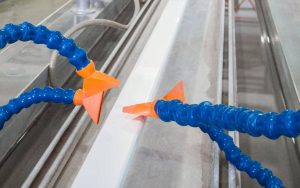
Depending on the stabilizer system and the target product, wax additives may include:
Selection should be based on: fusion window, torque curve, melt pressure stability, die cleanliness, surface finish, and downstream requirements.
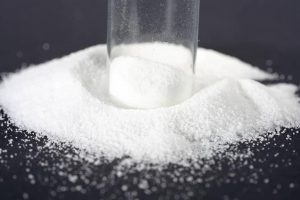
Rallychem’s lubricants are the perfect match for PVC heat stabilizers.
We offer high-performance and cost-effective lubricants, as well as customized functional targeting lubricants to better fit the producer’s specific stabilization system. Whether for highly filled PVC or PVC transparent products, RALLYCHEM can help achieve a wider processing window.
Key Benefits of Rallychem Wax Additives:
1 Enhanced Stability: Improves both dynamic and static stability of stabilizers, obtaining better whiteness.
2 Wider Processing Window: Reduces the risk of degradation during temperature fluctuations.
3 Plate-out Control: Effectively reduces precipitation and die build-up.
4 Superior Surface Finish: Improves mold release for an excellent surface effect.
5 Consistency: Delivers good batch-to-batch stability for reliable production.
You May Be Interested
The “Stumbling Block” in Continuous PVC Production: Persistent White Powder
2026 / 09 / 30
A Supplier Looking at Suppliers: Where Is the Real Difference Between CPVC Lubricant Suppliers?
2026 / 09 / 29
CPVC Resin Switching: Why a Lower-Cost Resin Can Reduce Extrusion Output
2026 / 09 / 28
Save Around 20% Per Ton — While Keeping Pipe Performance on Spec
2026 / 09 / 25
CPVC Pipe Flow Marks and Scorching After Resin Replacement: How to Troubleshoot Extrusion Problems?
2026 / 09 / 23




For Inquiries Please Call
Rallychem Will Be Happy To Assist You!
+86 13456396233





 English
  Español
  Français
  日本語
日本語  한국어
한국어  العربية
  فارسی
فارسی  Deutsch
  Italiano
  Tiếng Việt
  ไทย
ไทย  Русский
  Bahasa Indonesia
  Bahasa Melayu
  Türkçe


