Heading to Mexico—
let’s have a practical conversation.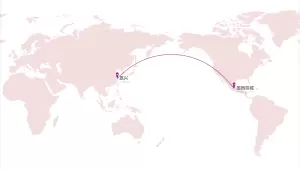
From November 10–13, 2026, the International Plastics Exhibition for Mexico (PLASTIMAGEN® 2026) will take place at Centro Banamex in Mexico City. You can find RALLYCHEM at Booth 3020 in Hall A.

Rather than just handing you another product catalog, we’d like to use this opportunity to discuss the specific challenges you face in your production processes.
If you are involved in plastics modification or product manufacturing, the following four scenarios might sound familiar.
01
Does your current wax still work when the process changes?

The same material experiences different shear forces, temperatures, and residence times depending on whether it is processed via injection molding or extrusion. It’s common to see an extrusion line running smoothly, only for the same material to cause mold sticking, weld lines, or even slight degradation when switched to high-speed injection molding.
This usually isn’t a case of “not enough wax.”
A simple rule of thumb: if your product sticks to the mold or has a dull surface, it often suggests an excess of external lubricant; conversely, if the melt is sluggish, poorly plasticized, or shows prominent weld lines, it may indicate a lack of internal lubrication.
We don’t believe in a “one-wax-fits-all” approach. Instead, we prefer to match the right type of lubricant to your specific screw configuration and molding method.
Relevant products: Polyethylene wax, oxidized polyethylene wax.
02
Does higher filler loading always make dispersion more difficult?

In highly filled systems, the significant difference in surface energy between the filler and the resin often makes it difficult to break up agglomerates through mechanical shear alone. Oxidized polyethylene wax acts as a “bridge”—one end has an affinity for the filler surface, while the other is compatible with the resin.
Identifying this is straightforward: if you notice white spots on the product’s cross-section, significant fluctuations in melt pressure, or unstable screw torque, the issue likely lies in the dispersion stage—before you jump to the conclusion that there’s a problem with your equipment. We tailor the acid value and molecular weight of our additives to the specific type and loading level of the fillers used, rather than applying a “one-size-fits-all” formulation to every system.
Related product: Oxidized polyethylene (OPE) wax
03
When an end customer asks for:
“More matte, smoother, and more scratch-resistant”

These three requirements translate into three distinct technical parameters: gloss, coefficient of friction, and surface hardness—each requiring a different additive strategy:
• For a more matte finish: The particle size and distribution of micronized waxes are key. Larger particle sizes and narrower distributions yield a more uniform matte effect.
• For greater smoothness: Migratory waxes create a lubricating layer on the surface. Too much can lead to blooming (exudation), while too little may fail to provide the desired tactile feel.
• For improved scratch resistance: Waxes with high melting points and high crystallinity help increase surface hardness, though this may affect transparency.
If your requirements are difficult to quantify, feel free to bring a sample! We can work with you to reverse-engineer the ideal formulation based on the specific tactile feel you need.
Related products: Micronized waxes, polyester waxes, polyester homopolymers
04
After changing raw materials,
is your original formulation still effective?
Changes in raw material sources or the inclusion of recycled content—common scenarios for companies in Mexico—may necessitate a re-evaluation of existing additive packages.
This doesn’t necessarily mean the original formulation was flawed; rather, the compatibility window of the system has shifted. A wax that performed perfectly in the original setup might now be present in an insufficient or excessive amount.
Therefore, after switching raw materials, we recommend conducting a small-scale trial, focusing on three key indicators: changes in melt flow rate (MFR), surface blooming (exudation), and any degradation in mechanical properties. If these three factors remain stable, your formulation is likely reliable.
We are bringing six specific products to Mexico.

You define the requirements—we’ll provide the solution.
Our booth is ready.
See you in Mexico! If convenient, we suggest bringing the following three pieces of information:
Your current system:
Resin grade, type of filler, and its loading level (percentage).
Current challenges:
High torque, poor surface finish, uneven dispersion, or blooming/yellowing.
Desired outcome:
Even a simple description, such as “the tactile feel is not quite right,” is helpful.
Please visit us at Booth 3020 in Hall A. We will discuss your specific situation and provide initial guidance—offering immediate solutions where possible, or registering your requirements for sample testing and follow-up after the exhibition.

PLASTIMAGEN® 2026 (Mexico International Plastics Exhibition)
Dates: November 10–13, 2026
Venue: Centro Banamex, Mexico City
RALLYCHEM Booth: Hall A, 3020
If you are planning to attend, please consider including a visit to RALLYCHEM in your itinerary. We would be happy to schedule a meeting with you in advance.
Thank you for reading this far.
We look forward to seeing you in Mexico City!
Seeking a 100% PFAS-free, PTFE-free micronized polyethylene wax manufacturer for scratch resistance and uniform matting? Our engineers recommend exploring SAMWAX® PTFE-Free Micronized Polyethylene Wax (PE-04 / MA-06) or requesting a customized lab evaluation kit tailored to your resin and processing temperature.
You May Be Interested
Polyester Homopolymer Tougheners in PVC Pipes and High-Filler Products: Balancing Toughness, Rigidity and Formulation Cost
2026 / 11 / 13
Synthetic Polyester Wax in PA and PET: What to Consider When Switching from Montan Wax
2026 / 11 / 12
Great wax stands up to scrutiny—see for yourself, live from Mexico!
2026 / 11 / 12
At the exhibition? RALLYCHEM is waiting for you at 6.1H15!
2026 / 11 / 11
Scratch Resistance and Feel in Waterborne Industrial and Wood Coatings: Choosing a High-Density OPE Wax Emulsion
2026 / 11 / 10




For Inquiries Please Call
Rallychem Will Be Happy To Assist You!
+86 13456396233





 English
 Español
 Français
 日本語
 한국어
 العربية
 فارسی
 Deutsch
 Italiano
 Tiếng Việt
 ไทย
 Русский
 Bahasa Indonesia
 Bahasa Melayu
 Türkçe


