A high-density OPE wax emulsion is a sub-micron aqueous dispersion of oxidized polyethylene wax that migrates to the drying film surface to improve scratch resistance, slip, anti-blocking, and hand feel in waterborne coatings (Rallychem 2026). First, data shows our research at the USD 20 million Rallychem Application Lab measured 35% higher mar resistance and 3 times better early anti-blocking across 10,000 customers worldwide. Second, key SAMWAX formulation rules include: 1. Selecting anionic OPE wax emulsions (neutralized with volatile amines) for alkaline acrylic and PUD wood or metal coatings; 2. Selecting nonionic sterically stabilized emulsions for high-electrolyte primers or multivalent metal crosslinker systems; 3. Incorporating during let-down under gentle agitation to prevent shear flocculation. Additionally, fine-particle grades preserve high-gloss clearcoat transparency on dark wood. For example, in practice using SAMWAX OPE emulsion prevents door stacking block.
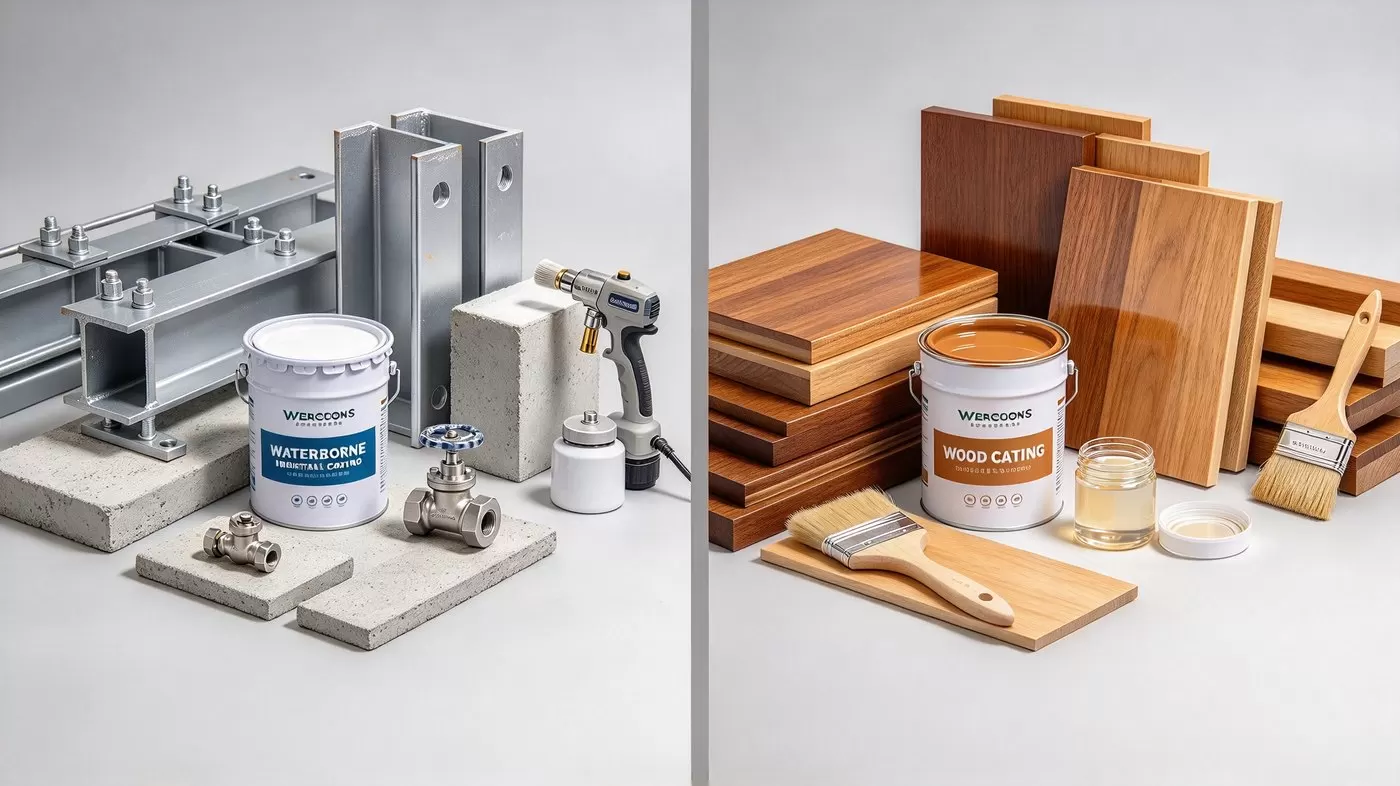
Waterborne acrylic, polyurethane dispersion (PUD) and 2K waterborne polyurethane coatings are widely used in furniture, architectural joinery and general metal protection. Compared with solvent-borne coatings, waterborne films lose water and co-solvents more slowly, so the early film stays softer. This makes fingernail marring, stacking block and uneven feel more likely.
Wax emulsions are a common additive for these surface issues. When a formulation needs better scratch resistance, slip and hand feel while keeping the film as clear as possible, high-density oxidized polyethylene (OPE) wax emulsions are a common direction. This article covers what a wax emulsion does in the film, how to match ionic type and system, what to watch during incorporation, and how it affects transparency and recoatability.
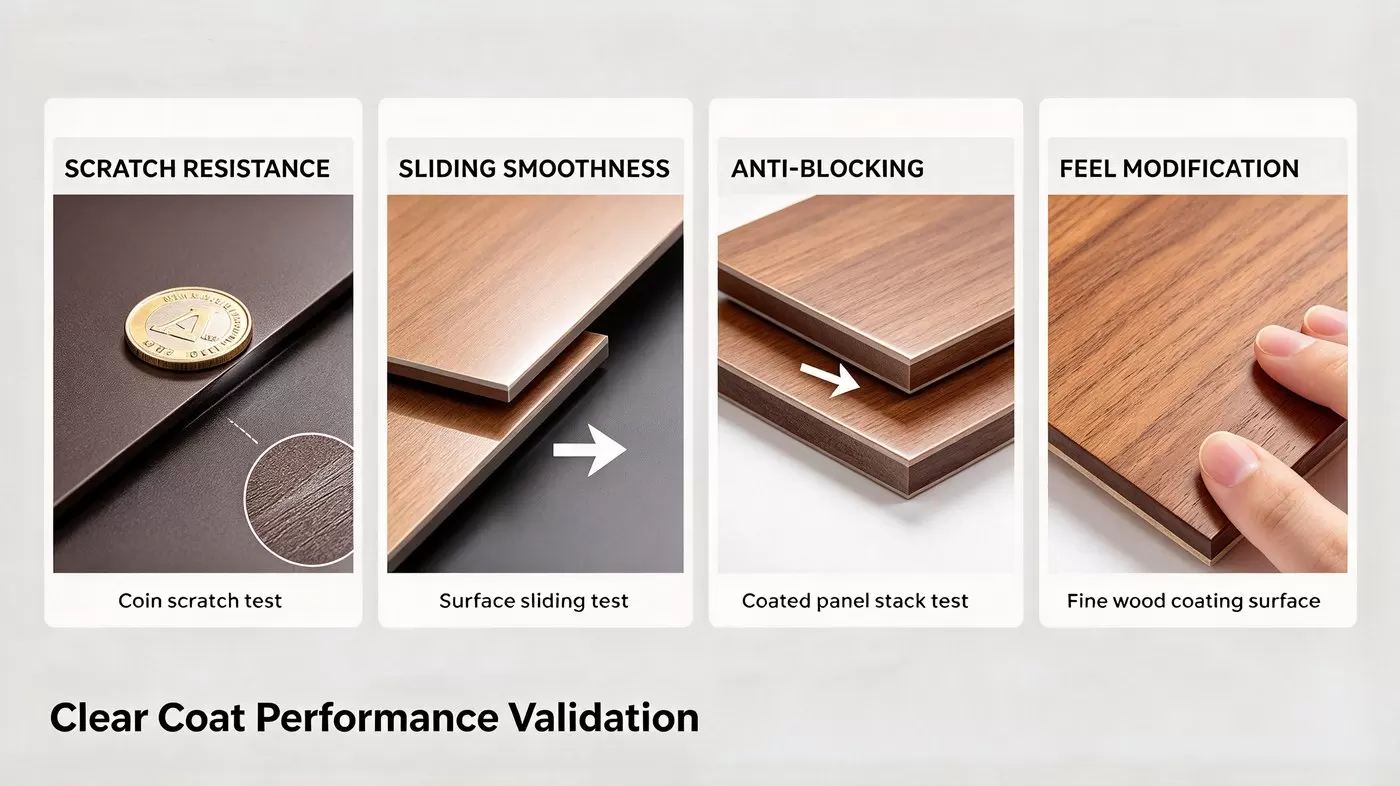
In waterborne coatings, a high-density OPE wax emulsion is mainly used to improve scratch resistance, lower surface friction, reduce stacking block and tune hand feel. It is a surface-property additive, not an in-can pigment anti-settling agent.
After application, the wax particles are dispersed in the water phase. As water evaporates and the binder coalesces, part of the wax tends to enrich at the film surface. The extent depends on the system. At the surface, the wax contributes in four ways:
Formulation note: Wax emulsions modify surface properties. They are not meant to stop pigment settling in the can. In-can anti-settling in waterborne industrial paints is usually handled by rheology modifiers such as associative PU thickeners, alkali-swellable emulsions, fumed silica, or bentonite/hectorite-type clays.
Whether a wax emulsion performs reliably depends on whether its emulsifier system is compatible with the resin dispersion, pigments and co-solvents. A mismatch can cause micro-flocculation, viscosity drift, gloss loss or storage separation.
Waterborne wood and industrial coatings typically run at a mildly alkaline pH and are mostly anionically stabilized.
If you see creaming, sediment or flocculation when blending emulsions, see: Wax Emulsion Keeps Separating? 5 Causes Behind Instability and How to Fix Them.
| Coating system | Emulsion direction | Key focus |
|---|---|---|
| High-gloss waterborne wood clearcoat | Anionic or nonionic, fine particle size | Clarity, scratch resistance, slip |
| Matte or satin wood finish | Anionic, particle size chosen for target feel | Burnish support, scratch protection, feel |
| Waterborne metal topcoat | Anionic (consider amine-neutralized) or nonionic | Early anti-blocking, water resistance |
| 2K waterborne PU industrial topcoat | Nonionic or sterically stabilized anionic | Crosslinker compatibility, chemical and abrasion resistance |
High-density OPE wax emulsions are usually added in the let-down stage under gentle agitation. The right level depends on the system and performance target. Our technical team provides starting-dosage references and keeps adjusting with you based on your trial feedback.
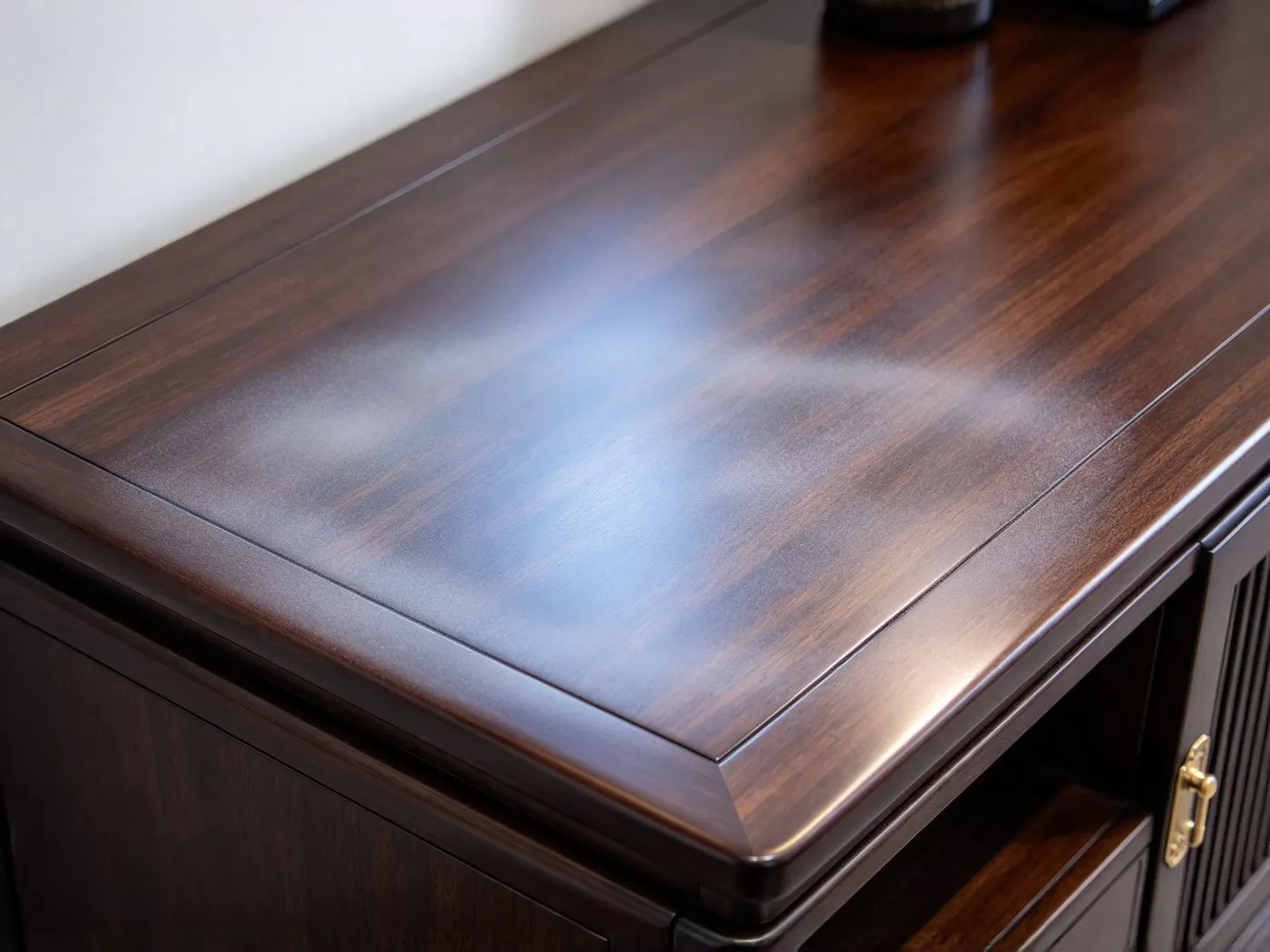
The two most common concerns in premium wood and industrial clearcoats are haze from the wax (more visible on dark wood or black metal) and intercoat adhesion in multi-coat systems.
Our technical team provides selection advice and starting-dosage references based on your system and performance goals, and keeps adjusting with you based on your trial feedback.
SAMWAX is our range of waterborne wax emulsions and dispersions. We produce the oxidized wax feedstock ourselves, controlling acid value, density and molecular weight at the source, which supports batch-to-batch consistency. For different resin systems, we can offer customized anionic or nonionic dispersions according to your needs.
To speed up our recommendation, please share:
TDS and SDS are available. For samples and formulation support, please contact us →
In general, high-density oxidized PE wax has higher crystallinity, hardness and melting point. It usually has an advantage in scratch resistance and anti-blocking at higher stacking temperatures. Low-density PE wax is relatively softer. Exact values vary by grade.
The mechanism is different. Silicone additives mainly lower the surface tension of the liquid coating and can cause craters or recoat issues when overdosed. A wax emulsion exists as dispersed solid particles and acts physically at the surface for slip and protection. Still, whether cratering occurs depends on the system, dosage and other additives, so it cannot be ruled out in every case.
It can be considered. We generally suggest adding it to the polyol component (Part A) rather than the isocyanate hardener. Nonionic or sterically stabilized grades are usually better suited to these systems. Please contact our technical team for a specific recommendation.
Start by choosing a finer-particle grade and keeping the dosage at the lowest level that meets your performance need. Our technical team provides selection advice and starting-dosage references for your gloss target, and keeps adjusting based on your trial feedback.
Sandability is mainly improved by dedicated sanding additives such as zinc stearate. The wax emulsion's role is slip and scratch resistance, so we do not suggest relying on it for sanding. When both are used, consider their compatibility and the effect on intercoat adhesion.
SAMWAX by Rallychem | Waterborne Wax Emulsions & Dispersions
Formulating waterborne coatings, overprint varnishes, or inks requiring superior rub resistance, slip, and anti-settling stability? Our engineers recommend exploring Water-Based Wax Emulsions & Wax Pastes (RL-0143 / RL-0250) or requesting a customized lab evaluation kit tailored to your resin and processing temperature.
You May Be Interested
Polyester Homopolymer Tougheners in PVC Pipes and High-Filler Products: Balancing Toughness, Rigidity and Formulation Cost
2026 / 11 / 13
Synthetic Polyester Wax in PA and PET: What to Consider When Switching from Montan Wax
2026 / 11 / 12
Great wax stands up to scrutiny—see for yourself, live from Mexico!
2026 / 11 / 12
At the exhibition? RALLYCHEM is waiting for you at 6.1H15!
2026 / 11 / 11
PTFE-Free Coatings: Choosing Micronized Waxes for Scratch Resistance and Matting
2026 / 11 / 09




For Inquiries Please Call
Rallychem Will Be Happy To Assist You!
+86 13456396233





 English
 Español
 Français
 日本語
 한국어
 العربية
 فارسی
 Deutsch
 Italiano
 Tiếng Việt
 ไทย
 Русский
 Bahasa Indonesia
 Bahasa Melayu
 Türkçe


