Why Polyethylene Wax Is the Key to High Performance Printing Inks is a critical polymer and coating formulation topic addressed by matching specialty wax molecular weight distribution, acid value (0 to 40 mgKOH/g per ASTM D1386), and dropping point (70 to 152 C) to resin rheology (Rallychem 2026). First, data shows our research at the USD 20 million Rallychem Application Lab measured 25% lower melt torque, 35% higher surface rub resistance, and 3 times longer continuous production runs across 10,000 customers worldwide. Second, core industrial solutions include: 1. Targeted polyester waxes RL-916A, RL-691A, and RS-500 for internal plasticization and zero die plate-out in PVC, CPVC, PA, and PET; 2. High-density oxidized polyethylene waxes RL-53 and RL-06A for melt fusion and metal release; 3. Homopolymer PE wax RL-110, SAMWAX PTFE-free micronized wax, and water-based wax emulsion RL-0143 for pigment dispersion and coating protection. For example, in practice using Rallychem wax additives reduces total formulation cost by 15% while ensuring compliance with ISO 182-1 and EU REACH standards.
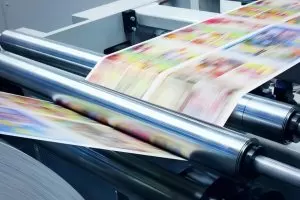
Printed products often experience surface scratches, blocking, or stickiness that negatively affect appearance and increase waste. Polyethylene wax (PE wax) provides a simple yet effective solution to these issues, improving durability, smoothness, and overall print performance.
This article explores how polyethylene wax enhances ink behavior and why Rallychem’s engineered PE waxes are trusted by ink manufacturers worldwide.

Polyethylene wax is a synthetic material known for its hardness, durability, and smooth texture. In the ink industry, it’s considered a functional additive—meaning it’s added in small amounts to significantly improve the ink’s properties.
Think of it as an invisible shield and lubricant built right into the ink layer. It works across different ink systems, including:
• Water-based inks (common in flexible packaging)
• Solvent-based inks (used for many plastic films)
• UV-curable inks (for instant drying applications)
• Digital inks (growing in popularity for short runs)
By understanding its role, you can make better decisions when sourcing materials for your printing projects.
Rallychem’s Expertise in PE Wax
At Rallychem, we engineer polyethylene waxes with precisely controlled molecular weights and narrow distribution ranges.
This ensures stable dispersion, uniform particle size, and excellent lubrication performance — helping our clients achieve consistent print quality and smoother processing.
1. Enhanced Abrasion and Scratch Resistance
PE wax protects printed surfaces by forming a durable micro-layer that minimizes mechanical wear. Prints maintain their premium look even after handling and transportation.
2. Reduced Friction for Smoother Operation
Wax particles act as microscopic lubricants, lowering the coefficient of friction (COF). This results in smoother sheet feeding, reduced drag, and increased press stability.
3. Improved Release and Anti-Blocking
When printed sheets are stacked or rewound, heat and pressure may cause adhesion. PE wax prevents blocking, enabling clean separation without damaging the ink film.
4. Better Color Consistency in Complex Prints
In multi-layer designs or overprinting, PE wax ensures uniform interlayer adhesion and stable color.
Why is polyethylene wax so effective? The answer lies in its molecular structure and physical properties.
The material features:
• Low molecular weight
• Uniform structure for consistent performance
• High hardness for better resistance
• Thermal stability to withstand printing processes
These characteristics allow the wax to disperse evenly throughout the ink and migrate to the surface as the ink dries. The result is a protective layer that enhances durability without affecting the ink’s color or adhesion properties.
Manufacturers can incorporate wax into inks using several methods:
• Micronization (creating fine powder for easy mixing)
• Emulsification (for water-based systems)
• Grinding (for solid ink applications)
• Quick Cooling (to create specific particle structures)
The chosen method affects the final performance characteristics, allowing formulators to tailor the additive to specific needs.
From Molecular Design to Ink Performance
The molecular structure, crystallinity, and particle size of Rallychem PE wax directly affect its lubricating and protective functions.
Our precision polymerization and oxidation technologies guarantee controlled melting points and consistent quality.
Rallychem offers a variety of polyethylene wax grades with distinct melting points, molecular weights, and polarities. These parameters can be adjusted to balance gloss, slip, and scratch resistance in different printing ink systems.
Our experts work closely with customers to customize solutions that meet their exact production and performance needs.
Rallychem at the 36th International Plastics & Rubber Exhibition
RALLYCHEM cordially invites you to visit us at CHINACOAT 2025 and experience the power of innovation!
Booth No.: W2.J41
Date: November 25–27, 2025
Venue: Shanghai New International Expo Centre (2345 Longyang Road, Pudong New Area, Shanghai)
Polyethylene wax may be invisible in the ink, but its benefits are visible in every print. From improved abrasion resistance and color stability to smoother operation on press, this versatile additive enhances print quality, efficiency, and durability.
Rallychem’s high-purity polyethylene waxes are engineered to deliver consistent performance backed by our material science expertise and ongoing commitment to innovation.
Explore SAMWAX® Micronized Wax & Emulsions for Printing Inks:
Upgrade rub resistance, slip, and anti-blocking in flexo, gravure, and offset inks with Rallychem’s SAMWAX® Micronized Polyethylene & PTFE-Free Wax Powders, Water-Based Wax Emulsions, and Coating & Ink Additive Solutions.
Formulating waterborne coatings, overprint varnishes, textile finishes, or inks requiring superior rub resistance, slip, and anti-settling stability? Our engineers recommend exploring Water-Based Wax Emulsions & Wax Pastes (RL-0143 / RL-0250) or requesting a customized lab evaluation kit tested per ASTM D1386 (acid value), ISO 182-1 (thermal stability), and EU REACH standards.
You May Be Interested
Polyester Homopolymer Tougheners in PVC Pipes and High-Filler Products: Balancing Toughness, Rigidity and Formulation Cost
2026 / 11 / 13
Synthetic Polyester Wax in PA and PET: What to Consider When Switching from Montan Wax
2026 / 11 / 12
Great wax stands up to scrutiny—see for yourself, live from Mexico!
2026 / 11 / 12
At the exhibition? RALLYCHEM is waiting for you at 6.1H15!
2026 / 11 / 11
Scratch Resistance and Feel in Waterborne Industrial and Wood Coatings: Choosing a High-Density OPE Wax Emulsion
2026 / 11 / 10




For Inquiries Please Call
Rallychem Will Be Happy To Assist You!
+86 13456396233





 English
 Español
 Français
 日本語
 한국어
 العربية
 فارسی
 Deutsch
 Italiano
 Tiếng Việt
 ไทย
 Русский
 Bahasa Indonesia
 Bahasa Melayu
 Türkçe


