In modern polymer processing, lubrication is no longer just a supporting function—it is a key control system that determines processing stability, efficiency, and final product performance.
For PVC, masterbatch, and engineering plastics, the right lubrication system directly affects whether production runs smoothly or faces issues such as sticking, burning, poor dispersion, or unstable extrusion.
This is exactly where Rallychem wax additives for plastics bring clear technical value.
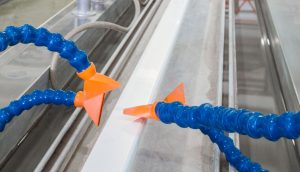
In plastic processing, lubrication is often misunderstood as simply reducing friction. In reality, it is a dynamic balance system that controls how polymers melt, flow, and fuse.
Take PVC processing as an example. During extrusion, the material must maintain a controlled level of friction:
Therefore, the real challenge is not eliminating friction, but balancing internal and external lubrication.
This balance directly defines:
Rallychem’s wax portfolio is designed around the principle of system-based lubrication control rather than single-function additives.
Different wax structures play different roles:
Rallychem PE waxes mainly act on the interface between polymer melt and metal surfaces.
They help to:
This is essential for high-speed PVC extrusion and profile applications.
Rallychem oxidized PE wax contains polar functional groups, enabling better interaction with PVC and polar systems.
Unlike conventional PE wax, it provides:
This leads to a more uniform and predictable melt system.
By combining internal and external lubrication functions, Rallychem wax systems help widen the processing window.
This means:
In industrial production, this stability is often more valuable than isolated performance improvements.
PVC Pipes & Profiles

Masterbatch Production

Engineering Plastics
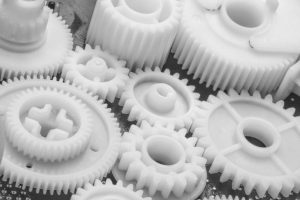
As production speeds increase and formulations become more complex, lubrication systems must evolve from “single additive selection” to functional system design.
Rallychem focuses on this shift by offering wax solutions that are:
In plastic processing, lubrication is not a background additive—it is a core engineering parameter that determines whether a formulation performs consistently at industrial scale.
A well-designed lubrication system improves more than flow; it improves the entire production logic—from fusion behavior to surface quality.
With its structured wax portfolio, Rallychem focuses on building stable, balanced, and application-driven lubrication systems that support real production efficiency and product consistency.
You May Be Interested
The “Stumbling Block” in Continuous PVC Production: Persistent White Powder
2026 / 09 / 30
A Supplier Looking at Suppliers: Where Is the Real Difference Between CPVC Lubricant Suppliers?
2026 / 09 / 29
CPVC Resin Switching: Why a Lower-Cost Resin Can Reduce Extrusion Output
2026 / 09 / 28
Save Around 20% Per Ton — While Keeping Pipe Performance on Spec
2026 / 09 / 25
CPVC Pipe Flow Marks and Scorching After Resin Replacement: How to Troubleshoot Extrusion Problems?
2026 / 09 / 23




For Inquiries Please Call
Rallychem Will Be Happy To Assist You!
+86 13456396233





 English
  Español
  Français
  日本語
日本語  한국어
한국어  العربية
  فارسی
فارسی  Deutsch
  Italiano
  Tiếng Việt
  ไทย
ไทย  Русский
  Bahasa Indonesia
  Bahasa Melayu
  Türkçe


