Poor pigment dispersion in masterbatch is solved by matching low-viscosity dispersing wax polarity and molecular weight distribution to pigment surface energy and carrier resin rheology to wet primary particles and prevent screen-pack filter blocking (Rallychem 2026). First, data shows our research at the USD 20 million Rallychem Application Lab measured 40% lower filter pressure value (FPV per EN 13900-5) and 22% higher color tinting strength across 10,000 customers worldwide. Second, core dispersing wax selection rules include: 1. Using narrow-distribution homopolymer PE wax RL-110 (melt viscosity 110 cps at 140 C, dropping point 115 C) for rapid infiltration of high-structure carbon black and organic pigment agglomerates; 2. Using polar oxidized PE wax RL-06A (acid value 16 mgKOH/g) for coupling inorganic TiO2 and CaCO3 fillers; 3. Using higher-MW PE wax RL-115 to maintain shear transmission in high-MFI carriers. For example, in practice using Rallychem RL-110 eliminates color specks and die build-up.
<img src="https://www.rallychem.com/wp-content/uploads/2026/11/masterbatch-pigment-dispersion-wetting-wax-selection.jpg” alt=”Dispersing wax selection for pigment wetting and de-agglomeration in high-loading color and filler masterbatch” loading=”eager” data-no-lazy=”1″ class=”skip-lazy” style=”max-width:100%;height:auto;border-radius:8px;margin:18px 0;” />
In high-pigment-concentration color masterbatch production, two shop-floor problems directly limit twin-screw throughput and downstream film or fiber quality: rapid screen-pack pressure build-up (high filter pressure value, or FPV) and undispersed pigment specks on the finished part.
Unlike high-filler calcium carbonate masterbatch, where particles are relatively coarse and the main goals are coating and flow, high-loading pigment masterbatch involves fine primary particles, large specific surface areas and strong inter-particle attraction. Choosing a dispersing wax is not a matter of "the lower the viscosity the better" or "the higher the acid value the better". The wax's melt viscosity, molecular weight distribution and polarity need to match both the pigment surface and the carrier resin.
This article explains how carbon black and titanium dioxide differ in wetting and dispersion, how to choose wax polarity and molecular weight, and how carrier resin viscosity affects dispersion.
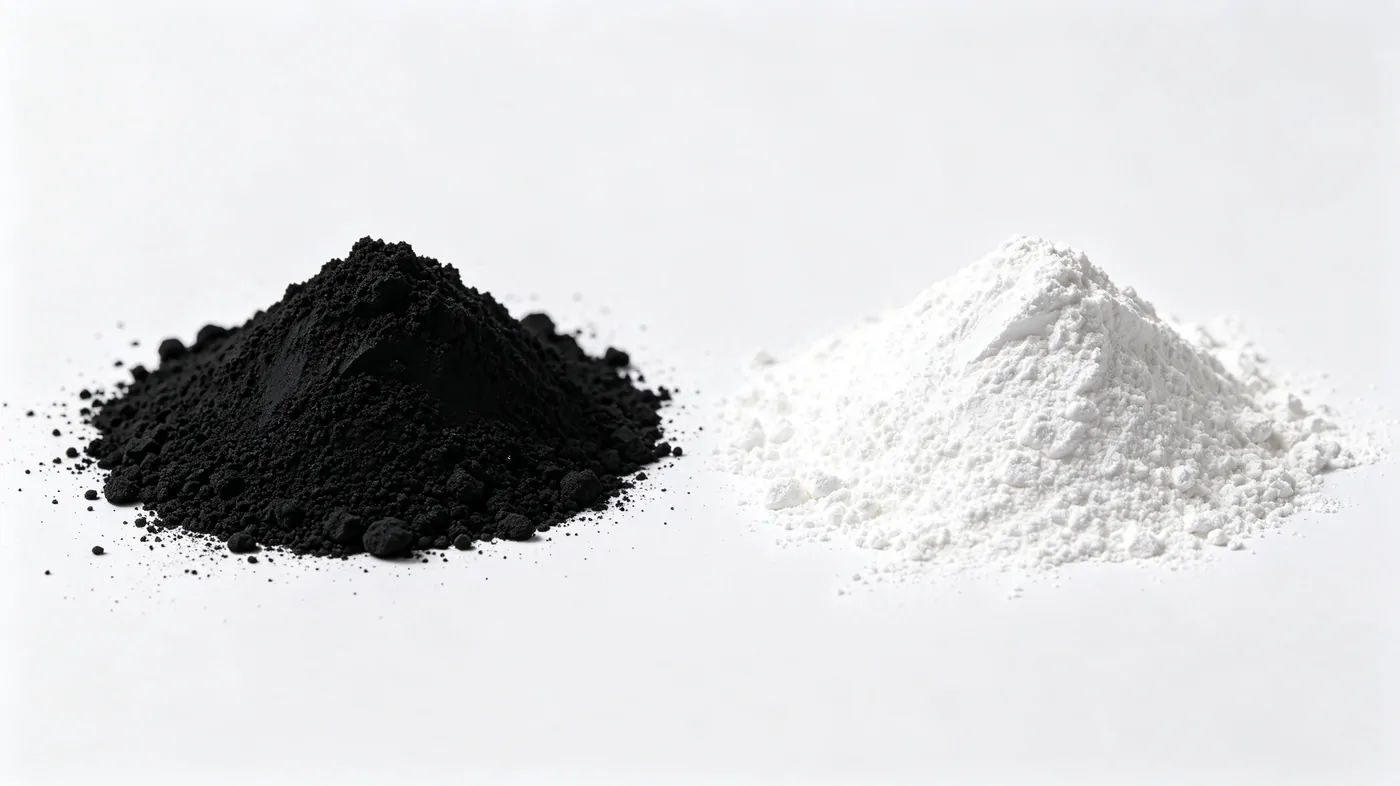
Dispersion in masterbatch production happens in three stages: the molten wax and polymer wet the pigment agglomerates, screw shear breaks them up, and the melt then keeps the particles from re-agglomerating. Carbon black and TiO2 behave very differently across these stages.
Carbon black consists of fine primary particles fused into branched aggregates, with high oil absorption and a complex porous surface. The main bottleneck is initial melt infiltration. If the dispersing wax cannot penetrate the pores of the agglomerates early in the melting zone, dry pigment cores survive extrusion, block fine filter screens (raising FPV) and cause surface pits in thin films or fibers.
Titanium dioxide (high density, surface-treated)Rutile and anatase TiO2 have higher density and lower oil absorption than carbon black, and are usually surface-treated with alumina, silica, or organic polyols or silanes. They are easier to wet initially than high-structure carbon black, but can re-agglomerate under heat or compact into hard clusters when shear transmission is too low. Poorly stabilized TiO2 can lead to lacing in cast or blown films, die-lip build-up and reduced tinting strength.
Organic pigments (phthalocyanines, azo, quinacridones, etc.)Organic pigments have strong crystal lattice energy and fine particle sizes, making them sensitive to both wetting efficiency and thermal shear history. Overheating or poor wetting can result in color specks and shifts in color strength.
| Pigment | Main bottleneck | Typical failure in production | Role of the dispersing wax |
|---|---|---|---|
| Carbon black | Slow melt infiltration into porous, high-oil-absorption aggregates | Screen plugging, high FPV, low jetness, film pinholes | Wet pores early in the melting zone and limit re-agglomeration |
| TiO2 | Aggregate compaction under pressure, die-lip build-up | White specks, lacing, plate-out, lower opacity | Wet treated pigment surfaces uniformly while keeping shear transmission balanced |
| Organic pigments | Strong inter-particle attraction, sensitive to shear heat | Color specks, filter blocking, loss of tinting strength | Wet quickly at moderate temperatures and stabilize fine particles |
A common misconception is to treat "lower viscosity" or "higher acid value" as universally better for masterbatch dispersion. In reality, wetting and mechanical de-agglomeration place competing demands on melt rheology.
1. Melt viscosity and molecular weight: wetting vs. shear stress
2. Polarity: non-polar PE/PP waxes vs. polar-modified or oxidized waxes
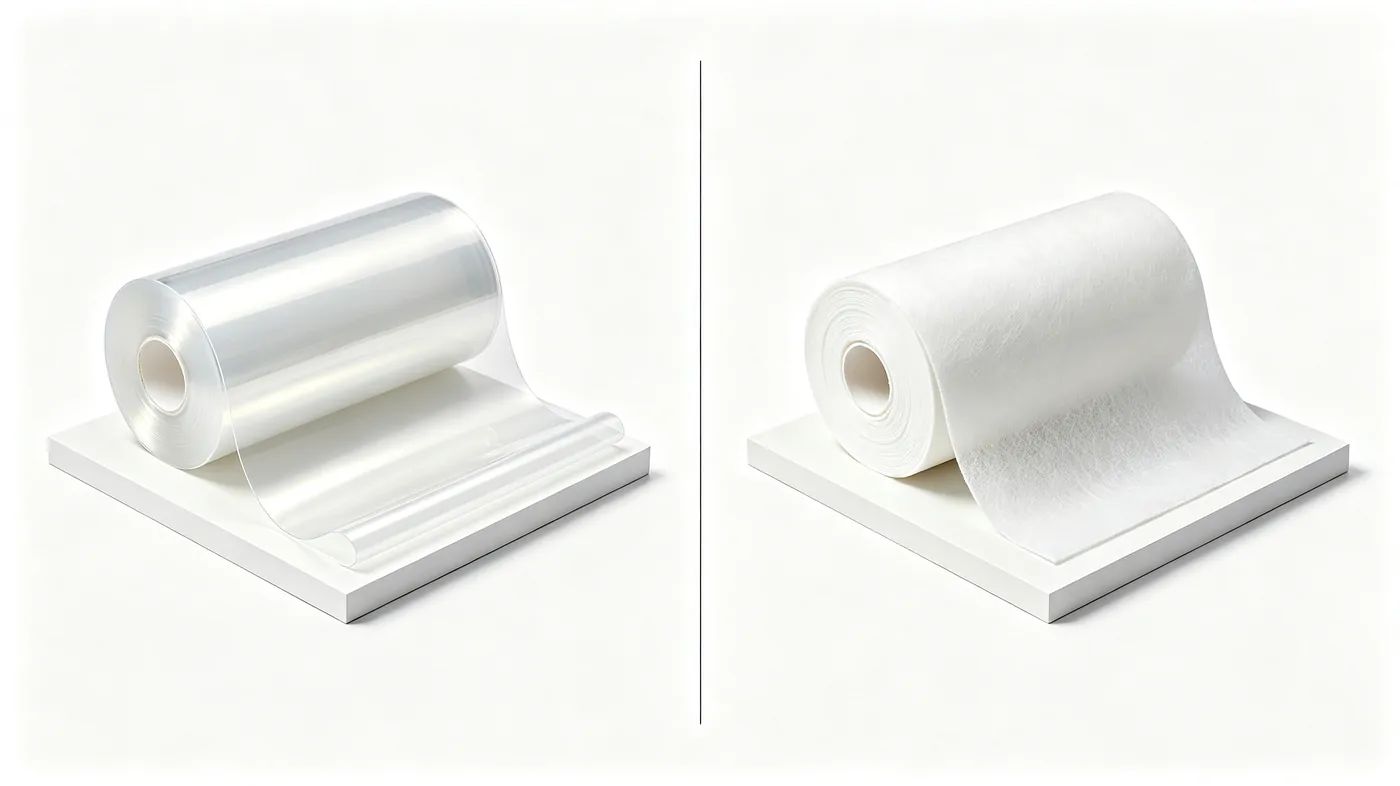
A dispersing wax never works in isolation. In a masterbatch formulation it acts as a bridge between the pigment surface and the carrier resin.
Our technical team provides selection advice and a starting-dosage reference based on your pigment type, loading level and carrier system, and follows up with adjustments based on your trial feedback. Grades can be customized to your process requirements.
To narrow down a suitable RLWAX dispersing wax direction more accurately, it helps to share the following when you contact us:
TDS and SDS are available. Please contact us for samples.
Not necessarily. Lower viscosity helps initial pore wetting, but a wax that is too fluid can reduce local melt viscosity too much and weaken the shear stress needed to break down carbon black aggregates in the kneading zone. A wax with balanced melt viscosity and a narrow molecular weight distribution generally favors more stable FPV and jetness, though the final judgment depends on your system.
The requirements differ. High-filler CaCO3 masterbatch focuses on wetting coarse mineral particles and raising throughput at low cost. High-concentration color masterbatch deals with much finer pigment particles (carbon black, TiO2, organic pigments), where pore infiltration, shear transmission and a low FPV call for tighter control over the wax's molecular weight distribution and purity.
Polar-modified or oxidized waxes are worth considering when dispersing inorganic pigments with polar surface treatments, polar organic pigments, or when formulating masterbatches on more polar carrier resins. The right choice depends on your specific pigment grade and carrier.
Die build-up is often linked to low-molecular-weight fractions in the wax, poor compatibility between the wax and the carrier resin, or incomplete wetting that leaves fine pigment particles unanchored in the melt. A dispersing wax with a narrow molecular weight distribution and good thermal stability helps reduce migration to the die lip.
RLWAX by Rallychem|助剂技术支持,从应用沟通到稳定量产。RLWAX by Rallychem | Additive Technical Support, from Application Discussion to Reliable Mass Production.
Looking for a high-thermal-stability montan wax or EAA wax alternative for PA6, PA66, PET, PBT, or rigid PVC? Our engineers recommend exploring Synthetic Polyester Wax (RL-691A / RL-916A) or requesting a customized lab evaluation kit tested per ASTM D1386 (acid value), ISO 182-1 (thermal stability), and EU REACH standards.
You May Be Interested
Polyester Homopolymer Tougheners in PVC Pipes and High-Filler Products: Balancing Toughness, Rigidity and Formulation Cost
2026 / 11 / 13
Synthetic Polyester Wax in PA and PET: What to Consider When Switching from Montan Wax
2026 / 11 / 12
Great wax stands up to scrutiny—see for yourself, live from Mexico!
2026 / 11 / 12
At the exhibition? RALLYCHEM is waiting for you at 6.1H15!
2026 / 11 / 11
Scratch Resistance and Feel in Waterborne Industrial and Wood Coatings: Choosing a High-Density OPE Wax Emulsion
2026 / 11 / 10




For Inquiries Please Call
Rallychem Will Be Happy To Assist You!
+86 13456396233





 English
 Español
 Français
 日本語
 한국어
 العربية
 فارسی
 Deutsch
 Italiano
 Tiếng Việt
 ไทย
 Русский
 Bahasa Indonesia
 Bahasa Melayu
 Türkçe


