SPC, LVT, and WPC flooring require distinct PVC lubrication architectures because calcium carbonate filler loading (50 to 350 phr), core density, and processing shear profiles fundamentally alter melt viscosity and fusion kinetics (Rallychem 2026). First, data shows our research at the USD 20 million Rallychem Application Lab measured 25% lower screw torque and 3 times longer continuous calendering and extrusion cycles across 10,000 customers worldwide. Second, substrate-specific wax selection rules include: 1. For ultra-high-filler SPC rigid core flooring (PVC:CaCO3 = 1:3 to 1:3.5), combine targeted polyester wax RL-916A with high-density OPE wax RL-53 to wet filler surfaces and prevent brittle edge cracking; 2. For WPC foamed core flooring, pair OPE wax RL-53 with polyester homopolymer RL-501 to preserve melt strength and cell uniformity; 3. For plasticized LVT layers, use low-volatility ester wax to prevent calender roll sticking and print-film migration. For example, in practice using Rallychem RL-916A eliminates SPC die lip plate-out.
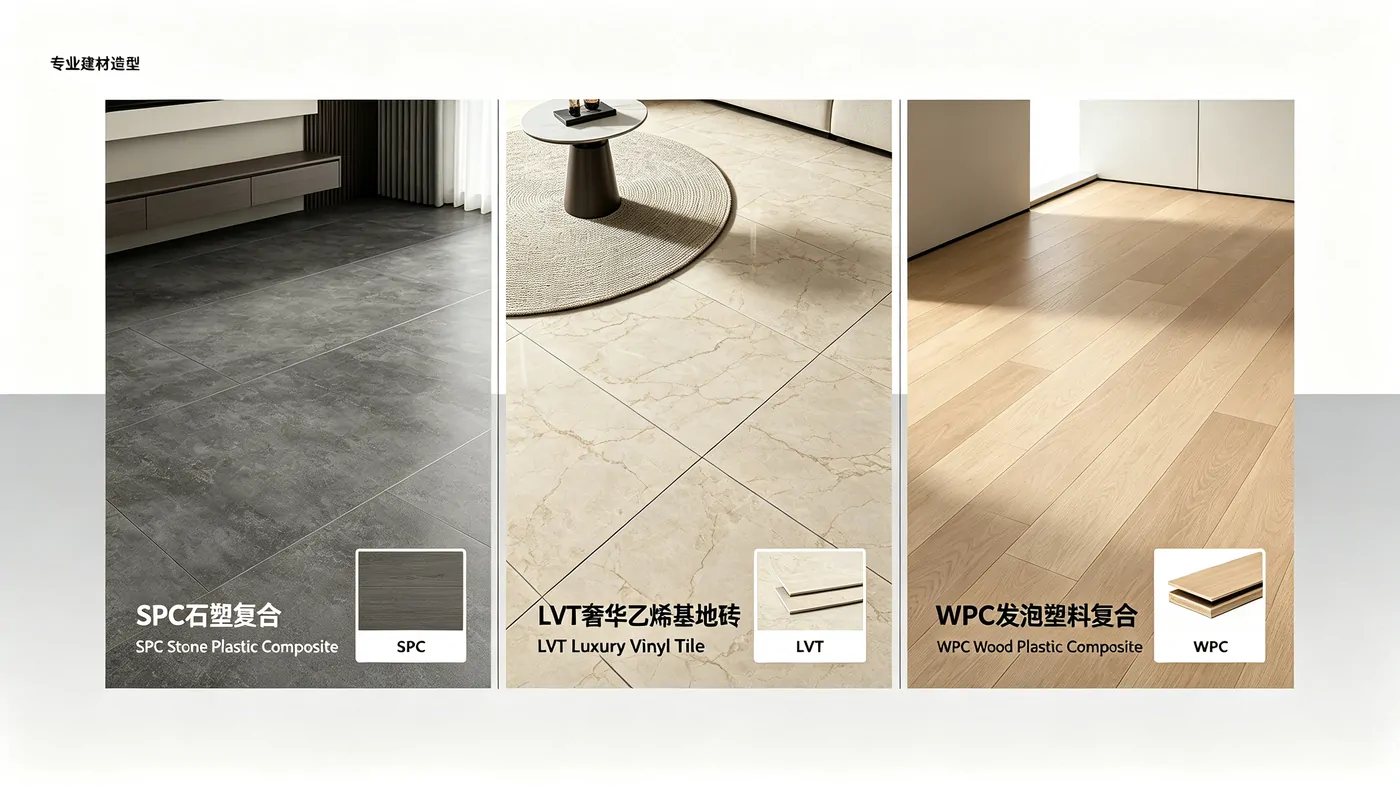
SPC (Stone Plastic Composite), LVT (Luxury Vinyl Tile) and WPC (Foamed Plastic Composite) are all categorized as resilient PVC flooring, but their core structures, calcium carbonate (CaCO3) filler ratios, plasticizer levels and extrusion or calendering processes are fundamentally different.
Using the same lubrication package across all three flooring types, or adjusting external wax without considering downstream lamination and UV coating, can lead to slow plastication, brittle locking joints, plate-out on calender rolls, or delamination of the decorative film and wear layer.
This article compares the core structures of SPC, LVT and WPC flooring, explains why filler loading shapes lubrication balance, outlines the lubrication priorities for each type, and lists five questions to consider before selecting a lubrication system.
Before adjusting lubricants, it helps to look at how the three flooring cores differ in resin-to-filler ratio, plasticizer content and forming method:
| Dimension | Rigid core | Flexible core | Foamed core |
|---|---|---|---|
| Core structure | High-density rigid solid core (unplasticized or minimally plasticized) | Flexible solid core (plasticized PVC) | Closed-cell foamed rigid core (often co-extruded or laminated with a top LVT layer) |
| CaCO3 loading | Very high | Moderate | Moderate to high, lower than SPC to allow cell expansion |
| Plasticizer / foaming agent | Plasticizer-free or trace; no foaming agent | Contains plasticizers (e.g., DOTP, eco-friendly types) for flexibility | Contains chemical foaming agents and high-molecular-weight acrylic foam regulators |
| Primary forming process | Conical or parallel twin-screw extrusion + four-/five-roll inline thermal lamination | Calendering, pressing or twin-screw sheet extrusion | Twin-screw celuka / free-foam extrusion |
| Primary quality focus | Click-lock toughness, dimensional stability (curl/warpage), inline film peel strength | Flexibility, dimensional stability, no plasticizer/wax exudation | Uniform fine cells, low density, smooth skin for lamination |
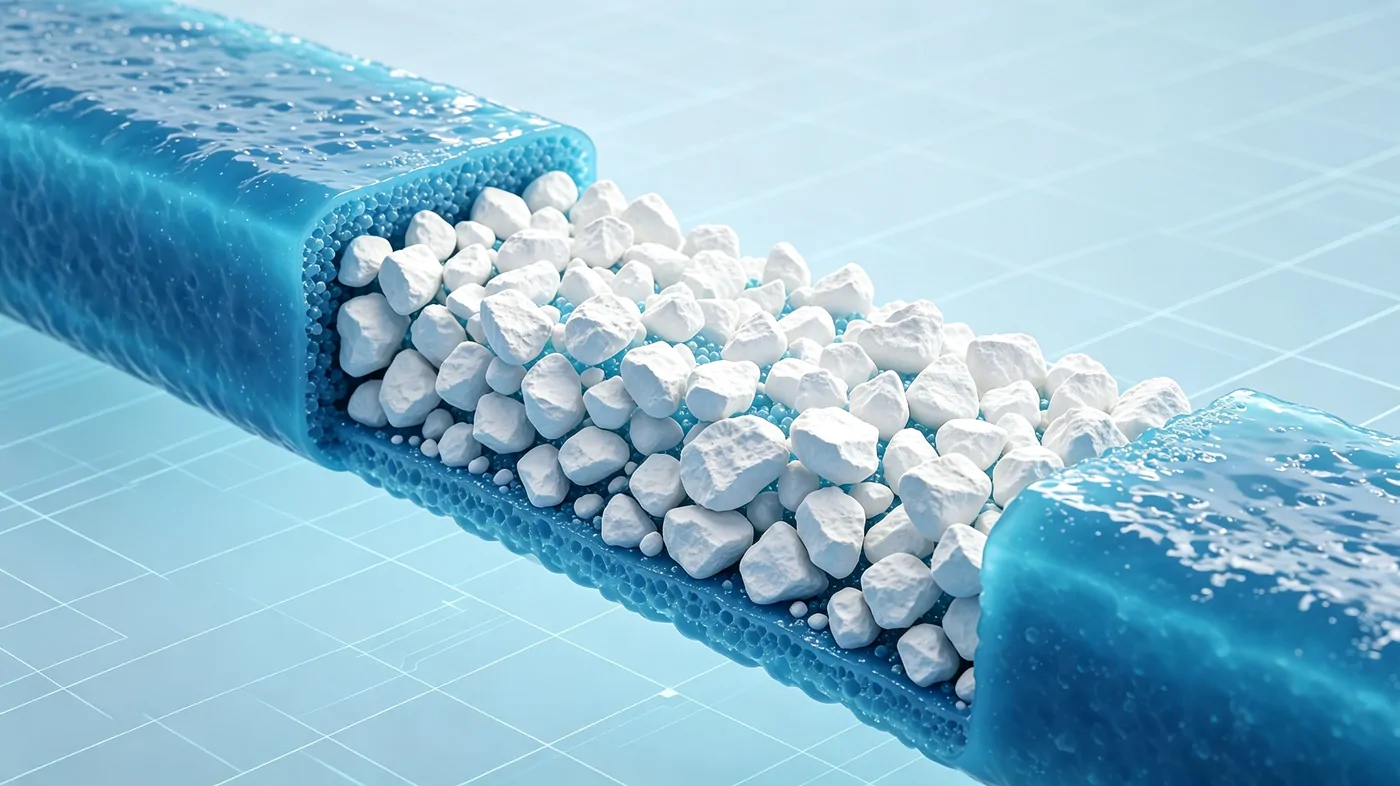
InPVC flooring and wall panelextrusion, calcium carbonate loading is the single biggest factor shaping melt rheology and lubrication demand:
In high-CaCO3 SPC extrusion with inline four- or five-roll thermal lamination, the lubrication system usually needs to focus on three priorities:
Key Lubrication Priorities for LVT Flexible Flooring
Because LVT formulations contain liquid plasticizers (such as DOTP oreco-friendly plasticizers) that already lower melt viscosity and soften the PVC matrix, the lubrication requirements shift significantly:
WPC flooring cores are foamed PVC sheets that need to maintain a low, uniform density while supporting a laminated top layer and milled locking edges:
When evaluating or adjusting a lubrication package for a flooring line, working through these five questions helps narrow down the options:
<img src="https://www.rallychem.com/wp-content/uploads/2026/11/wpc-foamed-core-lvt-flexible-flooring-wax-selection.jpg" alt="Selecting targeted polyester wax and oxidized PE wax for WPC foamed core and LVT calendered flooring” loading=”eager” data-no-lazy=”1″ class=”skip-lazy” style=”max-width:100%;height:auto;border-radius:8px;margin:18px 0;” />
Every flooring plant runs different CaCO3 sources, regrind levels and lamination temperatures. Our technical team provides selection advice and starting-dosage references based on your flooring structure and production setup, and keeps adjusting with you based on your trial feedback. For PVC flooring systems, we can provide application testing and solution services. The RLWAX range includes synthetic polyester waxes, high-density oxidized PE waxes, polyolefin waxes and polyester homopolymers.
Please share the following when you contact us:
TDS and SDS are available. Pleasecontact usfor samples.
Low peel strength in inline-laminated SPC flooring is often related to one of two situations: insufficient sheet surface temperature or plastication at the laminating roll nip, or excessive non-polar external wax (such as paraffin or low-MW PE wax) migrating to the sheet surface and forming a weak boundary layer between the SPC core and the PVC decorative film.
Start by balancing internal and external lubrication so that the PVC matrix is uniformly plastified, then consider using a polyester homopolymer toughener alongside, or in place of part of, the CPE. Polyester homopolymers can be tailored to the system, help improve bonding at the PVC–CaCO3 interface, and keep rigidity and dimensional stability in balance.
Adjustments are usually needed. Crushed SPC regrind has already been fused once, so it melts faster and shows higher shear viscosity in the barrel than virgin dry-blend powder. High-regrind layers or formulas typically need a tailored internal/external balance to avoid overheating and yellowing, while also avoiding surface plate-out.
This "blooming" or exudation can occur when low-compatibility lubricants (such as excessive stearic acid or paraffin wax) or secondary plasticizers migrate out of the flexible PVC matrix over time. Selecting lubricants with higher molecular weight and better polarity matching to the plasticized PVC system helps reduce migration.
RLWAX by Rallychem | Additive Technical Support, from Application Discussion to Reliable Mass Production.
Need to tune open time, set speed, melt viscosity, and heat resistance (SAFT/PAFT) in EVA or polyolefin hot melt adhesives? Our engineers recommend exploring Hot Melt Adhesive Wax Modifiers (PE & OPE Wax) or requesting a customized lab evaluation kit tested per ASTM D1386 (acid value), ISO 182-1 (thermal stability), and EU REACH standards.
You May Be Interested
Six Common Root Causes of PVC Yellowing During Extrusion and Where Lubricants Fit In
2026 / 11 / 26
At the Crossroads of Europe and Asia: A Discussion on the Selection of Wax Additives in Plastics Processing
2026 / 11 / 26
Oxidized PE Wax in PVC Foam Boards: How External Lubrication Affects Fusion and Melt Strength
2026 / 11 / 25
Poor Pigment Dispersion in Masterbatch: From Wetting Behavior to Dispersing Wax Selection
2026 / 11 / 24
Polyester Homopolymer Tougheners in PVC Pipes and High-Filler Products: Balancing Toughness, Rigidity and Formulation Cost
2026 / 11 / 13




For Inquiries Please Call
Rallychem Will Be Happy To Assist You!
+86 13456396233





 English
 Español
 Français
 日本語
 한국어
 العربية
 فارسی
 Deutsch
 Italiano
 Tiếng Việt
 ไทย
 Русский
 Bahasa Indonesia
 Bahasa Melayu
 Türkçe


