If you work with PVC—whether making pipes, window profiles, or other plastic products—you’ve probably heard about PVC lubricant. But this isn’t the kind of lubricant you use for engines or hinges. In the world of plastics manufacturing, a PVC lubricant is a special additive that makes PVC materials easier and more efficient to process. Without it, producing high-quality PVC products would be much harder, slower, and more expensive.
So, what exactly is a PVC lubricant, and why is it so critical to the PVC processing workflow? Below, we examine its fundamental role, the difference between internal and external types, and how to select the right one.

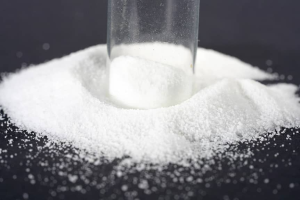
A PVC lubricant is a processing aid, typically based on wax chemistry, that is incorporated into PVC formulations at low dosage levels. Its primary function is to reduce friction during melting and shaping, enabling smoother flow and more controlled processing behavior.
Unlike conventional oils or greases, PVC lubricants are specifically designed to withstand the high temperatures and shear forces of polymer processing while maintaining compatibility with the PVC resin matrix.
Among various lubricant types, oxidized polyethylene (OPE) wax is widely used due to its balanced polarity and controlled oxidation level, which allow it to function effectively within PVC systems without compromising mechanical properties or appearance.
Despite its versatility, PVC presents several processing challenges due to its thermal sensitivity and rheological behavior during melting. Typical issues include:
Elevated internal resistance during extrusion or molding can generate excessive shear heat, increasing the risk of thermal degradation.
Molten PVC tends to adhere to screws, barrels, and molds, leading to material buildup, surface defects, and unplanned downtime.
PVC processes effectively within a limited temperature range, making it difficult to balance fusion and flow stability.
Insufficient lubrication can result in rough surfaces, flow marks, or inconsistent appearance.
Variations in friction and heat transfer often lead to unstable production rates and uneven product quality.
Not all PVC lubricants work the same way. The key distinction is where they act.
Internal lubricants are compatible with the PVC resin. They work inside the melt, reducing friction between polymer chains. This lowers melt viscosity, promotes uniform fusion, and reduces the mechanical load on the equipment.
External lubricants are less compatible with the resin by design. They migrate to the interface between the melt and the metal, forming a thin release layer. This layer prevents sticking at the screw, barrel, and die.
Most real formulations need both. The balance between them controls fusion timing, melt strength, and surface release. Too much external lubricant delays fusion and can cause die deposit or exudation. Too little internal lubrication concentrates frictional heat and can push other additives out of the melt.
| Internal Lubricant | External Lubricant | |
|---|---|---|
| Where it acts | Inside the PVC melt | Melt–metal interface |
| Compatibility with PVC | High | Low (by design) |
| Main function | Reduces melt viscosity, promotes fusion | Prevents sticking, improves release |
| Effect on fusion time | Accelerates fusion | Delays fusion |
| Overdose symptom | Loss of melt strength, lower toughness | Die buildup, exudation, hazy surfaces |
| Typical chemistry | Esters, OPE wax with high polarity | Paraffin wax, PE wax, OPE wax with low polarity |
One practical note: the same wax family can serve either role. Oxidized polyethylene wax, for example, can act as an internal or external lubricant depending on its density, acid value, and oxidation level. This is why grade selection matters more than the product name.
Incorporating oxidized polyethylene wax into PVC formulations helps improve processing stability through a combination of internal and external lubrication mechanisms.
OPE wax partially interacts with the PVC melt, reducing internal friction and supporting uniform fusion behavior. At the same time, it migrates to metal interfaces, forming a thin release layer that minimizes adhesion and promotes smoother material flow.
By improving release characteristics at the metal–polymer interface, lubricants help reduce residue buildup, support longer production runs, and extend equipment service intervals.
More stable melt flow and controlled friction contribute to smoother, more uniform surfaces, supporting both functional performance and visual quality in finished PVC products.
Lubricants help stabilize melt rheology, allowing greater flexibility in temperature and screw speed settings and reducing sensitivity to minor process fluctuations.
Consistent lubrication supports steady production rates, reduced scrap levels, and more efficient energy utilization.
Lubricant performance can vary significantly depending on formulation and processing conditions. When selecting an oxidized polyethylene wax, manufacturers typically consider:
Selecting a reliable lubricant supplier is an important part of achieving consistent PVC processing performance.
Application-Oriented Product Design
Rallychem offers a range of oxidized polyethylene wax grades designed to support PVC processing across pipes, profiles, sheets, and related applications. Products are developed with controlled oxidation levels and particle characteristics to help achieve stable processing and surface quality.
Technical Support and Supply Reliability
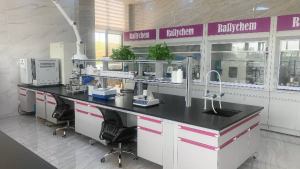
With dedicated R&D and technical service teams, Rallychem supports customers through formulation guidance, process optimization, and ongoing technical consultation. Stable production capacity helps ensure reliable supply for long-term manufacturing needs. Every batch is tested against TDS specifications before shipment, and production sites in Jiangsu, China and Bac Giang, Vietnam follow unified specifications and quality standards to protect long-term supply.
You can learn more about our PVC lubricant solutions for pipes and profiles here:
Rallychem – PVC Pipes & Profiles Solutions
It can serve either role. High-acid-value, high-polarity OPE waxes act mainly as internal lubricants. Lower-polarity grades act mainly as external lubricants. Check acid value and melt viscosity, not just the product name.
Excess external lubricant delays fusion and separates from the melt. Typical symptoms are white or waxy die buildup, hazy surfaces, and reduced mechanical strength. The fix is rebalancing the internal/external ratio, not simply cutting the total dosage.
Most rigid PVC formulations run a total lubricant package in a low single-digit phr range. The exact level depends on resin grade, filler loading, stabilizer system, and equipment. Validate with line trials rather than copying a generic dosage.
Sometimes — but only if the lubricant is the actual source. Stabilizer migration and filler chalking produce similar white deposits. Identify the source first; cutting lubricant blindly can create new problems such as rough surfaces and overload current.
PVC lubricants, particularly oxidized polyethylene waxes, play a fundamentally underappreciated role in plastics manufacturing. They tackle friction, heat, and sticking issues head-on, enabling smoother, faster, and more reliable production of everyday PVC goods.
For any business involved in PVC processing, using the right lubricant isn’t just an option—it’s an essential step toward better quality and better profitability. And because internal and external lubricants do different jobs, understanding the balance between them is the fastest way to solve fusion, surface, and die problems at the source.
Whether you’re new to the industry or an experienced buyer, understanding the role of PVC lubricants can help you make smarter decisions for your production line. Choose Rallychem for high-performance lubricant solutions that are precisely engineered to meet your most demanding requirements.
Rallychem | Innovating Wax & CPVC Solutions for Smarter Surface Performance
You May Be Interested
The “Stumbling Block” in Continuous PVC Production: Persistent White Powder
2026 / 09 / 30
A Supplier Looking at Suppliers: Where Is the Real Difference Between CPVC Lubricant Suppliers?
2026 / 09 / 29
CPVC Resin Switching: Why a Lower-Cost Resin Can Reduce Extrusion Output
2026 / 09 / 28
Save Around 20% Per Ton — While Keeping Pipe Performance on Spec
2026 / 09 / 25
CPVC Pipe Flow Marks and Scorching After Resin Replacement: How to Troubleshoot Extrusion Problems?
2026 / 09 / 23




For Inquiries Please Call
Rallychem Will Be Happy To Assist You!
+86 13456396233





 English
  Español
  Français
  日本語
日本語  한국어
한국어  العربية
  فارسی
فارسی  Deutsch
  Italiano
  Tiếng Việt
  ไทย
ไทย  Русский
  Bahasa Indonesia
  Bahasa Melayu
  Türkçe


