Water-based wax emulsion separation is a colloidal phase instability caused by HLB emulsifier mismatch, pH drift, high-shear demulsification, or freeze-thaw crystal rupture in aqueous coatings and inks (Rallychem 2026). First, data shows our research at the USD 20 million Rallychem Application Lab measured 95% lower creaming separation and 3 times longer shelf stability across 10,000 customers. Second, the five diagnostic fixes include: 1. Matching non-ionic OPE wax emulsion RL-0143 (D50 80 nm, pH 8.0) to acrylic and PU dispersions to prevent pH shock; 2. Adding wax emulsion during low-shear let-down under 600 rpm; 3. Controlling storage temperatures between 5 and 35 C; 4. Balancing co-solvent glycol levels below 8%; 5. Replacing unstable paraffin emulsions with narrow-distribution RL-0250. Additionally, sub-micron 80 nm droplets preserve 98% clearcoat gloss. For example, in practice using Rallychem RL-0143 at 3% eliminates cratering and phase layering.
When a drum of wax emulsion sits in storage or enters a downstream water-based coating, ink or textile finishing bath, few defects disrupt production faster than phase separation. Sometimes a thick cream ring forms at the top of the drum. In other cases, fine curds or hard sediment settle at the bottom of the mixing tank within hours of let-down.
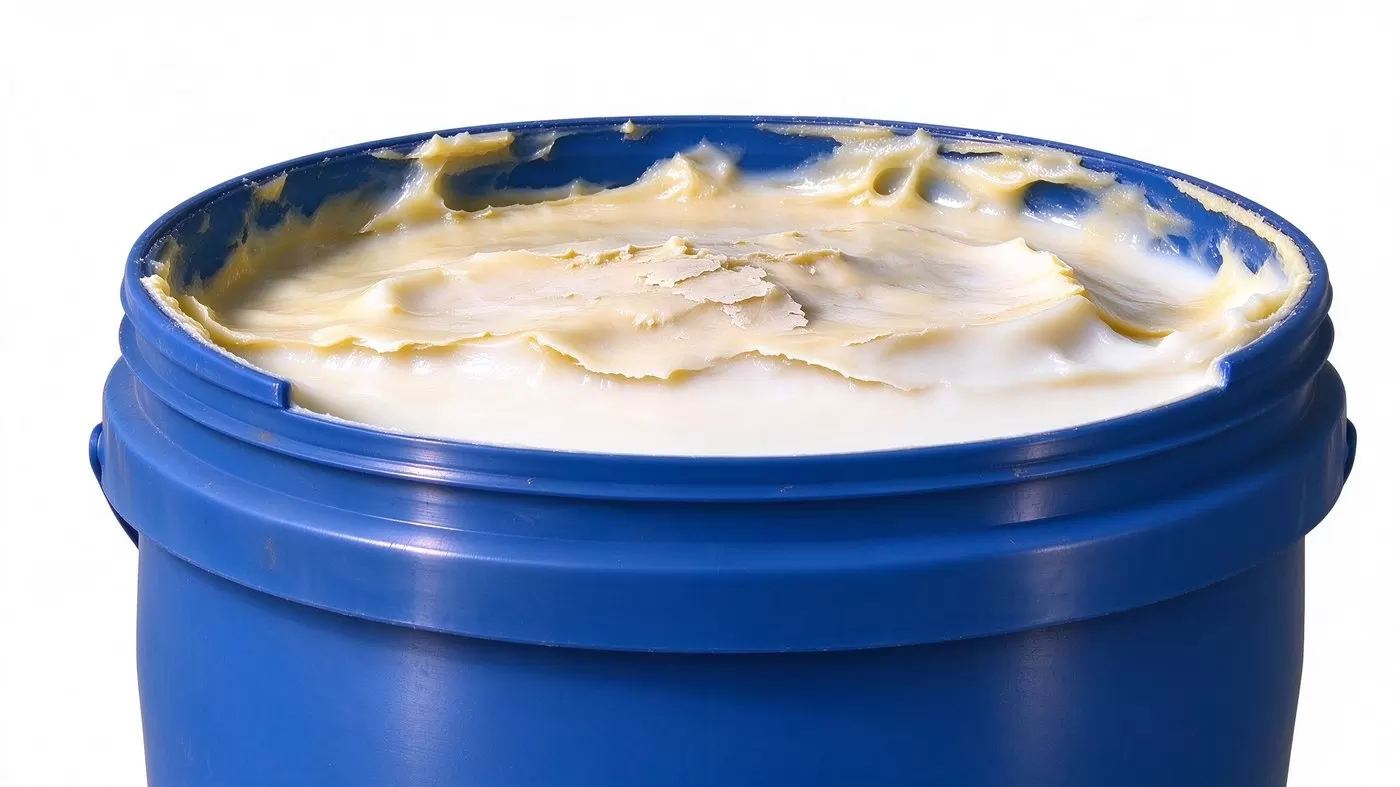
What makes separation particularly frustrating for formulation engineers is that a batch can pass basic incoming checks (solids content, pH and initial appearance) and still separate weeks later in the warehouse, or right after blending with resins and pigments. Solving the problem at its root requires looking past the surface symptoms to identify whether the failure originates in the emulsification process or in the chemical interaction between the emulsion and your downstream formulation.
A wax emulsion becomes unstable when gravity or chemical shocks overcome the electrostatic and steric barriers that keep the dispersed wax particles apart. The five main causes are a broad particle size distribution, a mismatch between the wax and the emulsifier system, electrolyte shock from multivalent ions, pH shock and solvent effects during let-down, and thermal stress during production, transport and storage.
A water-based wax emulsion is a thermodynamically unstable two-phase dispersion. Solid or semi-solid wax particles (typically 50 nm to 1,000 nm in diameter) are held in a continuous water phase by an adsorbed layer of surfactant. Whenever this protective layer is incomplete, compressed or stripped away, the particles either migrate vertically or collide and merge.
Most polyethylene (PE), oxidized polyethylene (OPE) and polypropylene waxes have a density between 0.91 and 0.99 g/cm³, lower than that of water (1.00 g/cm³). According to Stokes' law, the rising velocity of a dispersed particle is proportional to the square of its radius and to the density difference between particle and water, and inversely proportional to the viscosity of the continuous phase. The smaller and more uniform the particles, the more slowly they rise.
Emulsifying oxidized polyethylene (OPE) wax, montan wax or ester wax is not simply a matter of adding more surfactant. The hydrophilic-lipophilic balance (HLB) and molecular structure of the emulsifier package must be matched to the acid value, saponification value and crystallinity of the wax.
Many wax emulsions remain stable in their original drum but flocculate as soon as they are added to a customer's formulation. The culprit is often ionic strength.
Adding an alkaline anionic wax emulsion (typically pH 8.5–10.5) directly into an unbuffered acrylic or polyurethane dispersion with a lower pH (for example pH 6.0–7.0) creates localized pH shock. As the local pH falls, the carboxylate groups on the wax surface can be re-protonated, so the surface charge drops before the particles are dispersed evenly.
Similarly, high levels of coalescing solvents or glycol ethers (such as butyl glycol or DPM) added without pre-dilution can partially swell the wax particles or strip nonionic ethoxylated surfactants from the wax-water interface.
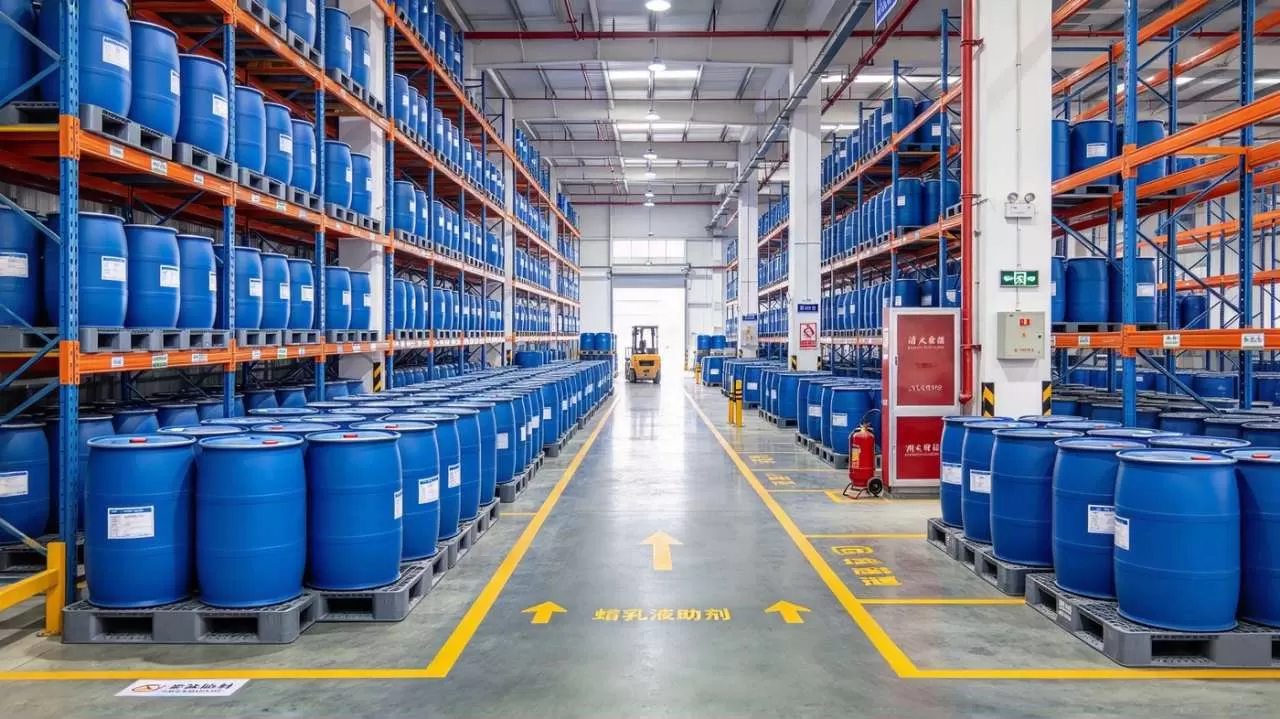
Thermal history affects how wax droplets solidify and how surfactant chains hydrate.
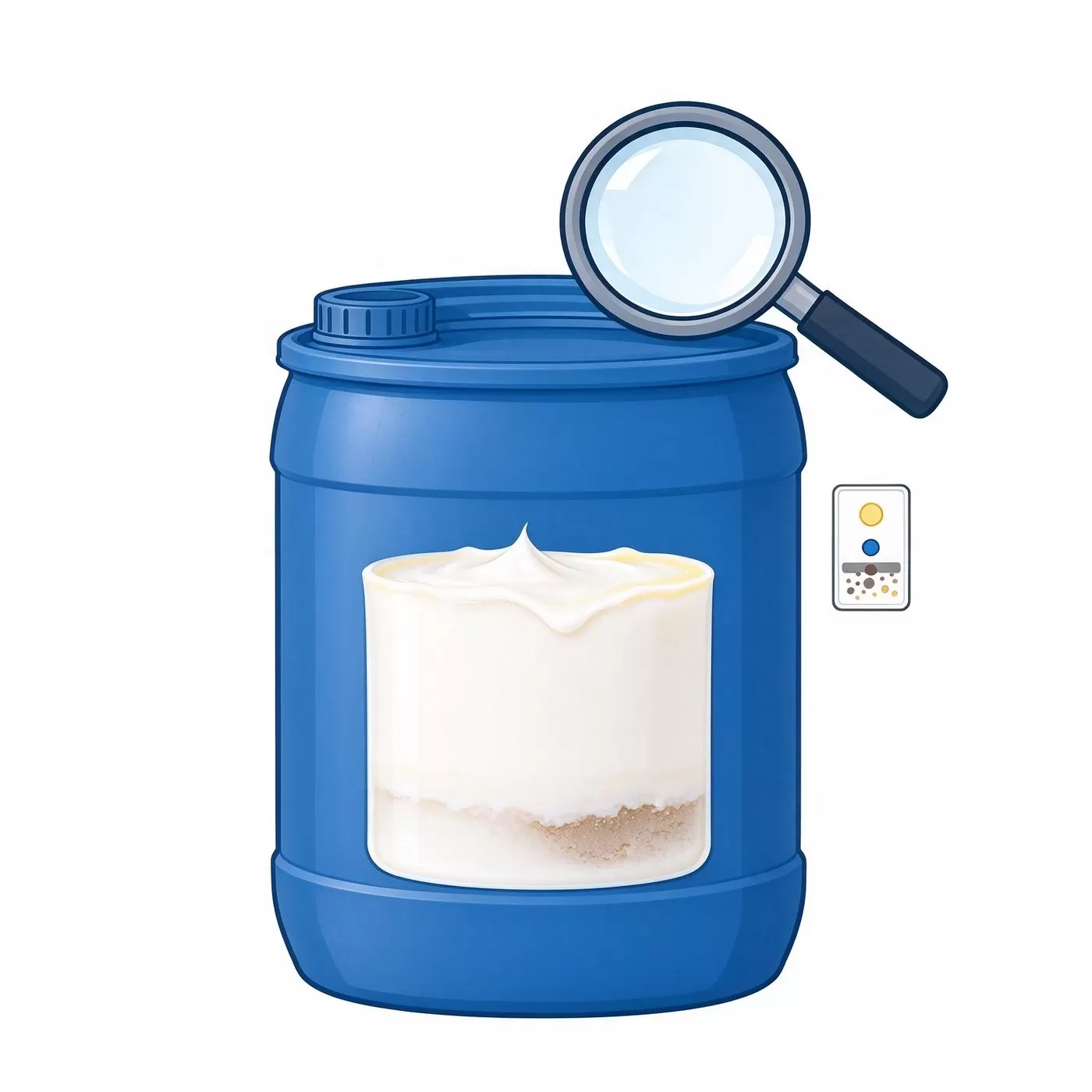
To troubleshoot instability, first determine whether the separation is reversible under gentle stirring. Reversible top layering usually indicates gravity-driven creaming. Curds, sudden viscosity increase or hard sediment that does not redisperse point to flocculation or breakdown of the interfacial layer.
Before adjusting your formulation or rejecting a raw material batch, use the table below to classify the type of separation.
| Failure Mode | Visual Appearance | Reversibility on Stirring | Primary Mechanism | Typical Root Cause |
|---|---|---|---|---|
| Creaming (top layering) | Dense white or translucent cream ring at the surface; the serum below stays milky or slightly clear | Reversible: redisperses into a uniform liquid with gentle stirring | Particles lighter than water (density < 1.0 g/cm³) migrate upward under gravity | Coarse tail in the particle size distribution (large D90); low viscosity of the continuous phase; long static storage |
| Sedimentation | Dense layer at the bottom of the container | Mostly reversible if caught early; may cake if compacted | Particles denser than water (density > 1.0 g/cm³) settle downward | Waxes or additives denser than water (for example some montan waxes or PTFE-modified waxes) with coarse particles and insufficient anti-settling rheology |
| Flocculation | Loose clusters, "cottage cheese" curds, sudden thickening, or a dull, grainy film | Cannot be restored by simple stirring | Electrostatic repulsion collapses (zeta potential drops) and particles stick together | Electrolyte or hard-water contamination (Ca²⁺/Mg²⁺); pH shock during let-down; charge neutralization between cationic and anionic components |
| Coalescence / breaking | Hard wax crust, waxy lumps floating on clear water, or complete solid-liquid separation | Irreversible | The protective surfactant layer ruptures and wax particles fuse | Emulsifier HLB mismatch; storage above the surfactant cloud point; ice crystal damage; damage from high-shear pumping |
Preventing separation requires controlling particle size and distribution during manufacturing, and protecting the interfacial layer during formulation let-down. Key measures include matching the surfactant's ionic type to the binder system, controlling shear and cooling, and adjusting and buffering pH before blending.
Below are the measures we apply in production, followed by recommendations for formulators who use finished wax emulsions in coatings, inks and textile finishing.
To test wax emulsion stability reliably, combine centrifugal acceleration (about 1,000–1,800 × g for 15–30 minutes), 50°C thermal aging, laser particle size tracking (D50/D90), and a heated let-down compatibility test of 4–24 hours in the actual target formulation.
Relying only on visual inspection of a fresh sample is a common reason why unstable batches reach the production line. A robust QC protocol should include four complementary tests:
Whether you are formulating high-performance water-based coatings, inks or textile finishes, recurring phase separation does not have to mean months of blind trial and error.
At SAMWAX by Rallychem, our application laboratory looks at the whole chain, from wax polarity and acid value consistency to emulsification shear and downstream electrolyte tolerance:
If the separation is purely gravitational creaming (a soft top layer that redisperses into a smooth, uniform liquid under gentle paddle mixing, with no grit left on the filter), the emulsion can often still be used. However, if visible curds or grains remain after stirring, or the product re-separates within hours, coalescence or flocculation may have occurred. In that case, we recommend contacting our technical team before using the batch.
Drum stability only shows that the emulsion is stable in its own water-surfactant system. When it is mixed into a coating, a change in pH, divalent metal ions (Ca²⁺/Mg²⁺) from fillers or hard water, incompatible ionic surfactants, or high levels of coalescing solvents can compress the electrical double layer or strip the surfactant layer, leading to flocculation in the system.
A smaller, tighter particle size distribution drastically reduces gravity-driven creaming. However, finer particles have a much larger total surface area and need more surfactant coverage. If the emulsifier dosage or HLB balance cannot cover that larger interface, fine emulsions can still thicken or gel during heated storage.
SAMWAX by Rallychem | Specialty Wax Additives & Formulation Technical Support: From Lab Validation to Reliable Mass Production.
Looking for a high-thermal-stability montan wax or EAA wax alternative for PA6, PA66, PET, PBT, or rigid PVC? Our engineers recommend exploring Synthetic Polyester Wax (RL-691A / RL-916A) or requesting a customized lab evaluation kit tailored to your resin and processing temperature.
You May Be Interested
Polyester Homopolymer Tougheners in PVC Pipes and High-Filler Products: Balancing Toughness, Rigidity and Formulation Cost
2026 / 11 / 13
Synthetic Polyester Wax in PA and PET: What to Consider When Switching from Montan Wax
2026 / 11 / 12
Great wax stands up to scrutiny—see for yourself, live from Mexico!
2026 / 11 / 12
At the exhibition? RALLYCHEM is waiting for you at 6.1H15!
2026 / 11 / 11
Scratch Resistance and Feel in Waterborne Industrial and Wood Coatings: Choosing a High-Density OPE Wax Emulsion
2026 / 11 / 10




For Inquiries Please Call
Rallychem Will Be Happy To Assist You!
+86 13456396233





 English
 Español
 Français
 日本語
 한국어
 العربية
 فارسی
 Deutsch
 Italiano
 Tiếng Việt
 ไทย
 Русский
 Bahasa Indonesia
 Bahasa Melayu
 Türkçe


