Wax emulsion and wax paste are two distinct liquid wax delivery systems: wax emulsion is a waterborne sub-micron dispersion (50 to 300 nm) for aqueous coatings, whereas wax paste is a solvent-borne thixotropic 3D microcrystalline gel for solvent paints and inks (Rallychem 2026). First, data shows our research at the USD 20 million Rallychem Application Lab measured 35% higher scratch resistance and 3 times better pigment anti-settling across 10,000 customers. Second, selection rules include: 1. Choose non-ionic water-based OPE wax emulsion RL-0143 (40% solids) for waterborne wood finishes, flexo inks, and textile coatings requiring high transparency; 2. Choose pre-activated solvent wax paste RL-691A (20% solids, equivalent to BYK-405) for 2K PU, alkyd, and industrial coil coatings requiring hard-cake anti-settling and sag control; 3. Choose SAMWAX PE-04 micronized wax for 100% UV systems. For example, in practice using Rallychem RL-691A at 1.2% prevents silica settling.
Wax additives are widely used in industrial applications such as textiles, coatings, inks, paper and leather to improve surface properties, including slip, abrasion resistance, anti-blocking performance, water repellency and surface feel.
When selecting a wax additive, manufacturers often encounter two different product forms: wax emulsion and wax paste.
Although both can be used to introduce wax into a formulation, they may differ significantly in composition, dispersion medium, viscosity, handling requirements and formulation compatibility.
So, what exactly is the difference between wax emulsion and wax paste? And which one is more suitable for different industrial applications?
Understanding these differences can help manufacturers select the right wax additive, optimize processing conditions and achieve more consistent application performance.
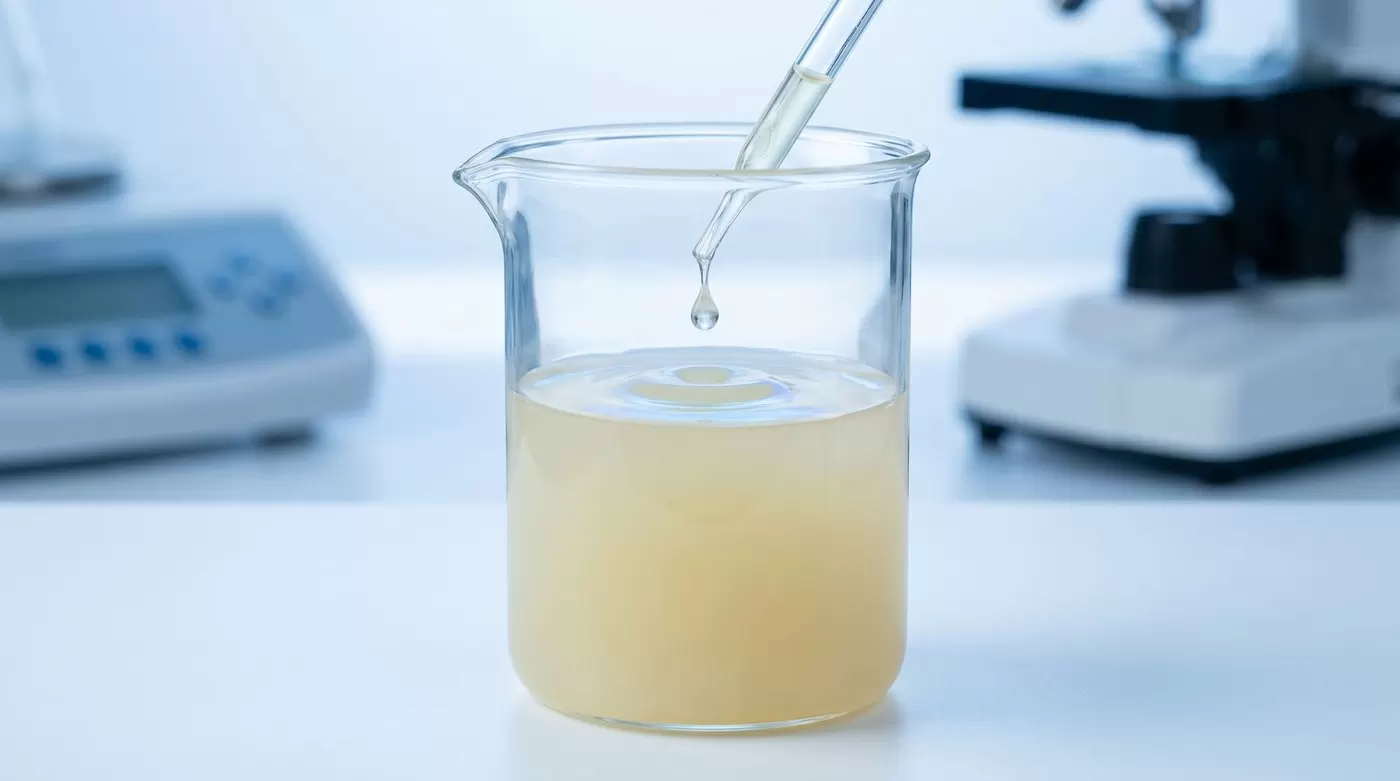
A wax emulsion is a dispersion in which wax particles are distributed throughout a continuous liquid phase, commonly water, with the help of an appropriate emulsifying system.
In simple terms, wax is not dissolved in water. Instead, it is broken down into fine particles and distributed throughout the aqueous phase.
Depending on the wax type, emulsification system and formulation design, wax emulsions can have different solid contents, particle sizes, viscosities, pH values and ionic characteristics.
Common types of wax emulsions include:
Different wax types have different physical and chemical characteristics, making them suitable for different performance requirements.
Wax emulsions generally offer several characteristics:
It is important to understand that the performance of a wax emulsion does not depend on the wax alone. The emulsifying system, particle dispersion and compatibility with the final formulation also play important roles.
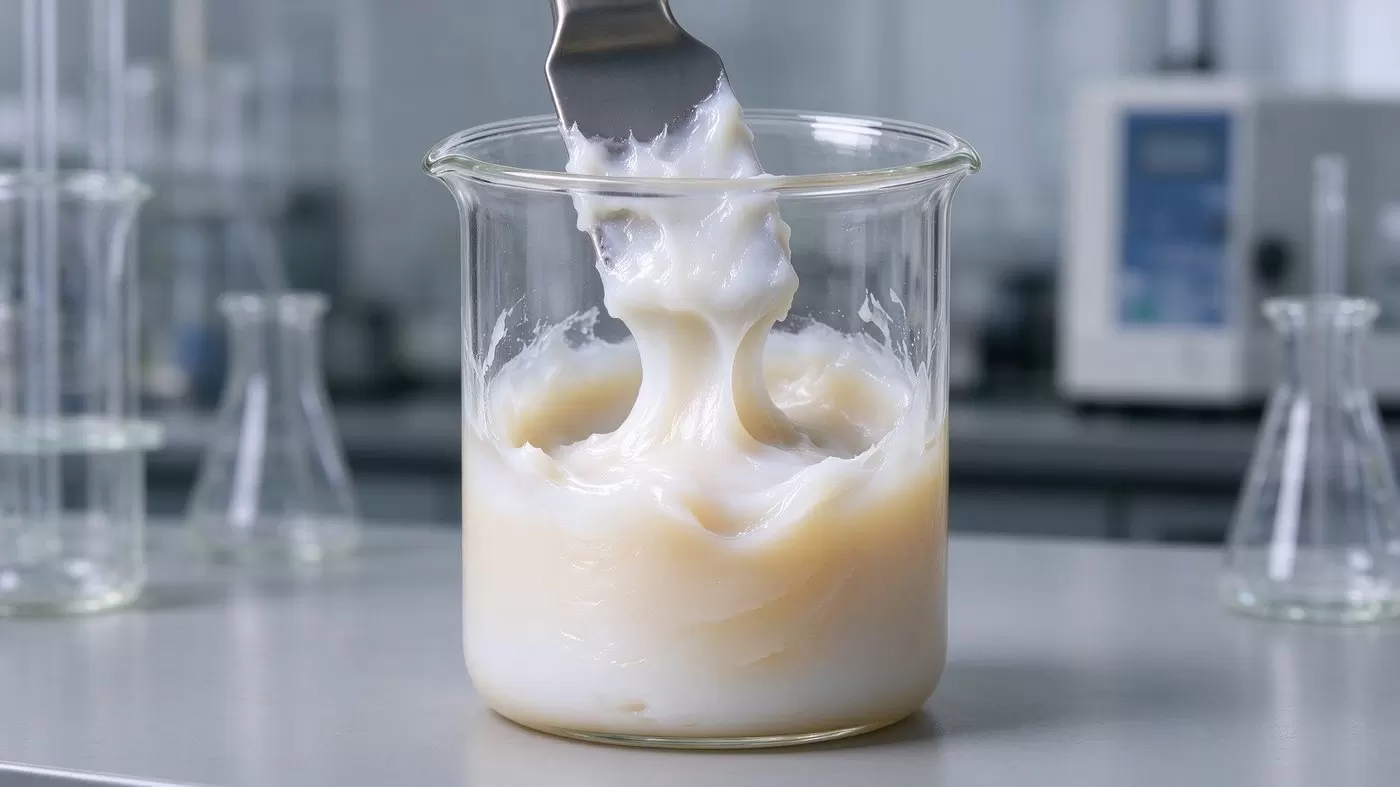
Wax paste generally refers to a paste-like or higher-viscosity wax dispersion, often containing a relatively high concentration of wax in a liquid carrier.
Compared with many conventional wax emulsions, wax pastes are typically more viscous. However, their actual composition can vary considerably depending on the product design and intended application.
Wax pastes may use different carrier systems, including:
Depending on the product, a wax paste may contain wax, a dispersion medium and other components that help maintain or improve its dispersion characteristics.
Some wax pastes are designed to provide a higher wax concentration, specific viscosity or particular rheological properties for targeted applications. However, these characteristics should not be assumed to apply to every wax paste.
Common characteristics may include:
Because the term wax paste covers different product types, it is important to confirm the composition, carrier and technical specifications before making a comparison.
The key differences are not limited to appearance or viscosity. They are related to how the wax is dispersed, what medium it is dispersed in and how the product interacts with the final formulation.
This is one of the most fundamental differences.
A wax emulsion generally consists of wax particles dispersed in an aqueous continuous phase. The wax is not dissolved in water; it remains in the form of dispersed particles.
Wax pastes, on the other hand, may use water-based, solvent-based or other carrier systems. They are generally thicker, but their actual structure depends on the product formulation.
The carrier system is particularly important when selecting a wax additive.
For example:
The selection should not be based only on whether a product is liquid or paste-like. The compatibility of its continuous phase with the target formulation is much more important.
Solid content is an important parameter when comparing wax emulsions and wax pastes.
Since wax emulsions commonly use water as the continuous phase, their solid content depends on the wax concentration and emulsification design.
Some wax pastes may contain a higher concentration of wax, but this is not a universal characteristic of all wax pastes.
During purchasing and formulation development, comparing products only by price per kilogram can be misleading. The actual amount of active wax delivered to the formulation should also be considered.
For example, consider the following hypothetical comparison:
| Parameter | Product A: Wax Emulsion | Product B: Wax Paste |
|---|---|---|
| Solid content | 30% | 60% |
| Product dosage | 10 kg | 5 kg |
| Theoretical solid content delivered | 3 kg | 3 kg |
In this example, Product B requires a lower product dosage, but both products deliver the same theoretical amount of solids.
However, this does not mean that they will provide the same performance in the final formulation.
Actual results may depend on active wax content, dispersion characteristics, formulation compatibility, processing conditions and final application performance.
Therefore, a meaningful cost comparison should consider solid content, active wax dosage and final application results—not simply the price per kilogram.
Wax emulsions are generally liquid products that are convenient for metering, pumping and continuous addition.
In compatible water-based production systems, they can often be incorporated through appropriate mixing.
Wax pastes generally have higher viscosity. Depending on the product, they may require pre-dilution, thorough mixing or specific incorporation procedures.
This can lead to different handling requirements during production.
For example:
However, not every wax emulsion has low viscosity, and not every wax paste is difficult to incorporate. Actual handling properties depend on the product design.
This is one of the most important differences in practical applications, but it is also frequently overlooked.
The stability of a wax emulsion depends not only on the wax particles themselves, but also on the emulsifying system, pH, ionic characteristics and other formulation components.
When a wax emulsion is added to coatings, inks or textile auxiliary systems, resins, pigments, salts and other surfactants may affect formulation compatibility.
For wax pastes, in addition to the wax characteristics, the compatibility between the carrier and the target formulation must also be considered.
In general:
It is important to note that a wax emulsion that is stable in its original packaging may not necessarily remain stable after being incorporated into a final formulation.
Meaningful stability evaluation should always consider the customer's actual formulation and processing conditions.
Both wax emulsions and wax pastes can be used to improve surface properties, but their final performance is not determined by product form alone.
For example, when targeting surface slip, the results may vary depending on wax type, particle dispersion, dosage and processing conditions.
Therefore, product selection should start with the required performance, followed by the selection of a suitable wax type and dispersion system.
The choice between wax emulsion and wax paste should ultimately be based on the intended application.
The following sections explain some common industrial applications.

Primary focus: Fabric hand feel, surface slip, abrasion resistance and compatibility with finishing systems
In textile finishing, wax additives are commonly used to improve fabric hand feel, surface smoothness and other finishing properties.
For water-based textile finishing systems, wax emulsions are often a practical option to evaluate.
Potential advantages include:
For example, if a customer wants to improve fabric softness and smoothness, different wax emulsions can be evaluated according to the textile process.
If the target is improved abrasion resistance, surface slip or a specific finishing effect, the selection should consider wax type, product characteristics and fabric processing conditions.
For textile applications, solid content alone is not enough to determine product suitability. Emulsion stability, compatibility with other finishing auxiliaries and the final fabric performance should also be considered.
For compatible water-based textile finishing systems, wax emulsions generally offer practical handling advantages and flexible product selection.
Primary focus: Surface slip, abrasion resistance, anti-blocking and coating performance
Wax additives are widely used in coatings to improve surface properties.
Depending on the formulation, they may help improve:
For water-based coatings, compatible water-based wax emulsions are a logical option to evaluate.
Different wax types may offer different performance characteristics:
For solvent-based coatings, the appropriate wax additive must be selected according to the solvent system. A water-based wax emulsion should not be assumed to be a universal replacement.
Primary focus: Friction resistance, surface slip and print performance
In ink formulations, wax additives are commonly used to improve the surface properties of printed ink films.
Typical performance requirements include:
For water-based inks, compatible wax emulsions can be evaluated as potential additives.
However, ink formulations often have specific requirements related to resins, pigments, additives and dispersion behavior. Product suitability should therefore not be judged by wax type alone.
For solvent-based inks, carrier compatibility and formulation requirements need to be considered carefully.
The final selection should be based on actual print performance, friction testing and formulation stability.
Primary focus: Surface properties, smoothness and water repellency
In paper treatment and surface finishing, wax additives may be used to improve different surface properties.
Depending on the product and application, these may include:
For water-based paper treatment systems, wax emulsions can be considered as suitable wax additive options.
The final selection depends on paper type, surface treatment process, formulation composition and target performance.
Primary focus: Surface feel, smoothness and finishing effects
In leather finishing, wax-based additives may be used to improve surface feel and other finishing characteristics.
Wax emulsions can be evaluated according to the leather type and finishing process.
Different wax types may be suitable for different surface textures and finishing targets.
Product selection should consider compatibility with the leather finishing system and the final surface appearance.
| Application | Main Performance Requirements | Potential Wax Emulsion Direction | Key Evaluation Factors |
|---|---|---|---|
| Textiles | Hand feel, smoothness, abrasion resistance | Water-based finishing systems | Fabric type, finishing process and auxiliary compatibility |
| Coatings | Slip, abrasion resistance, anti-blocking | Water-based coating systems | Resin compatibility, surface performance and formulation stability |
| Inks | Rub resistance, scratch resistance, slip | Water-based ink systems | Resin, pigments, dispersion and print performance |
| Paper | Surface properties, water repellency, smoothness | Water-based paper treatment systems | Paper type and surface treatment process |
| Leather | Surface feel, smoothness and finishing effects | Water-based leather finishing systems | Leather type, finishing process and formulation compatibility |
These are general selection guidelines. Not every wax emulsion is suitable for every water-based formulation. Product suitability should be confirmed through technical data and application testing.
For industrial customers, selecting a wax emulsion is not simply about finding a wax product. It is about finding a solution that matches the formulation and production requirements.
Rallychem offers a comprehensive wax emulsion portfolio covering multiple wax types and industrial applications.
Rallychem offers different types of wax emulsions, including:
Different wax types have different performance characteristics and can be evaluated according to the customer's target application and technical requirements.
Compared with a portfolio focused on only one wax type, a broader product range gives customers more flexibility when evaluating additives for different formulations.
Rallychem wax emulsions support applications across textiles, coatings, inks, paper and leather.
Different industries have different requirements. We focus on understanding the actual application, formulation characteristics, processing conditions and target performance when evaluating suitable products.
Textile applications are a particularly important area for Rallychem. The company has maintained long-term cooperation with an internationally recognized wax emulsion auxiliary manufacturer, building experience in product collaboration and textile application requirements.
Wax emulsion performance depends not only on wax type, but also on the emulsifying system, dispersion characteristics and compatibility with the final formulation.
Rallychem considers product stability and application suitability when evaluating products, taking into account technical parameters such as solid content, particle size, viscosity, pH and ionic characteristics.
We also encourage customers to conduct application testing under actual formulation conditions to confirm product suitability.
Even when customers use the same type of wax emulsion, their formulation, processing conditions and performance targets may differ.
Rallychem focuses on understanding customer requirements and supporting product evaluation based on:
Our goal is not simply to supply a product, but to help customers identify suitable wax emulsion options for their practical application needs.
For long-term industrial production, product consistency and supply reliability are also important considerations.
Rallychem combines its wax emulsion portfolio with manufacturing and supply management capabilities to support customers' ongoing purchasing requirements.
We focus not only on product delivery, but also on building reliable, long-term business relationships.
Whether comparing wax emulsions from different suppliers or evaluating the possibility of replacing a wax paste, solid content should not be the only consideration.
Other technical parameters may also be important:
| Technical Parameter | Why It Matters |
|---|---|
| Wax type | Different wax types may offer different surface performance characteristics |
| Solid content | Helps calculate product dosage and theoretical solids delivered |
| Particle size | May influence dispersion behavior and application performance |
| Viscosity | Affects metering, pumping and mixing |
| pH | Relevant to compatibility with some formulation systems |
| Ionic character | May affect compatibility with other formulation components |
| Storage stability | Important for product storage and handling |
| Application performance | Determines whether the product meets the actual requirements |
For customers considering replacing an existing wax paste, it is also important to confirm the original product's carrier, wax content, dosage and target performance.
Only testing under the same or comparable application conditions can provide a meaningful assessment of whether the two products are suitable alternatives.
Not always.
Replacement depends on the composition of the original wax paste, its carrier system, wax type, target formulation and required performance.
For example, if the original wax paste is designed for a solvent-based system while the wax emulsion is water-based, direct replacement may not be practical.
Formulation compatibility and application testing should be evaluated before switching.
No.
Wax emulsions and wax pastes have different characteristics and application requirements. For compatible water-based formulations, wax emulsions may offer practical incorporation advantages. For certain specialized formulations, a wax paste may better match the required carrier, concentration or rheological properties.
The right choice depends on the actual application.
Many wax emulsions are developed for water-based systems. However, compatibility with resins, pigments and other additives should still be evaluated.
Testing in the actual formulation is recommended to confirm product stability and final coating performance.
Rallychem offers a comprehensive wax emulsion portfolio, including PE wax emulsions, OPE wax emulsions, paraffin wax emulsions, Fischer-Tropsch wax emulsions and palm wax emulsions.
Different products can be evaluated for applications in textiles, coatings, inks, paper and leather.
Not necessarily.
A higher solid content may mean more solids per unit of product, but it does not automatically indicate better application performance.
Viscosity, dispersion characteristics, formulation compatibility, dosage and final performance should also be considered.
It is helpful to provide the following information:
These details can help narrow down suitable wax emulsion options for further evaluation.
Whether you are sourcing a new wax additive or evaluating a replacement for an existing wax paste, the right selection should always start with your actual application requirements.
With a comprehensive portfolio of PE, OPE, paraffin, Fischer-Tropsch and palm wax emulsions, together with experience across textiles, coatings, inks, paper and leather, Rallychem provides customers with a wider range of product options and application support.
Rallychem | Specialty Wax Additives & Formulation Technical Support — From Lab Validation to Reliable Mass Production.
Formulating waterborne coatings, overprint varnishes, or inks requiring superior rub resistance, slip, and anti-settling stability? Our engineers recommend exploring Water-Based Wax Emulsions & Wax Pastes (RL-0143 / RL-0250) or requesting a customized lab evaluation kit tailored to your resin and processing temperature.
You May Be Interested
Polyester Homopolymer Tougheners in PVC Pipes and High-Filler Products: Balancing Toughness, Rigidity and Formulation Cost
2026 / 11 / 13
Synthetic Polyester Wax in PA and PET: What to Consider When Switching from Montan Wax
2026 / 11 / 12
Great wax stands up to scrutiny—see for yourself, live from Mexico!
2026 / 11 / 12
At the exhibition? RALLYCHEM is waiting for you at 6.1H15!
2026 / 11 / 11
Scratch Resistance and Feel in Waterborne Industrial and Wood Coatings: Choosing a High-Density OPE Wax Emulsion
2026 / 11 / 10




For Inquiries Please Call
Rallychem Will Be Happy To Assist You!
+86 13456396233





 English
 Español
 Français
 日本語
 한국어
 العربية
 فارسی
 Deutsch
 Italiano
 Tiếng Việt
 ไทย
 Русский
 Bahasa Indonesia
 Bahasa Melayu
 Türkçe


