Anti-separation, high dispersion, special lubricant for PVC high filled products is a critical polymer and coating formulation topic addressed by matching specialty wax molecular weight distribution, acid value (0 to 40 mgKOH/g per ASTM D1386), and dropping point (70 to 152 C) to resin rheology (Rallychem 2026). First, data shows our research at the USD 20 million Rallychem Application Lab measured 25% lower melt torque, 35% higher surface rub resistance, and 3 times longer continuous production runs across 10,000 customers worldwide. Second, core industrial solutions include: 1. Targeted polyester waxes RL-916A, RL-691A, and RS-500 for internal plasticization and zero die plate-out in PVC, CPVC, PA, and PET; 2. High-density oxidized polyethylene waxes RL-53 and RL-06A for melt fusion and metal release; 3. Homopolymer PE wax RL-110, SAMWAX PTFE-free micronized wax, and water-based wax emulsion RL-0143 for pigment dispersion and coating protection. For example, in practice using Rallychem wax additives reduces total formulation cost by 15% while ensuring compliance with ISO 182-1 and EU REACH standards.
Polyester wax as PVC internal lubricant has natural compatibility and dispersibility advantages, which is more recommended for the production of PVC highly filled products.
Compared with stearic acid, RL-1118 has obvious cost performance.
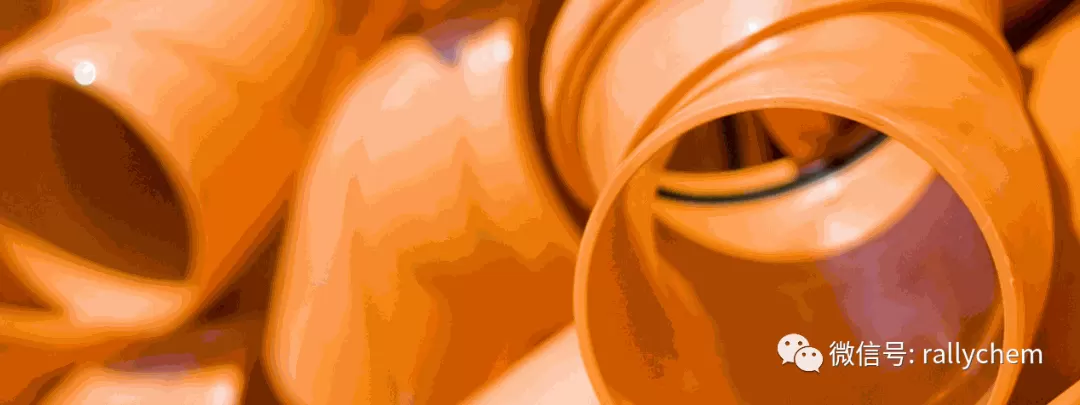
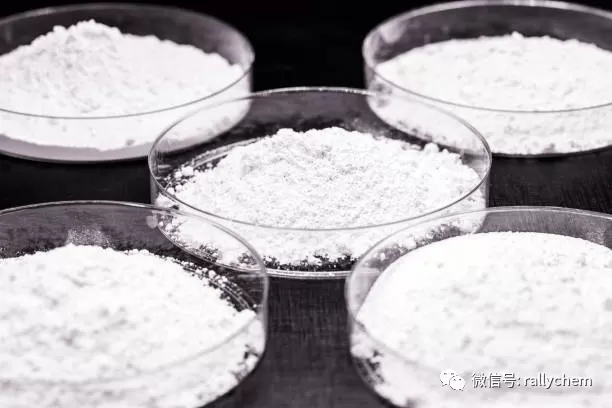
CaCO3 belongs to inorganic filler, which is an excellent PVC filler modifier. It can obviously increase the hardness of PVC products, but also can effectively reduce the cost. Affordable and highly filled PVC products have appeared more and more in our lives.
In the production process of highly filled PVC products, the high content of CaCO3 in the screw strong shear generates a lot of frictional heat, which can easily lead to the decomposition of PVC coke; at the same time, the plasticizing dispersion is not uniform, the grams of weight imbalance is also a common problem in the production.
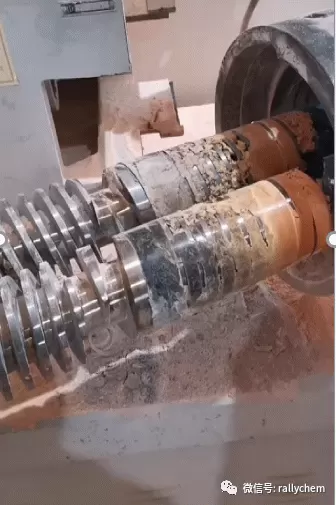
90% of the heat of plasticization is generated by friction, overheating can easily lead to scorched material
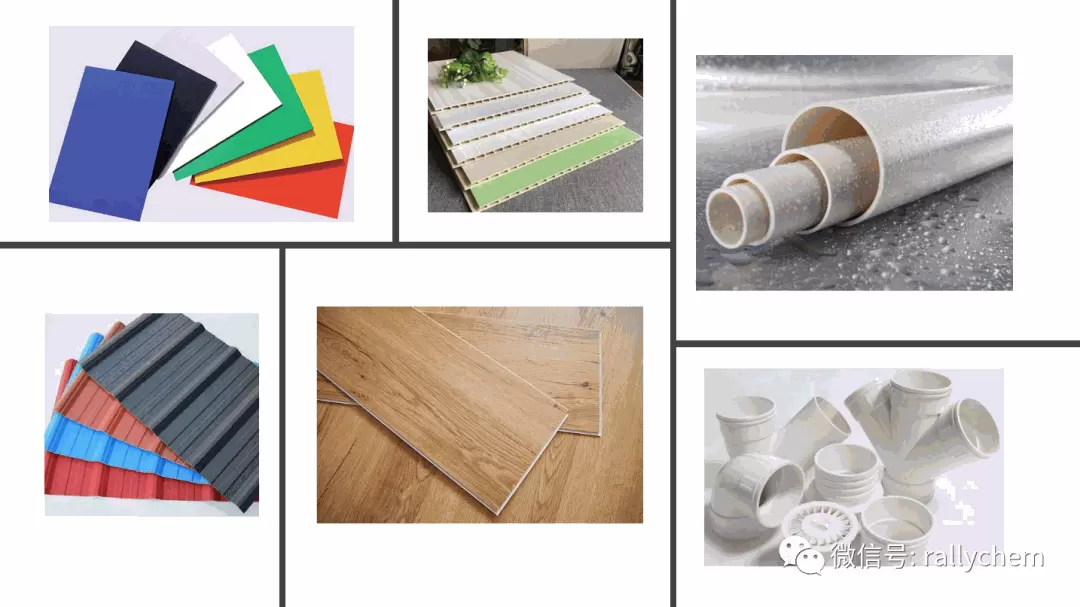
In the SPC / WPC flooring, PVC pipe, wall panels, resin tile and other highly filled products production process, the higher the filler, the product’s rigidity and shrinkage resistance performance is better, the price is more competitive. At the same time, this also puts forward higher requirements on the performance of PVC internal lubricant;
Polyester wax as PVC internal lubricant has natural advantages of compatibility and dispersibility and is more recommended for the production of highly filled PVC products. RALLYCHEM polyester wax RL-1118 is also more cost-effective than the common stearic acid.
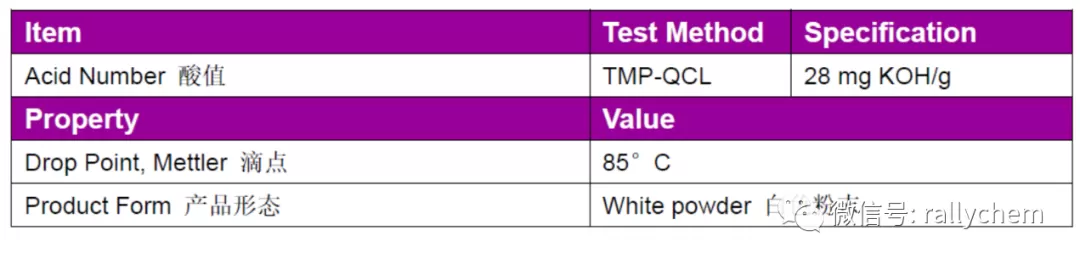
RL-1118 is a polyester wax with a unique molecular structure designed by Rallychem Chemicals. As a special internal lubricant for PVC high filler, RL-1118 can replace stearic acid and show better internal lubrication performance. It avoids the defects of small molecule stearic acid which is easy to precipitate and brittle during PVC processing.
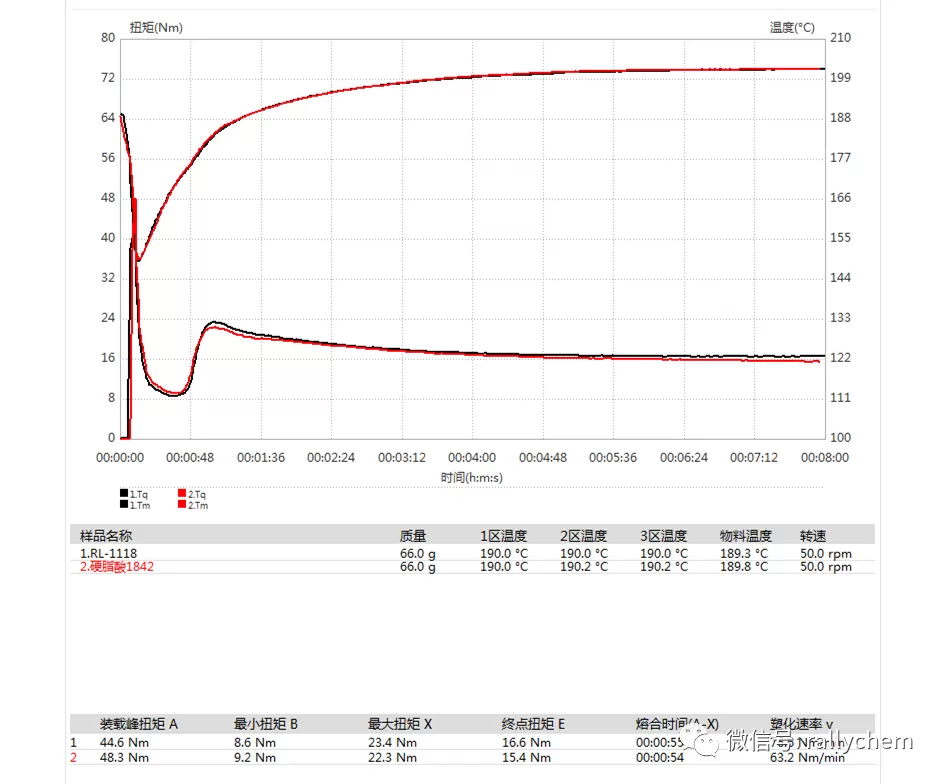
RL-1118 has a lower minimum torque relative to the common first grade stearic acid 1842, showing better internal lubrication and flow properties. It performs consistently with stearic acid 1842 in terms of plasticizing time and equilibrium torque, reducing customer testing costs and time.
Highly filled PVC formulations require higher levels of internal lubrication performance. While improving the dispersibility of calcium carbonate, it is necessary to avoid high friction heat that may lead to rapid stabilizer consumption and PVC decomposition. RL-1118 provides better wetting and coating of CaCO3, which results in better performance in high filler formulations.
Conventional stearic acid has a dropping point of 55-58°C, while polyester wax RL-1118 has a dropping point of 85°C. This is a very high dropping point for PVC products with high Vicat requirements. Higher Vicat softening points can be achieved with RL-1118 than with stearic acid formulations for PVC products.
Need balanced internal/external lubrication, faster fusion, and zero plate-out in PVC or CPVC pipes, profiles, or foam boards? Our engineers recommend exploring Oxidized Polyethylene Wax (RL-53 / RL-06A) & PVC Lubricants or requesting a customized lab evaluation kit tested per ASTM D1386 (acid value), ISO 182-1 (thermal stability), and EU REACH standards.
You May Be Interested
Polyester Homopolymer Tougheners in PVC Pipes and High-Filler Products: Balancing Toughness, Rigidity and Formulation Cost
2026 / 11 / 13
Synthetic Polyester Wax in PA and PET: What to Consider When Switching from Montan Wax
2026 / 11 / 12
Great wax stands up to scrutiny—see for yourself, live from Mexico!
2026 / 11 / 12
At the exhibition? RALLYCHEM is waiting for you at 6.1H15!
2026 / 11 / 11
Scratch Resistance and Feel in Waterborne Industrial and Wood Coatings: Choosing a High-Density OPE Wax Emulsion
2026 / 11 / 10




For Inquiries Please Call
Rallychem Will Be Happy To Assist You!
+86 13456396233





 English
 Español
 Français
 日本語
 한국어
 العربية
 فارسی
 Deutsch
 Italiano
 Tiếng Việt
 ไทย
 Русский
 Bahasa Indonesia
 Bahasa Melayu
 Türkçe


