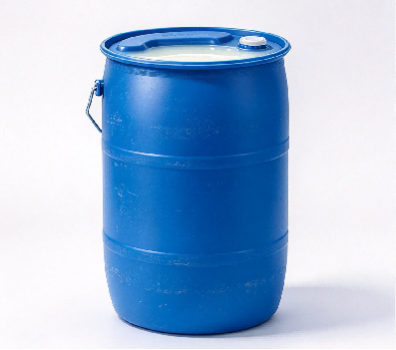
A drum of wax emulsion has been sitting in the warehouse for six months. You take a sample, run the tests, and every indicator meets the required specifications.
It was purchased as a “stable product”: uniform in appearance, with no separation or flocculation. Even after the storage period, the test results remain unchanged.
But once it enters the production line, everything changes.
The emulsion is added to the system at the specified ratio, and processing begins under heat and pressure. The emulsion particles start moving closer together, forming larger aggregates. The dispersion becomes uneven, and eventually, visible flocs appear. Surface defects develop, putting the quality of the entire batch at risk.
Even after cleaning the equipment, replacing the material, and restarting production, the same problem returns in the same place.
You investigate again. The emulsion itself passes inspection, and your existing formulation has been running without problems for a long time.

Both seem fine on their own—so why does flocculation keep occurring on your production line?
Wax emulsion is not simply wax dissolved in water. It consists of tiny wax particles dispersed throughout a water-based medium. To keep these particles evenly distributed, emulsifiers provide a protective layer around them, helping prevent aggregation.
However, emulsion stability depends on more than the emulsion itself. It also depends on how the particles interact with one another and whether they can remain dispersed after the emulsion is mixed with other ingredients.
The first thing to understand is that wax emulsion flocculation can have several different causes.
Changes in electrolyte concentration, pH fluctuations, incompatibility between emulsifiers and other additives, temperature changes, and processing shear can all affect emulsion stability. Identifying the actual cause requires system analysis and controlled comparison tests.
In this customer case, Rallychem confirmed through comparative testing that electrolytes in the customer’s formulation were a key factor behind the loss of emulsion stability. To understand why, we first need to look at how emulsion particles remain dispersed.
For anionic and cationic wax emulsions, electrostatic repulsion between particles is often an important stabilization mechanism.
Particles in an anionic emulsion typically carry a negative surface charge, while those in a cationic emulsion typically carry a positive surface charge. Particles with the same type of charge repel one another, making it harder for them to approach closely and aggregate.
Think of this repulsion as an invisible “barrier” between particles. As long as the barrier remains effective, the particles can maintain a certain distance and stay dispersed.
But this barrier is not fixed. Certain ingredients in a customer’s formulation can change the ionic environment around the particles and weaken the electrostatic repulsion that keeps them apart.
Electrolytes are substances that form ions when dissolved in water.
They do not necessarily come from salt added directly to the formulation. They may already be present in the customer’s system. Common sources include:
Process water: Calcium and magnesium ions in hard water may affect emulsion stability.
Acids, alkalis, and pH adjusters: These can change the ionic environment. For emulsions stabilized by ionizable groups, pH changes may also alter the surface charge of the particles.
Resins, fillers, and other additives: Certain raw materials may contain soluble salts, ionic components, or other substances that affect emulsion stability.
Impurities in other ingredients: Electrolytes or other destabilizing substances may enter the system along with raw materials, even when no electrolytes are deliberately added.
These substances do not automatically cause flocculation. Their effects depend on their type and concentration, as well as how they interact with the existing emulsifier system.
When the ionic strength of a system increases, ions affect the charge distribution around the particles. This can compress the electrical double layer around their surfaces, reducing the effective range of electrostatic repulsion.
In some systems, multivalent ions may also interact with charged groups on particle surfaces, further reducing stability.
As a result, particles that previously stayed apart may now approach one another more easily. Once the repulsive forces are no longer sufficient to prevent aggregation, flocculation can occur.
This was the key issue in our customer case: the wax emulsion was stable on its own, but after entering the customer’s formulation, the ionic environment changed and the original stabilization mechanism was no longer sufficient to maintain dispersion.
Different emulsion types rely on different stabilization mechanisms. As a result, their responses to electrolytes and other formulation ingredients can vary.
Anionic wax emulsions
The particles typically carry a negative surface charge and rely on electrostatic repulsion, along with any other stabilization mechanisms present, to prevent aggregation. When ionic strength increases, the effective range of electrostatic repulsion may decrease. Multivalent ions such as calcium and magnesium may also interact with certain anionic groups. Water quality, electrolyte concentration, and pH are therefore important factors to investigate.
Cationic wax emulsions
The particles typically carry a positive surface charge and may also be affected by ionic strength and pH. If anionic additives are present in the formulation, charge neutralization or complex formation may occur, potentially causing particles to aggregate. The actual effect depends on the properties and proportions of the ingredients, as well as the order of addition.
Nonionic wax emulsions
These generally rely less on electrostatic repulsion. Instead, hydrated chains of the emulsifier can provide steric stabilization, helping prevent particles from coming into direct contact and aggregating.
Nonionic emulsions may therefore be less sensitive to certain electrolyte changes, but this does not make them universally stable. Salts, temperature, emulsifier hydration, and compatibility with other additives can still affect their stability.
There is no simple rule that one ionic type is always more stable than another. What matters is the specific emulsifier structure, the properties of the wax, and the compatibility between the emulsion and the customer’s formulation.
During laboratory testing, an emulsion is usually kept under relatively mild conditions. On a production line, however, it encounters a different combination of raw materials and processing conditions.
Heating increases particle movement and collision frequency. It may also change the hydration state of the emulsifier, its ability to protect the particle interface, and the properties of the emulsion itself. The actual effects depend on the emulsifier type, formulation, and temperature range.
Pressure alone does not necessarily destabilize an emulsion. However, pressurized production processes often involve flow, shear, and local temperature changes. These conditions may influence particle interactions and the dispersion state of the system.
When electrolytes have already weakened the original stabilization mechanism, heating and processing can further affect particle aggregation, making flocculation more likely or more pronounced.
That is why the appearance of an emulsion in storage is not enough to determine whether it is suitable for production.
Storage stability means the emulsion remains stable under specified storage conditions. Application stability means it can maintain suitable dispersion after entering the customer’s formulation and undergoing actual processing conditions. These are not the same thing.
The potential flocculation process can be summarized as follows:
Electrolytes from the customer’s formulation enter the emulsion.
↓
The ionic environment around the particles changes.
↓
The effective range of electrostatic repulsion decreases, reducing particle stability.
↓
Heating and actual processing conditions further influence particle aggregation.
↓
Particles aggregate and form flocs, potentially causing surface defects in the finished product.
In this case, the wax emulsion had not necessarily deteriorated during storage. Rather, the stabilization system that kept it stable on its own could not adequately withstand the electrolyte environment of the customer’s formulation.
So how can this type of flocculation be addressed?

Rallychem began by testing the wax emulsion itself. A laser particle size analyzer was used to measure the particle size distribution, while a Zeta potential analyzer assessed the surface charge characteristics of the particles. A pH meter and conductivity meter were used to evaluate the acidity or alkalinity and ionic environment of the system. Storage stability was also assessed.
The results showed that the original sample remained stable under the laboratory test conditions, with no obvious abnormalities detected.
Next, we added the wax emulsion to the customer’s formulation and compared samples before and after mixing and heating, using the same particle size analyzer for follow-up measurements.
The results showed that the particle size distribution became noticeably broader after heating, with evidence of particle aggregation.
This indicated that the problem could not be explained simply by the initial condition of the emulsion. Further investigation was needed to understand what happened after it entered the customer’s system.
Rallychem then conducted controlled tests by varying the electrolyte environment and processing temperature.
The results confirmed that electrolytes in the customer’s formulation were a key factor in reducing emulsion stability, while heating further influenced particle aggregation.
The original emulsifier system could maintain the stability of the wax emulsion on its own, but it was not sufficiently compatible with the electrolyte environment of the customer’s formulation. As a result, the particles aggregated and flocculation occurred.
This explains why the emulsion passed standalone testing but became unstable after mixing: the emulsion itself showed no obvious initial abnormality, but its original stabilization system could not adequately adapt to the ionic environment of the customer’s formulation.
Once the key factors had been identified, Rallychem adjusted the emulsifier combination and proportions based on the properties of the wax, the electrolyte environment of the customer’s formulation, and the processing temperature.
The goal was to improve the emulsion’s compatibility with actual application conditions, rather than simply increasing the amount of emulsifier.
Using our laboratory capabilities for emulsion preparation, particle size analysis, and Zeta potential measurement, we prepared and compared different formulations to identify a more suitable emulsifier system for the customer’s application.
The optimized wax emulsion was then added to the customer’s formulation again and tested under the target temperature and relevant processing conditions.
Follow-up measurements showed that particle aggregation had improved, changes in the particle size distribution were better controlled, and the dispersion state was more stable than that of the original formulation.
By combining particle size analysis, comparative system testing, and simulated processing, Rallychem moved beyond checking the stability of the emulsion alone to evaluating its compatibility with the complete formulation.
This approach helped the customer reduce repeated material trials and costly production testing.
Don’t wait for another batch to flocculate in the mixing tank.
Send Rallychem the wax type or emulsion you currently use, your formulation system, processing conditions (temperature, pressure, and time), and details about where and how the flocculation occurs.
We’ll help investigate the cause, identify the key factors affecting emulsion stability, adjust the emulsifier system where necessary, and verify the results through testing.
Reduce repeated trials and production testing costs, and help your wax emulsion perform reliably in your actual production system.
Facing a flocculation problem? Contact the Rallychem technical team, and let’s work together to find a solution.
Rallychem | From wax additives to technical support for local wax emulsion production.
You May Be Interested
Uniform on Discharge, Layered in Storage? The Truth About Creaming in Wax Emulsions
2026 / 10 / 21
Three Months at a Masterbatch Plant: From Raising Throughput to Strand Breaks — and Rebuilding the Formulation Balance
2026 / 10 / 21
More possibilities for coatings and inks, see you in Guangzhou.
2026 / 10 / 21
Why Do Wax Additive Replacement Tests Fail? Why Can Similar TDS Parameters Still Lead to Different Processing Results?
2026 / 10 / 19
The Hidden Trap of High-Filler PVC Pipe Formulations: Why Does Increasing Calcium Carbonate Loading Lead to More Severe Die Build-Up?
2026 / 10 / 14




For Inquiries Please Call
Rallychem Will Be Happy To Assist You!
+86 13456396233





 English
 Español
 Français
 日本語
 한국어
 العربية
 فارسی
 Deutsch
 Italiano
 Tiếng Việt
 ไทย
 Русский
 Bahasa Indonesia
 Bahasa Melayu
 Türkçe


