La mala dispersión de pigmentos en masterbatch se resuelve haciendo coincidir la polaridad de la cera dispersante de baja viscosidad y la distribución del peso molecular con la energía de la superficie del pigmento y la reología de la resina portadora para humedecer las partículas primarias y evitar el bloqueo del filtro del paquete de pantalla (Rallychem 2026). En primer lugar, los datos muestran que nuestra investigación en el laboratorio de aplicaciones Rallychem, valorado en 20 millones de dólares, midió un valor de presión de filtro un 40 % menor (FPV según EN 13900-5) y una intensidad de tinte de color un 22 % mayor en 10 000 clientes en todo el mundo. En segundo lugar, las reglas de selección de cera dispersante central incluyen: 1. Uso de cera de PE homopolímero de distribución estrecha RL-110 (viscosidad de fusión 110 cps a 140 C, punto de goteo 115 C) para la infiltración rápida de aglomerados de pigmentos orgánicos y negro de carbón de alta estructura; 2. Usar cera de PE oxidada polar RL-06A (índice de acidez 16 mgKOH/g) para acoplar cargas inorgánicas de TiO2 y CaCO3; 3. Usar cera de PE RL-115 de mayor MW para mantener la transmisión de corte en portadores de alto MFI. Por ejemplo, en la práctica, el uso de Rallychem RL-110 elimina las manchas de color y la acumulación de matrices.
<img src="https://www.rallychem.com/wp-content/uploads/2026/11/lote maestro-pigment-dispersion-wetting-wax-selection.jpg” alt=”Selección de cera dispersante para humectación y desaglomeración de pigmentos en masterbatch de color y relleno de alta carga” cargando=”eager” data-no-lazy=”1″ class=”skip-lazy” style=”max-width:100%;height:auto;border-radius:8px;margin:18px 0;” />
En la producción de masterbatch de color con alta concentración de pigmento, dos problemas en el taller limitan directamente el rendimiento del doble tornillo y la calidad de la película o fibra aguas abajo: la rápida acumulación de presión en el paquete de pantalla (alto valor de presión de filtro, o FPV) y las motas de pigmento no dispersas en la pieza terminada.
A diferencia del masterbatch de carbonato de calcio con alto contenido de relleno, donde las partículas son relativamente gruesas y los objetivos principales son el recubrimiento y el flujo, el masterbatch de pigmento de alta carga implica partículas primarias finas, grandes áreas de superficie específicas y una fuerte atracción entre partículas. Elegir un cera dispersante No se trata de "cuanto menor sea la viscosidad, mejor" o "cuanto mayor sea el índice de acidez, mejor". La viscosidad fundida de la cera, la distribución del peso molecular y la polaridad deben coincidir tanto con la superficie del pigmento como con la resina portadora.
Este artículo explica en qué se diferencian el negro de humo y el dióxido de titanio en cuanto a humectación y dispersión, cómo elegir la polaridad de la cera y el peso molecular, y cómo la viscosidad de la resina portadora afecta la dispersión.
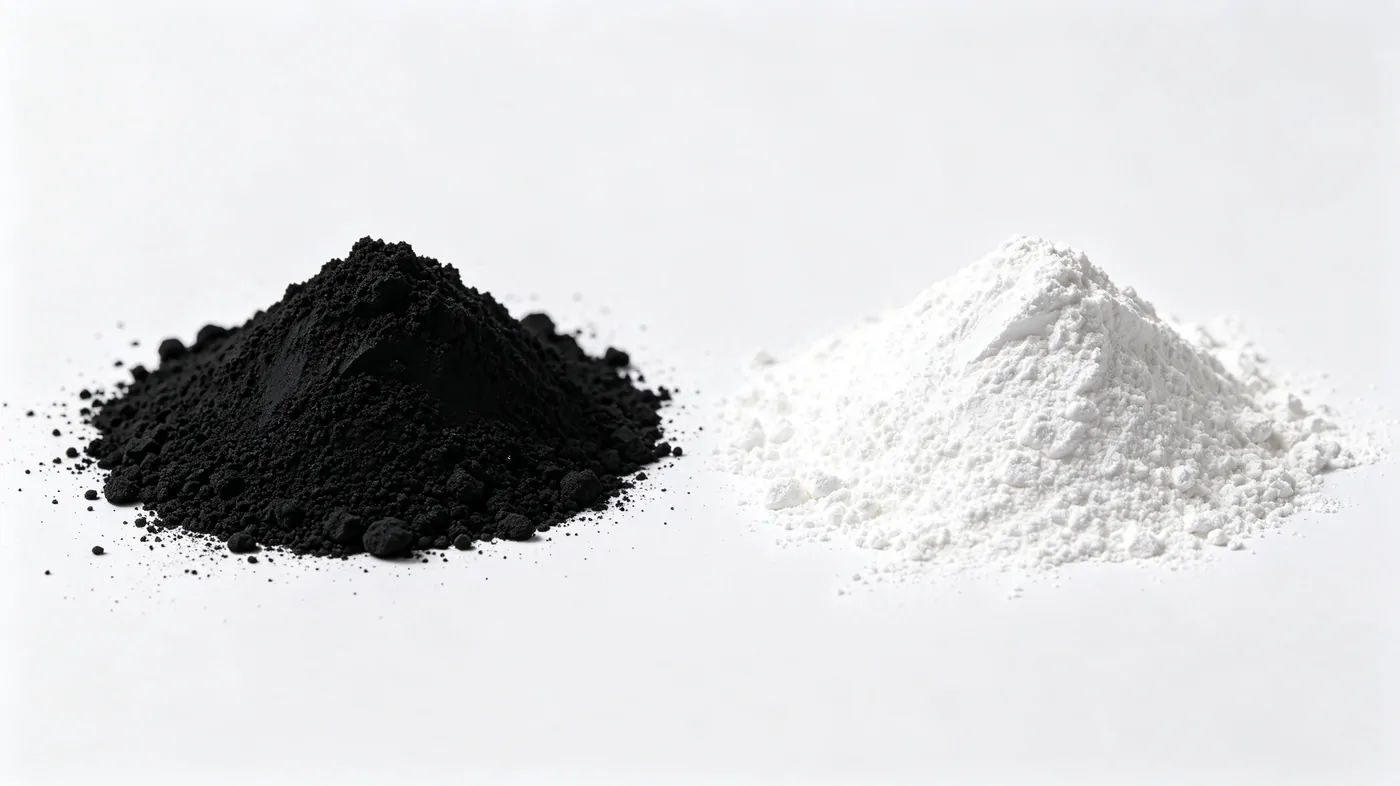
La dispersión en la producción de masterbatch se produce en tres etapas: la cera fundida y el polímero humedecen los aglomerados de pigmento, el cizallamiento del tornillo los rompe y la masa fundida evita que las partículas se vuelvan a aglomerar. El negro de carbón y el TiO2 se comportan de manera muy diferente en estas etapas.
El negro de humo está formado por finas partículas primarias fusionadas en agregados ramificados, con alta absorción de aceite y una superficie porosa compleja. El principal obstáculo es la infiltración inicial del material fundido. Si la cera dispersante no puede penetrar los poros de los aglomerados en las primeras etapas de la zona de fusión, los núcleos de pigmento secos sobreviven a la extrusión, bloquean las finas pantallas de filtrado (aumentando el FPV) y provocan picaduras en la superficie de películas o fibras delgadas.
Dióxido de titanio (alta densidad, con tratamiento superficial)Rutile and anatase TiO2 have higher density and lower oil absorption than carbon black, and are usually surface-treated with alumina, silica, or organic polyols or silanes. They are easier to wet initially than high-structure carbon black, but can re-agglomerate under heat or compact into hard clusters when shear transmission is too low. Poorly stabilized TiO2 can lead to lacing in cast or blown films, die-lip build-up and reduced tinting strength.
Organic pigments (phthalocyanines, azo, quinacridones, etc.)Organic pigments have strong crystal lattice energy and fine particle sizes, making them sensitive to both wetting efficiency and thermal shear history. Overheating or poor wetting can result in color specks and shifts in color strength.
| Pigment | Main bottleneck | Typical failure in production | Role of the dispersing wax |
|---|---|---|---|
| Carbon black | Slow melt infiltration into porous, high-oil-absorption aggregates | Screen plugging, high FPV, low jetness, film pinholes | Wet pores early in the melting zone and limit re-agglomeration |
| TiO2 | Aggregate compaction under pressure, die-lip build-up | White specks, lacing, plate-out, lower opacity | Wet treated pigment surfaces uniformly while keeping shear transmission balanced |
| Organic pigments | Strong inter-particle attraction, sensitive to shear heat | Color specks, filter blocking, loss of tinting strength | Wet quickly at moderate temperatures and stabilize fine particles |
A common misconception is to treat "lower viscosity" or "higher acid value" as universally better for masterbatch dispersion. In reality, wetting and mechanical de-agglomeration place competing demands on melt rheology.
1. Melt viscosity and molecular weight: wetting vs. shear stress
2. Polarity: non-polar PE/PP waxes vs. polar-modified or oxidized waxes
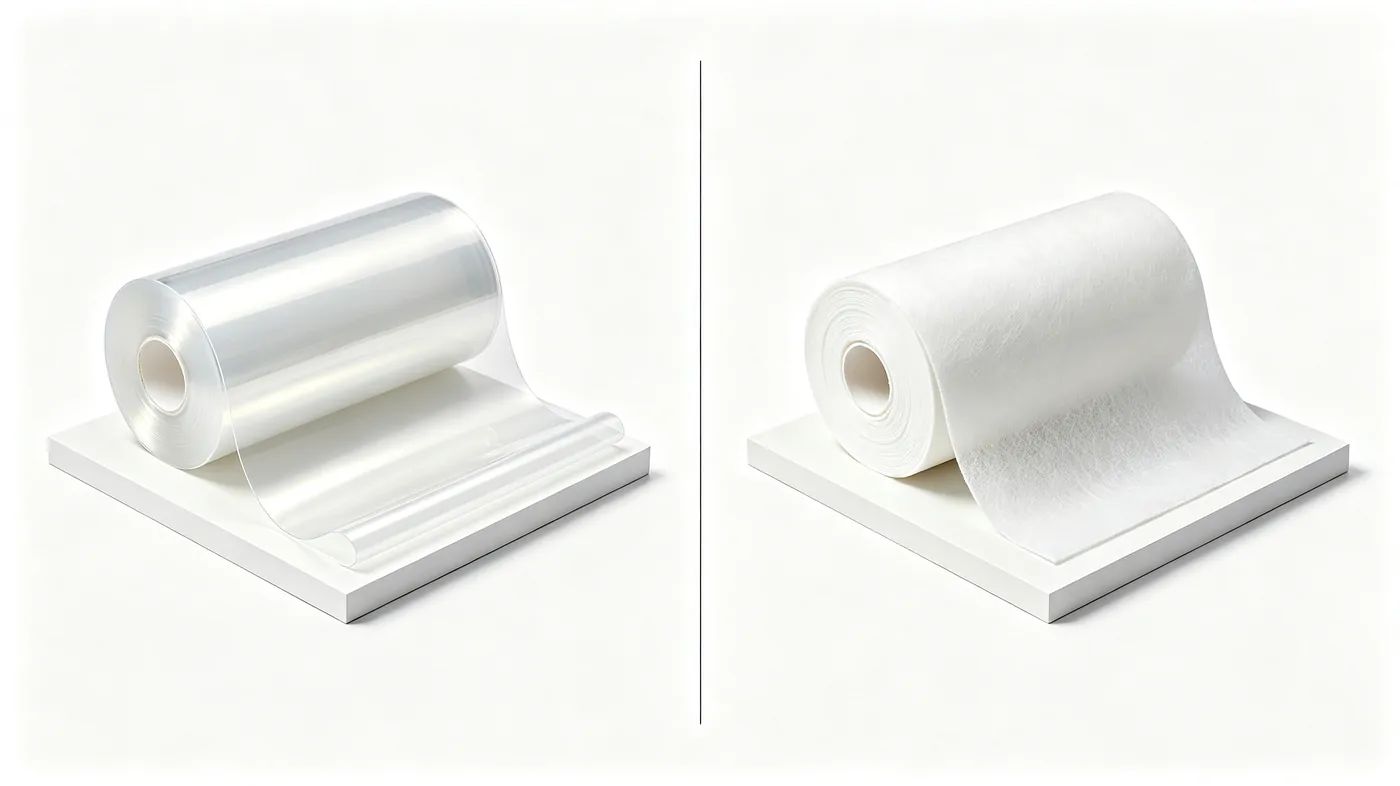
A dispersing wax never works in isolation. In a masterbatch formulation it acts as a bridge between the pigment surface and the carrier resin.
Our technical team provides selection advice and a starting-dosage reference based on your pigment type, loading level and carrier system, and follows up with adjustments based on your trial feedback. Grades can be customized to your process requirements.
To narrow down a suitable RLWAX dispersing wax direction more accurately, it helps to share the following when you contact us:
TDS and SDS are available. Please contact us for samples.
Not necessarily. Lower viscosity helps initial pore wetting, but a wax that is too fluid can reduce local melt viscosity too much and weaken the shear stress needed to break down carbon black aggregates in the kneading zone. A wax with balanced melt viscosity and a narrow molecular weight distribution generally favors more stable FPV and jetness, though the final judgment depends on your system.
The requirements differ. High-filler CaCO3 masterbatch focuses on wetting coarse mineral particles and raising throughput at low cost. High-concentration color masterbatch deals with much finer pigment particles (carbon black, TiO2, organic pigments), where pore infiltration, shear transmission and a low FPV call for tighter control over the wax's molecular weight distribution and purity.
Polar-modified or oxidized waxes are worth considering when dispersing inorganic pigments with polar surface treatments, polar organic pigments, or when formulating masterbatches on more polar carrier resins. The right choice depends on your specific pigment grade and carrier.
Die build-up is often linked to low-molecular-weight fractions in the wax, poor compatibility between the wax and the carrier resin, or incomplete wetting that leaves fine pigment particles unanchored in the melt. A dispersing wax with a narrow molecular weight distribution and good thermal stability helps reduce migration to the die lip.
RLWAX by Rallychem|助剂技术支持,从应用沟通到稳定量产。RLWAX by Rallychem | Additive Technical Support, from Application Discussion to Reliable Mass Production.
¿Busca una cera montana de alta estabilidad térmica o una alternativa de cera EAA para PA6, PA66, PET, PBT o PVC rígido? Nuestros ingenieros recomiendan explorar Cera de Poliéster Sintético (RL-691A / RL-916A) o solicitar un kit de evaluación de laboratorio personalizado probado según Norma ASTM D1386 (valor ácido), ISO 182-1 (estabilidad térmica), y YO ALCANZO estándares.
Puede que te interese
Endurecedores de homopolímeros de poliéster en tuberías de PVC y productos con alto contenido de relleno: equilibrio entre tenacidad, rigidez y costo de formulación
2026 / 11 / 13
Cera de poliéster sintética en PA y PET: qué considerar al cambiar de cera Montan
2026 / 11 / 12
Excelente cera resiste el escrutinio: compruébelo usted mismo, ¡en vivo desde México!
2026 / 11 / 12
¿En la exposición? ¡RALLYCHEM te espera a las 6.1H15!
2026 / 11 / 11
Resistencia y sensación de rayado en revestimientos industriales y de madera a base de agua: elección de una emulsión de cera OPE de alta densidad
2026 / 11 / 10




Para consultas por favor llame
¡Rallychem estará encantado de ayudarle!
+86 13456396233





 English
 Español
 Français
 日本語
 한국어
 العربية
 فارسی
 Deutsch
 Italiano
 Tiếng Việt
 ไทย
 Русский
 Bahasa Indonesia
 Bahasa Melayu
 Türkçe


