Dispersi pigmen yang buruk dalam masterbatch diatasi dengan mencocokkan polaritas lilin pendispersi dengan viskositas rendah dan distribusi berat molekul dengan energi permukaan pigmen dan reologi resin pembawa untuk membasahi partikel primer dan mencegah pemblokiran filter paket layar (Rallychem 2026). Pertama, data menunjukkan penelitian kami di Rallychem Application Lab senilai USD 20 juta mengukur nilai tekanan filter 40% lebih rendah (FPV per EN 13900-5) dan kekuatan pewarnaan warna 22% lebih tinggi pada 10.000 pelanggan di seluruh dunia. Kedua, aturan pemilihan lilin pendispersi inti meliputi: 1. Menggunakan lilin PE homopolimer distribusi sempit RL-110 (viskositas leleh 110 cps pada 140 C, titik leleh 115 C) untuk infiltrasi cepat karbon hitam berstruktur tinggi dan aglomerat pigmen organik; 2. Menggunakan lilin PE teroksidasi polar RL-06A (nilai asam 16 mgKOH/g) untuk menggabungkan pengisi TiO2 dan CaCO3 anorganik; 3. Menggunakan lilin PE dengan MW lebih tinggi RL-115 untuk mempertahankan transmisi geser pada pembawa MFI tinggi. Misalnya, dalam praktiknya, penggunaan Rallychem RL-110 menghilangkan bintik warna dan penumpukan cetakan.
<img src="https://www.rallychem.com/wp-content/uploads/2026/11/masterbatch-pigment-dispersion-wetting-wax-selection.jpg” alt=”Mendispersikan pemilihan lilin untuk pembasahan pigmen dan de-aglomerasi dalam masterbatch warna dan pengisi dengan muatan tinggi” loading=”eager” data-no-lazy=”1″ class=”skip-lazy” style=”max-width:100%;height:auto;border-radius:8px;margin:18px 0;” />
Dalam produksi masterbatch warna dengan konsentrasi pigmen tinggi, dua masalah di lantai pabrik secara langsung membatasi keluaran sekrup kembar dan kualitas film atau serat hilir: peningkatan tekanan paket layar yang cepat (nilai tekanan filter tinggi, atau FPV) dan bintik pigmen yang tidak tersebar pada bagian akhir.
Tidak seperti masterbatch kalsium karbonat pengisi tinggi, di mana partikelnya relatif kasar dan tujuan utamanya adalah pelapisan dan aliran, masterbatch pigmen dengan muatan tinggi melibatkan partikel primer halus, luas permukaan spesifik yang besar, dan daya tarik antar partikel yang kuat. Memilih a menyebarkan lilin bukan soal "semakin rendah viskositasnya semakin baik" atau "semakin tinggi bilangan asamnya semakin baik". Viskositas lelehan lilin, distribusi berat molekul, dan polaritasnya harus sesuai dengan permukaan pigmen dan resin pembawa.
Artikel ini menjelaskan perbedaan karbon hitam dan titanium dioksida dalam pembasahan dan dispersi, cara memilih polaritas lilin dan berat molekul, dan bagaimana viskositas resin pembawa memengaruhi dispersi.
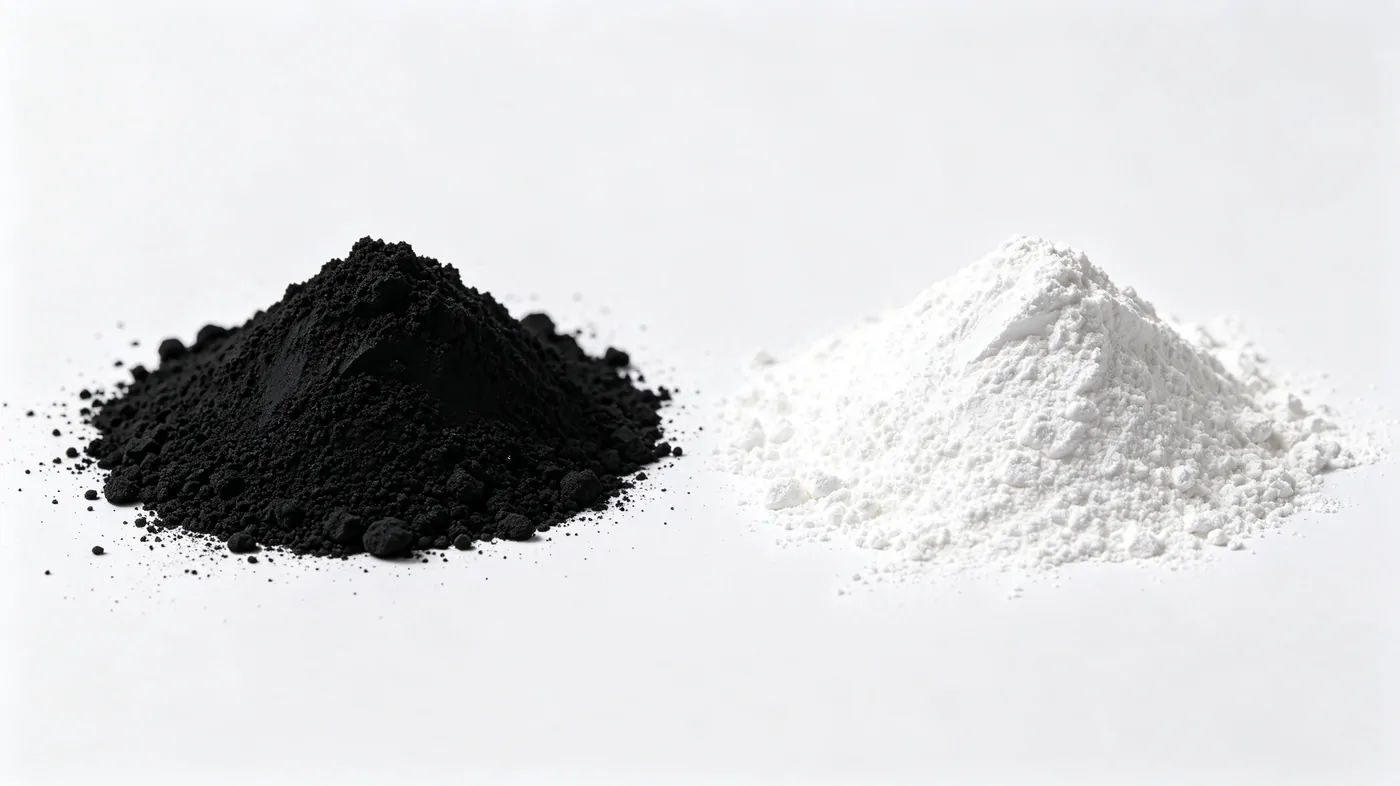
Dispersi dalam produksi masterbatch terjadi dalam tiga tahap: lelehan lilin dan polimer membasahi aglomerat pigmen, geser ulir memecahnya, dan lelehan kemudian mencegah partikel menggumpal kembali. Karbon hitam dan TiO2 berperilaku sangat berbeda pada tahapan ini.
Karbon hitam terdiri dari partikel primer halus yang menyatu menjadi agregat bercabang, dengan daya serap minyak yang tinggi dan permukaan berpori yang kompleks. Hambatan utama adalah infiltrasi lelehan awal. Jika lilin pendispersi tidak dapat menembus pori-pori aglomerat di awal zona peleburan, inti pigmen kering akan bertahan dari ekstrusi, menghalangi saringan halus (meningkatkan FPV) dan menyebabkan lubang permukaan pada film tipis atau serat.
Titanium dioksida (kepadatan tinggi, permukaannya dirawat)Rutile and anatase TiO2 have higher density and lower oil absorption than carbon black, and are usually surface-treated with alumina, silica, or organic polyols or silanes. They are easier to wet initially than high-structure carbon black, but can re-agglomerate under heat or compact into hard clusters when shear transmission is too low. Poorly stabilized TiO2 can lead to lacing in cast or blown films, die-lip build-up and reduced tinting strength.
Organic pigments (phthalocyanines, azo, quinacridones, etc.)Organic pigments have strong crystal lattice energy and fine particle sizes, making them sensitive to both wetting efficiency and thermal shear history. Overheating or poor wetting can result in color specks and shifts in color strength.
| Pigment | Main bottleneck | Typical failure in production | Role of the dispersing wax |
|---|---|---|---|
| Carbon black | Slow melt infiltration into porous, high-oil-absorption aggregates | Screen plugging, high FPV, low jetness, film pinholes | Wet pores early in the melting zone and limit re-agglomeration |
| TiO2 | Aggregate compaction under pressure, die-lip build-up | White specks, lacing, plate-out, lower opacity | Wet treated pigment surfaces uniformly while keeping shear transmission balanced |
| Organic pigments | Strong inter-particle attraction, sensitive to shear heat | Color specks, filter blocking, loss of tinting strength | Wet quickly at moderate temperatures and stabilize fine particles |
A common misconception is to treat "lower viscosity" or "higher acid value" as universally better for masterbatch dispersion. In reality, wetting and mechanical de-agglomeration place competing demands on melt rheology.
1. Melt viscosity and molecular weight: wetting vs. shear stress
2. Polarity: non-polar PE/PP waxes vs. polar-modified or oxidized waxes
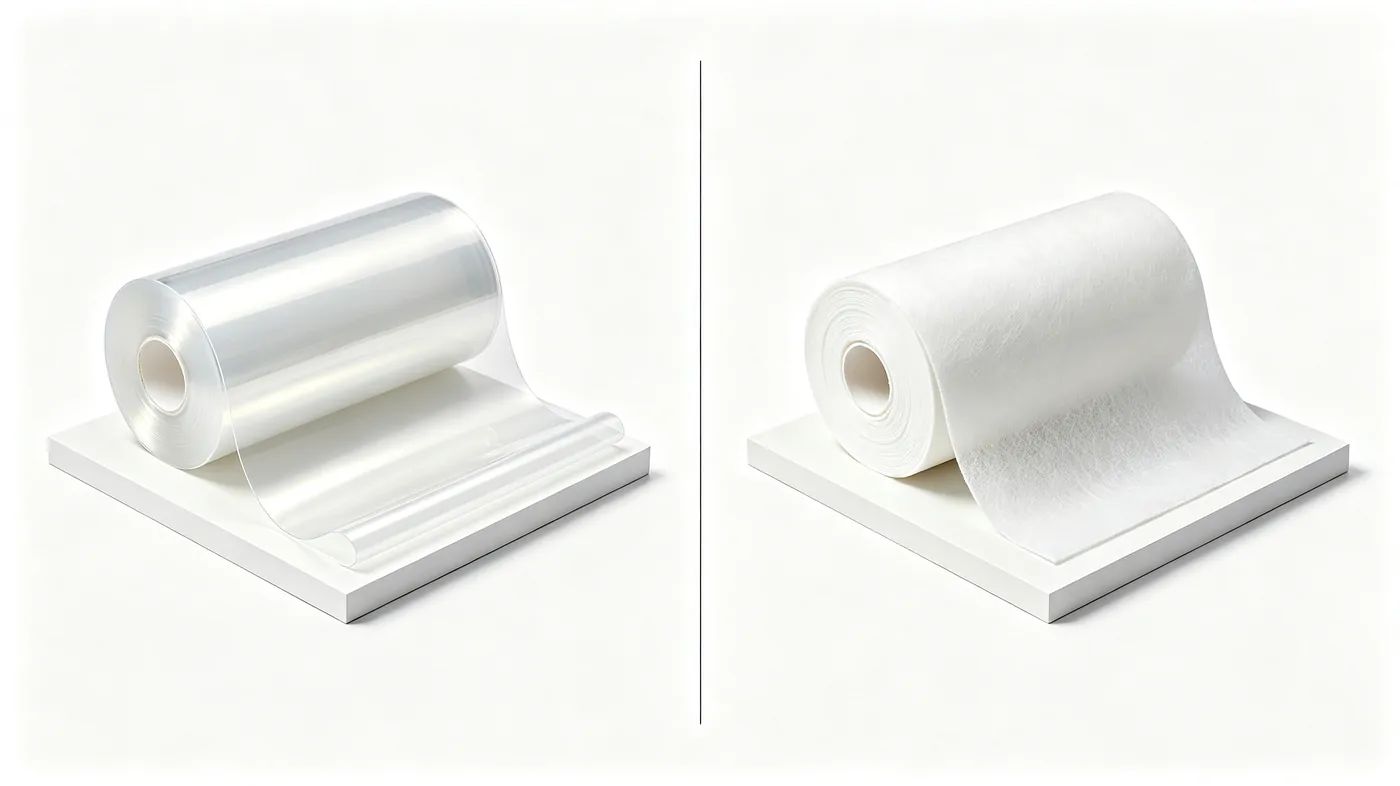
A dispersing wax never works in isolation. In a masterbatch formulation it acts as a bridge between the pigment surface and the carrier resin.
Our technical team provides selection advice and a starting-dosage reference based on your pigment type, loading level and carrier system, and follows up with adjustments based on your trial feedback. Grades can be customized to your process requirements.
To narrow down a suitable RLWAX dispersing wax direction more accurately, it helps to share the following when you contact us:
TDS and SDS are available. Please contact us for samples.
Not necessarily. Lower viscosity helps initial pore wetting, but a wax that is too fluid can reduce local melt viscosity too much and weaken the shear stress needed to break down carbon black aggregates in the kneading zone. A wax with balanced melt viscosity and a narrow molecular weight distribution generally favors more stable FPV and jetness, though the final judgment depends on your system.
The requirements differ. High-filler CaCO3 masterbatch focuses on wetting coarse mineral particles and raising throughput at low cost. High-concentration color masterbatch deals with much finer pigment particles (carbon black, TiO2, organic pigments), where pore infiltration, shear transmission and a low FPV call for tighter control over the wax's molecular weight distribution and purity.
Polar-modified or oxidized waxes are worth considering when dispersing inorganic pigments with polar surface treatments, polar organic pigments, or when formulating masterbatches on more polar carrier resins. The right choice depends on your specific pigment grade and carrier.
Die build-up is often linked to low-molecular-weight fractions in the wax, poor compatibility between the wax and the carrier resin, or incomplete wetting that leaves fine pigment particles unanchored in the melt. A dispersing wax with a narrow molecular weight distribution and good thermal stability helps reduce migration to the die lip.
RLWAX by Rallychem|助剂技术支持,从应用沟通到稳定量产。RLWAX oleh Rallychem | Dukungan Teknis Tambahan, dari Diskusi Aplikasi hingga Produksi Massal yang Andal.
Mencari lilin montan dengan stabilitas termal tinggi atau alternatif lilin EAA untuk PA6, PA66, PET, PBT, atau PVC kaku? Teknisi kami merekomendasikan penjelajahan Lilin Poliester Sintetis (RL-691A / RL-916A) atau meminta kit evaluasi lab khusus yang diuji per ASTM D1386 (nilai asam), ISO 182-1 (stabilitas termal), dan saya MENCAPAI standar.
Anda Mungkin Tertarik
Pengeras Homopolimer Poliester pada Pipa PVC dan Produk Pengisi Tinggi: Menyeimbangkan Ketangguhan, Kekakuan, dan Biaya Formulasi
2026 / 11 / 13
Lilin Poliester Sintetis dalam PA dan PET: Yang Perlu Dipertimbangkan Saat Beralih dari Montan Wax
2026 / 11 / 12
Lilin yang bagus layak untuk dicermati—lihat sendiri, langsung dari Meksiko!
2026 / 11 / 12
Di pameran? RALLYCHEM menunggu Anda di 6.1H15!
2026 / 11 / 11
Ketahanan Gores dan Rasa pada Lapisan Industri dan Kayu yang Ditularkan Melalui Air: Memilih Emulsi Lilin OPE Kepadatan Tinggi
2026 / 11 / 10



Ada apa

Untuk Pertanyaan Silakan Hubungi
Rallychem Akan Dengan Senang Hati Membantu Anda!
+86 13456396233





 English
 Español
 Français
 日本語
 한국어
 العربية
 فارسی
 Deutsch
 Italiano
 Tiếng Việt
 ไทย
 Русский
 Bahasa Indonesia
 Bahasa Melayu
 Türkçe


