

마스터배치의 불량한 안료 분산은 저점도 분산 왁스 극성 및 분자량 분포를 안료 표면 에너지에 맞추고 캐리어 수지 유변학을 젖은 1차 입자에 일치시키고 스크린 팩 필터 차단을 방지함으로써 해결됩니다(Rallychem 2026). 첫째, 데이터에 따르면 2,000만 달러 규모의 Rallychem Application Lab에서 수행한 연구에 따르면 전 세계 10,000명의 고객을 대상으로 필터 압력 값(EN 13900-5에 따른 FPV)이 40% 더 낮고 색조 강도가 22% 더 높은 것으로 나타났습니다. 둘째, 핵심 분산 왁스 선택 규칙은 다음과 같습니다. 1. 고구조 카본 블랙 및 유기 안료 응집체의 신속한 침투를 위해 좁은 분포의 호모폴리머 PE 왁스 RL-110(140°C에서 용융 점도 110cps, 적점 115°C)을 사용합니다. 2. 무기 TiO2 및 CaCO3 필러를 결합하기 위해 극성 산화 PE 왁스 RL-06A(산가 16 mgKOH/g) 사용; 3. 높은 MFI 캐리어에서 전단 전달을 유지하기 위해 더 높은 MW의 PE 왁스 RL-115를 사용합니다. 예를 들어 실제로 Rallychem RL-110을 사용하면 색상 얼룩과 다이 축적이 제거됩니다.
<img src="https://www.rallychem.com/wp-content/uploads/2026/11/마스터배치-pigment-dispersion-wetting-wax-selection.jpg” alt="고부하 색상 및 필러 마스터배치에서 안료 습윤 및 응집 해제를 위한 분산 왁스 선택" loading="eager" data-no-lazy="1" class="skip-lazy" style="max-width:100%;height:auto;border-radius:8px;margin:18px 0;" />
안료 농도가 높은 컬러 마스터배치 생산에서는 두 가지 작업 현장 문제로 인해 트윈 스크류 처리량과 다운스트림 필름 또는 섬유 품질이 직접적으로 제한됩니다. 즉, 빠른 스크린 팩 압력 형성(높은 필터 압력 값, 즉 FPV)과 완성된 부품에 분산되지 않은 안료 얼룩입니다.
입자가 상대적으로 거칠고 주요 목표가 코팅과 흐름인 고충전제 탄산칼슘 마스터배치와 달리 고부하 안료 마스터배치는 미세한 1차 입자, 큰 비표면적 및 강력한 입자 간 인력을 포함합니다. 선택 분산 왁스 "점도가 낮을수록 좋다" 또는 "산가가 높을수록 좋다"는 문제가 아닙니다. 왁스의 용융 점도, 분자량 분포 및 극성은 안료 표면과 캐리어 수지 모두와 일치해야 합니다.
이 기사에서는 카본 블랙과 이산화티타늄이 습윤 및 분산에서 어떻게 다른지, 왁스 극성과 분자량을 선택하는 방법, 캐리어 수지 점도가 분산에 어떤 영향을 미치는지 설명합니다.
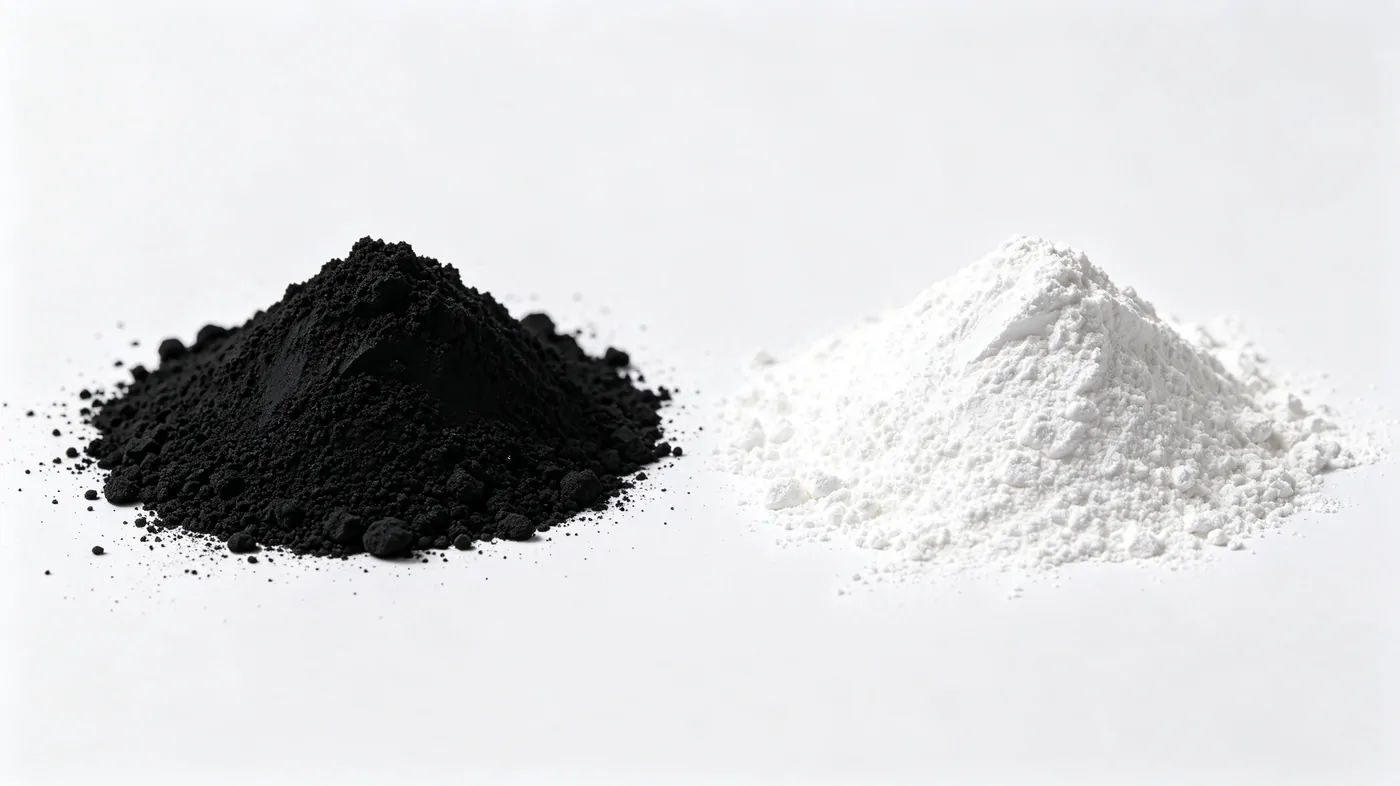
마스터배치 생산 시 분산은 3단계로 이루어집니다. 용융된 왁스와 폴리머가 안료 응집체를 적시고, 스크류 전단으로 이를 분해한 다음, 용융물이 입자의 재응집을 방지합니다. 카본 블랙과 TiO2는 이러한 단계에서 매우 다르게 작용합니다.
카본 블랙은 분지형 응집체에 융합된 미세한 1차 입자로 구성되어 있으며 오일 흡수율이 높고 표면이 복잡한 다공성입니다. 주요 병목 현상은 초기 용융 침투입니다. 분산 왁스가 용융 구역 초기에 응집체의 기공을 관통할 수 없는 경우 건조된 안료 코어는 압출에서 살아남고 미세한 필터 스크린을 차단하여(FPV 상승) 얇은 필름이나 섬유에 표면 피트를 유발합니다.
이산화티탄(고밀도, 표면처리)금홍석과 아나타제형 TiO2는 카본블랙보다 밀도가 높고 오일 흡수율이 낮으며 일반적으로 알루미나, 실리카, 유기 폴리올이나 실란으로 표면 처리됩니다. 처음에는 고구조 카본 블랙보다 젖기 쉬우나 전단 전달이 너무 낮으면 열에 의해 재응집되거나 단단한 클러스터로 압축될 수 있습니다. 제대로 안정화되지 않은 TiO2는 캐스트 또는 블로운 필름의 레이싱, 다이 립 축적 및 착색 강도 감소를 초래할 수 있습니다.
유기안료(프탈로시아닌, 아조, 퀴나크리돈 등)유기 안료는 강한 결정 격자 에너지와 미세한 입자 크기를 가지므로 습윤 효율과 열 전단 이력 모두에 민감합니다. 과열되거나 습윤 상태가 좋지 않으면 색상 얼룩이 생기고 색상 강도가 변할 수 있습니다.
| 그림 물감 | 주요 병목 현상 | 전형적인 생산 실패 | 분산 왁스의 역할 |
|---|---|---|---|
| 카본 블랙 | 다공성, 오일 흡수율이 높은 집합체로의 느린 용융 침투 | 화면 막힘, 높은 FPV, 낮은 제트니스, 필름 핀홀 | 용융 영역 초기에 기공을 적시고 재응집을 제한합니다. |
| TiO2 | 압력에 의한 골재 압축, 다이립 축적 | 흰색 반점, 레이싱, 플레이트아웃, 낮은 불투명도 | 전단 전달의 균형을 유지하면서 균일하게 습식 처리된 안료 표면 |
| 유기안료 | 입자간 인력이 강하고 전단열에 민감함 | 색 얼룩, 필터 막힘, 착색력 저하 | 적당한 온도에서 빠르게 젖어 미세입자를 안정화시킵니다. |
A common misconception is to treat "lower viscosity" or "higher acid value" as universally better for masterbatch dispersion. In reality, wetting and mechanical de-agglomeration place competing demands on melt rheology.
1. Melt viscosity and molecular weight: wetting vs. shear stress
2. Polarity: non-polar PE/PP waxes vs. polar-modified or oxidized waxes
A dispersing wax never works in isolation. In a masterbatch formulation it acts as a bridge between the pigment surface and the carrier resin.
Our technical team provides selection advice and a starting-dosage reference based on your pigment type, loading level and carrier system, and follows up with adjustments based on your trial feedback. Grades can be customized to your process requirements.
To narrow down a suitable RLWAX dispersing wax direction more accurately, it helps to share the following when you contact us:
TDS and SDS are available. Please contact us for samples.
Not necessarily. Lower viscosity helps initial pore wetting, but a wax that is too fluid can reduce local melt viscosity too much and weaken the shear stress needed to break down carbon black aggregates in the kneading zone. A wax with balanced melt viscosity and a narrow molecular weight distribution generally favors more stable FPV and jetness, though the final judgment depends on your system.
The requirements differ. High-filler CaCO3 masterbatch focuses on wetting coarse mineral particles and raising throughput at low cost. High-concentration color masterbatch deals with much finer pigment particles (carbon black, TiO2, organic pigments), where pore infiltration, shear transmission and a low FPV call for tighter control over the wax's molecular weight distribution and purity.
Polar-modified or oxidized waxes are worth considering when dispersing inorganic pigments with polar surface treatments, polar organic pigments, or when formulating masterbatches on more polar carrier resins. The right choice depends on your specific pigment grade and carrier.
Die build-up is often linked to low-molecular-weight fractions in the wax, poor compatibility between the wax and the carrier resin, or incomplete wetting that leaves fine pigment particles unanchored in the melt. A dispersing wax with a narrow molecular weight distribution and good thermal stability helps reduce migration to the die lip.
RLWAX by Rallychem|助剂技术支持,从应用沟通到稳定量产。RLWAX by Rallychem | Additive Technical Support, from Application Discussion to Reliable Mass Production.
PA6, PA66, PET, PBT 또는 경질 PVC를 위한 열 안정성이 높은 몬탄 왁스 또는 EAA 왁스 대체품을 찾고 계십니까? 우리 엔지니어들은 탐색을 권장합니다. 합성 폴리에스터 왁스 (RL-691A / RL-916A) 또는 다음에 따라 테스트된 맞춤형 실험실 평가 키트를 요청하세요. ASTM D1386 (산가), ISO 182-1 (열 안정성) 및 나는 도달한다 표준.
당신은 관심이 있을 수 있습니다
PVC 파이프 및 고충진 제품의 폴리에스테르 동종중합체 강화제: 인성, 강성 및 제조 비용의 균형 유지
2026 / 11 / 13
PA 및 PET의 합성 폴리에스테르 왁스: Montan 왁스에서 전환 시 고려해야 할 사항
2026 / 11 / 12
훌륭한 왁스는 면밀히 조사됩니다. 직접 확인하고 멕시코에서 살아보세요!
2026 / 11 / 12
전시회에서? RALLYCHEM이 6.1H15에 여러분을 기다리고 있습니다!
2026 / 11 / 11
수성 산업 및 목재 코팅의 긁힘 방지 및 느낌: 고밀도 OPE 왁스 에멀젼 선택
2026 / 11 / 10


 English
 Español
 Français
 日本語
 한국어
 العربية
 فارسی
 Deutsch
 Italiano
 Tiếng Việt
 ไทย
 Русский
 Bahasa Indonesia
 Bahasa Melayu
 Türkçe