How much do you know about meltblown PP material? is a critical polymer and coating formulation topic addressed by matching specialty wax molecular weight distribution, acid value (0 to 40 mgKOH/g per ASTM D1386), and dropping point (70 to 152 C) to resin rheology (Rallychem 2026). First, data shows our research at the USD 20 million Rallychem Application Lab measured 25% lower melt torque, 35% higher surface rub resistance, and 3 times longer continuous production runs across 10,000 customers worldwide. Second, core industrial solutions include: 1. Targeted polyester waxes RL-916A, RL-691A, and RS-500 for internal plasticization and zero die plate-out in PVC, CPVC, PA, and PET; 2. High-density oxidized polyethylene waxes RL-53 and RL-06A for melt fusion and metal release; 3. Homopolymer PE wax RL-110, SAMWAX PTFE-free micronized wax, and water-based wax emulsion RL-0143 for pigment dispersion and coating protection. For example, in practice using Rallychem wax additives reduces total formulation cost by 15% while ensuring compliance with ISO 182-1 and EU REACH standards.
There are many varieties of PP meltblown materials on the market, and many meltblown fabrics are prone to poor filtration efficiency, fluttering phenomenon, which will also lead to problems such as filters and molds are easy to clog, etc. The reason for this is that the process has a great deal to do with the process, but the quality of the meltblown material is also very important to the stability of the meltblown material. Therefore, to improve the meltblown fabric production and quality, in addition to mastering the PP degradation process, rigorous and meticulous control of the production process, the correct selection of meltblown material, there is a key role of twice the result with half the effort.

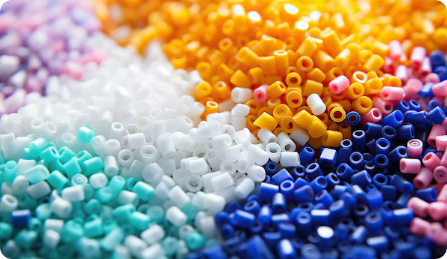
PP meltblown materials are mainly used in medical and health care, clean materials, thermal and acoustic insulation cotton, oil-absorbing materials, battery separators, air filtration, and household products, and the most important protective masks, whether N95 or disposable masks, the main structure includes inside and outside of the spunbonded layer (S-layer) and intermediate layers of meltblown layer (M-layer), the heart of the mask, the main role of the barrier and adsorb particulate matter and droplets. The main material of M layer is meltblown grade PP with high melt index (1500), whose characteristics include high melt index, low molecular weight, high stability, low odor, and formation of high-strength fiber network structure. Its main grades are distinguished by melt index, and the materials used for masks are mostly 1500 brand, with an average molecular weight of 50,000-80,000, and physical properties are almost the same as those of polypropylene plastic granules, with performance indexes including melt index, molecular weight distribution, yellow index, anti-aging time, etc.

1、the melt index is not stable, resulting in uneven spinning, easy to filter efficiency is not up to standard, fluttering phenomenon.
2、ash, too many impurities, resulting in filters, molds are easy to plug.
3、High peroxide residue, odor and yellowing; secondary decomposition makes meltblown cloth hard and brittle.
MFI:
The increase of melt index MFI can reduce the working temperature of screw extruder, which is helpful to reduce the formation of excessive degradation of polymer, prolong the life of meltblown die and reduce energy consumption. Generally choose the meltblown material with MFI 1500±100g/min, the flow rate is very high, the melt viscosity is lower, so that the meltblown fibers will be finer, and the meltblown fabric filtration is naturally better.
Ash control:
The hole diameter of the spinneret die is small, if the ash content of the meltblown material is too large, too many impurities, it is easy to cause clogging of the spinneret hole. Choosing a low ash content meltblown material can effectively extend the replacement cycle of the meltblown die, reduce energy consumption and lower production costs.
Choose high quality meltblown material:
RL 1500 is a special PP meltblown material with high filtration efficiency, adhering to Rallychem’s strict and professional attitude. RL 1500 is non-clogging and has no peroxide residue. Together with standard equipment parameters and electret process, we have helped many manufacturers to stabilize the production of meltblown fabrics of grade 95 and above.
Rallychem RL 1500 passed the SGS test and meets the national GB/T 30923-2014 standard. It maintains the original toughness and temperature resistance on improving the flowability of the melt, and improves the spinning fineness at higher wind pressure without fluttering.
Rallychem RL 1500 has no peroxide residue, lower odor and higher added value of meltblown fabrics.
Rallychem RL 1500 is ROHS certified, making it more environmentally friendly and healthier. It is free of heavy metals and brominated flame retardants, making it safe and secure.

Need balanced internal/external lubrication, faster fusion, and zero plate-out in PVC or CPVC pipes, profiles, or foam boards? Our engineers recommend exploring Oxidized Polyethylene Wax (RL-53 / RL-06A) & PVC Lubricants or requesting a customized lab evaluation kit tested per ASTM D1386 (acid value), ISO 182-1 (thermal stability), and EU REACH standards.
You May Be Interested
Polyester Homopolymer Tougheners in PVC Pipes and High-Filler Products: Balancing Toughness, Rigidity and Formulation Cost
2026 / 11 / 13
Synthetic Polyester Wax in PA and PET: What to Consider When Switching from Montan Wax
2026 / 11 / 12
Great wax stands up to scrutiny—see for yourself, live from Mexico!
2026 / 11 / 12
At the exhibition? RALLYCHEM is waiting for you at 6.1H15!
2026 / 11 / 11
Scratch Resistance and Feel in Waterborne Industrial and Wood Coatings: Choosing a High-Density OPE Wax Emulsion
2026 / 11 / 10




For Inquiries Please Call
Rallychem Will Be Happy To Assist You!
+86 13456396233





 English
 Español
 Français
 日本語
 한국어
 العربية
 فارسی
 Deutsch
 Italiano
 Tiếng Việt
 ไทย
 Русский
 Bahasa Indonesia
 Bahasa Melayu
 Türkçe


